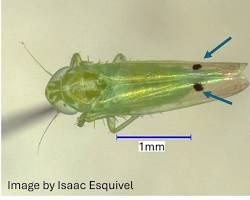
Jassid Leafhoppers (family Cicadellidae) are a massive and highly diverse group of tiny sap-feeding insects found worldwide. These agile insects are recognized for their wedge-shaped bodies, rapid movement, and remarkable ability to hop or jump when disturbed. Although individually small, they are among the most economically significant agricultural pests globally due to both their feeding damage and their role as vectors of devastating plant diseases.
Leafhoppers attack a wide variety of crops, ornamental plants, grasses, and trees. Their piercing-sucking mouthparts allow them to feed directly from plant tissues, causing symptoms such as stippling, yellowing, curling, and a condition called hopperburn. More importantly, many species spread viruses, bacteria, and phytoplasmas between plants, making them major threats to vineyards, vegetable crops, orchards, and commercial agriculture.
Quick Facts
- Common Name: Jassid Leafhoppers
- Scientific Family: Cicadellidae
- Order: Hemiptera
- Size: 1/8 to 1/4 inch long
- Main Habitat: Crop foliage and grasses
- Diet: Plant sap
- Main Threat: Disease transmission and plant damage
- Status: Major agricultural pest
Taxonomy and Classification
Jassid Leafhoppers belong to the order Hemiptera, commonly known as the true bugs. This order also includes:
- Aphids
- Stink bugs
- Cicadas
- Scale insects
- Sharpshooters
Leafhoppers undergo incomplete metamorphosis, developing through:
- Egg
- Nymph
- Adult
Nymphs resemble miniature adults but lack fully developed wings.
The family Cicadellidae contains thousands of species, many of which are highly specialized to certain host plants. Some species feed primarily on:
- Grasses
- Vines
- Fruit crops
- Vegetables
- Trees
- Field crops
Physical Description
Jassid Leafhoppers are small, slender insects with a streamlined wedge-shaped appearance.
Adult Appearance
- Narrow, tapered body
- Roof-like wings folded over the back
- Large compound eyes
- Long hind legs adapted for jumping
- Soft but agile body structure
Their coloration varies widely depending on species.
- Green
- Yellow
- Brown
- Striped
- Spotted
- Brightly patterned
Movement
One of the easiest ways to identify leafhoppers is their rapid movement.
- Jump instantly when disturbed
- Move sideways rapidly
- Scuttle backward
- Fly short distances quickly
Their jumping ability makes them difficult to catch or control manually.
Nymphs
Immature leafhoppers are:
- Wingless
- Smaller than adults
- Pale green or yellow
- Highly mobile
Nymphs often move sideways rapidly across leaf surfaces.
Distribution and Habitat
Leafhoppers occur worldwide and inhabit nearly every terrestrial ecosystem where plants are present.
Common Habitats
- Agricultural fields
- Grasslands
- Gardens
- Orchards
- Vineyards
- Forests
- Urban landscapes
They are particularly abundant in:
- Warm climates
- Humid growing regions
- Densely planted crops
- Areas with abundant weeds and grasses
Some species migrate long distances using wind currents, rapidly colonizing new crop fields.
Life Cycle
Female leafhoppers lay eggs directly into plant tissue using specialized egg-laying structures.
Egg Stage
Eggs are often inserted into:
- Leaf veins
- Stems
- Petioles
- Soft plant tissue
This hidden placement protects the eggs from predators and environmental conditions.
Nymph Stage
After hatching, nymphs begin feeding immediately on plant sap.
- Undergo several molts
- Remain highly active
- Feed continuously
- Develop wing pads gradually
Adult Stage
Adults are:
- Strong jumpers
- Capable of flight
- Rapid reproducers
- Efficient disease vectors
Many species complete multiple generations per year in warm climates.
Feeding Behavior
Leafhoppers feed using needle-like piercing-sucking mouthparts called stylets.
They tap directly into:
- Phloem tissue
- Xylem vessels
- Plant vascular fluids
As they feed, they remove nutrients and inject saliva into the plant.
Plant Damage
Damage from Jassid Leafhoppers occurs through both feeding and disease transmission.
Stippling
One of the earliest signs is:
- Tiny white or yellow dots on leaves
- Speckled foliage appearance
- Loss of chlorophyll
These feeding marks result from cell destruction.
Hopperburn
Certain species inject toxic saliva that causes:
- Leaf curling
- Brown leaf edges
- Scorched appearance
- Premature leaf drop
This condition is known as hopperburn.
Reduced Plant Vigor
- Stunted growth
- Reduced yields
- Poor fruit quality
- Weak seedlings
- General plant decline
Disease Transmission
The most serious threat posed by leafhoppers is their role as vectors of plant pathogens.
Diseases Spread by Leafhoppers
- Pierce’s Disease
- Aster Yellows
- Curly Top Virus
- Phytoplasma diseases
- Bacterial leaf scorch diseases
As leafhoppers move between infected and healthy plants, they spread pathogens rapidly through feeding.
Glassy-Winged Sharpshooter
One of the most destructive examples is the:
- Glassy-Winged Sharpshooter
This large leafhopper spreads the bacterium responsible for:
- Pierce’s Disease in grapes
This disease can devastate vineyards and ornamental landscapes.
Common Host Plants
Leafhoppers feed on a huge range of plants, including:
- Grapes
- Beans
- Potatoes
- Cotton
- Corn
- Tomatoes
- Fruit trees
- Shrubs
- Grasses
Many species can survive on weeds before moving into crops.
Signs of Infestation
Common indicators include:
- Leaf stippling
- Yellowing foliage
- Leaf curling
- Brown leaf edges
- Reduced plant vigor
- Tiny jumping insects on foliage
- Sticky traps capturing numerous adults
Infestations are often worst during warm, dry weather.
Management and Prevention
Effective management requires integrated pest management (IPM) focused on monitoring and early intervention.
Monitoring
Monitoring is essential for detecting migration and population buildup.
- Yellow sticky traps
- Sweep net sampling
- Visual inspections
- Leaf examinations
Sticky traps are especially useful for tracking adult movement into crops.
Cultural Controls
- Remove weeds near fields
- Reduce overwintering vegetation
- Rotate crops
- Maintain healthy plant growth
- Reduce plant stress
Weed management is particularly important because many weeds serve as reservoirs for both leafhoppers and plant diseases.
Physical Exclusion
Fine mesh row covers can help protect:
- Vegetables
- Seedlings
- High-value crops
Exclusion methods are especially useful in organic production systems.
Chemical Control
Chemical treatments are often necessary in severe infestations or disease outbreaks.
- Systemic insecticides
- Residual sprays
- Targeted foliar treatments
Proper timing is critical because leafhoppers are highly mobile and reproduce quickly.
Natural Predators
Many beneficial insects help suppress leafhopper populations naturally.
- Lady beetles
- Lacewings
- Minute pirate bugs
- Parasitic wasps
- Spiders
Conserving natural enemies can significantly reduce outbreaks.
Interesting Facts About Jassid Leafhoppers
- Some species migrate hundreds of miles on wind currents.
- They can move sideways and backward rapidly.
- Many species are brightly colored despite their small size.
- Leafhoppers are among the most important insect disease vectors in agriculture.
- Their jumping ability makes them extremely difficult to capture.
- Some species communicate through plant vibrations.
Conservation and Research
Research on Jassid Leafhoppers focuses heavily on agricultural disease management and vector biology.
Current Research Areas
- Plant disease epidemiology
- Migration prediction models
- Disease-resistant crop varieties
- Improved biological controls
- Early detection technologies
- Reduced-risk insecticides
Scientists continue working to reduce the enormous agricultural losses caused by leafhopper feeding and disease transmission.