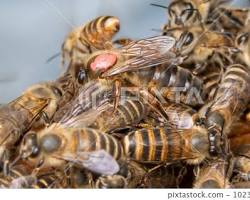
Japanese Honey Bees (Apis cerana japonica) are a subspecies of the Eastern Honey Bee native to Japan and nearby regions of East Asia. Unlike the heavily commercialized Western Honey Bee (Apis mellifera), Japanese Honey Bees are valued for their exceptional adaptation to local climates, disease resistance, and remarkable collective defense behaviors. They are highly important pollinators in forests, agricultural systems, and urban gardens throughout Japan.
Japanese Honey Bees are internationally famous for their extraordinary defense strategy against the deadly Asian Giant Hornet (Vespa mandarinia). Through highly coordinated teamwork, hundreds of worker bees swarm invading hornets and generate lethal heat by vibrating their flight muscles, effectively killing the predator through overheating. This unique survival adaptation has become one of the most studied examples of insect social defense in the natural world.
Quick Facts
- Common Name: Japanese Honey Bee
- Scientific Name: Apis cerana japonica
- Order: Hymenoptera
- Family: Apidae
- Size: About 1/2 inch long
- Main Role: Pollination
- Native Range: Japan
- Colony Type: Highly social perennial colonies
- Famous Trait: “Hot defensive ball” against giant hornets
Taxonomy and Classification
Japanese Honey Bees belong to the family Apidae, which includes:
- Honey bees
- Bumblebees
- Carpenter bees
- Orchid bees
They are a regional subspecies of the Eastern Honey Bee (Apis cerana), which evolved separately from the Western Honey Bee (Apis mellifera).
Japanese Honey Bees are:
- Highly social insects
- Colony-forming pollinators
- Perennial nest builders
- Cooperatively defensive
Their long evolutionary history alongside native predators, especially the Asian Giant Hornet, has shaped many of their specialized defensive behaviors.
Physical Description
Japanese Honey Bees are slightly smaller and darker than common Western Honey Bees.
Adult Appearance
- Dark brown to black coloration
- Distinct abdominal striping
- Hair-covered thorax
- Transparent wings
- Compact body shape
Compared to Italian Honey Bees, Japanese Honey Bees appear:
- Darker overall
- More compact
- Better adapted to cooler climates
Workers, Queens, and Drones
Like other honey bee species, colonies contain:
- Workers: Sterile females responsible for foraging and defense
- Queen: The primary reproductive female
- Drones: Males whose main role is mating
The “Hot Defensive Ball” Strategy
The Japanese Honey Bee’s most remarkable behavior is its defense against the Asian Giant Hornet.
Hornet Threat
Asian Giant Hornets are capable of:
- Decapitating honey bees
- Destroying entire colonies
- Killing thousands of bees in hours
Western Honey Bees often cannot defend themselves effectively against these attacks.
Heat Ball Defense
Japanese Honey Bees evolved a unique defense system:
- Workers swarm invading hornets
- Hundreds of bees form a tight ball around the predator
- Bees vibrate their flight muscles intensely
- Internal temperature rises above 115°F
- The hornet overheats and dies
The bees survive because their heat tolerance is slightly higher than the hornet’s.
This behavior is considered one of the most sophisticated examples of collective insect defense ever documented.
Distribution and Habitat
Japanese Honey Bees are native to the Japanese archipelago.
Natural Habitats
- Forests
- Mountain valleys
- Agricultural land
- Urban gardens
- Rural landscapes
They are highly adapted to:
- Cold winters
- Seasonal climates
- Mountain environments
- Native flowering plants
Nest Sites
Colonies commonly nest in:
- Tree cavities
- Rock crevices
- Traditional wooden hives
- Wall voids
- Roof spaces
Feral colonies are widespread throughout rural and forested regions of Japan.
Behavior and Ecology
Japanese Honey Bees are highly organized social insects with complex colony behavior.
Pollination
Their primary ecological role is pollination.
- Native wildflowers
- Fruit trees
- Vegetable crops
- Forest plants
- Agricultural crops
They are especially important in traditional Japanese agricultural systems.
Foraging
Workers collect:
- Nectar
- Pollen
- Water
- Plant resins
They communicate food locations through waggle dances similar to Western Honey Bees.
Defensive Behavior
Japanese Honey Bees are generally docile while foraging but will defend their colony if disturbed.
- Guard bees monitor nest entrances
- Alarm pheromones coordinate defense
- Colonies react collectively to threats
Like all honey bees, they can sting repeatedly during colony defense.
Human Conflict
Japanese Honey Bees are overwhelmingly beneficial, but conflicts occasionally occur when colonies establish nests inside structures.
Structural Nesting
Colonies may nest in:
- Wall voids
- Attics
- Roof cavities
- Sheds
- Abandoned buildings
Problems associated with indoor colonies include:
- Buzzing noise
- Honey leakage
- Wax accumulation
- Potential stinging incidents
Health Risks
Stings are painful and venomous.
- Localized swelling
- Pain and redness
- Allergic reactions in sensitive individuals
- Rare risk of anaphylaxis
However, Japanese Honey Bees are generally less aggressive than many wasp species.
Management and Prevention
Management focuses on conservation, humane removal, and minimizing unnecessary conflict.
Live Removal
If colonies establish inside structures:
- Contact a professional beekeeper
- Use humane live removal methods
- Avoid extermination whenever possible
Removing colonies properly prevents:
- Structural damage from melting wax
- Honey fermentation
- Secondary pest infestations
Avoid Disturbance
When bees are actively foraging:
- Avoid sudden movements
- Do not block flight paths
- Keep distance from nest entrances
Most stinging incidents occur when nests are disturbed directly.
Beekeeping Protection
Japanese beekeepers often use specialized hive designs to help colonies defend against giant hornets.
- Narrow entrances
- Protective barriers
- Hornet traps
- Strategic hive placement
Interesting Facts About Japanese Honey Bees
- They evolved alongside the Asian Giant Hornet.
- They can collectively “cook” hornets alive using body heat.
- Their colonies survive colder climates better than many imported bees.
- They are highly efficient native pollinators.
- Japanese beekeeping traditions date back centuries.
- Their defensive behavior is studied worldwide by entomologists.
Conservation and Research
Japanese Honey Bees are important ecological pollinators and a major focus of scientific research.
Current Research Areas
- Collective defense behavior
- Thermal regulation during hornet attacks
- Disease resistance
- Sustainable beekeeping
- Pollinator conservation
- Bee communication systems
Researchers continue studying how Japanese Honey Bees naturally resist predators and environmental stressors, with the goal of improving global pollinator health and sustainable apiculture.