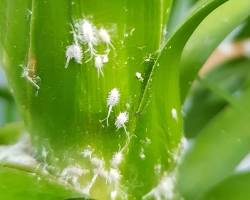
Jade Plant Mealybugs (commonly Planococcus citri or Pseudococcus longispinus) are destructive sap-feeding pests that commonly infest Jade Plants (Crassula ovata) and other indoor succulents. These insects are easily identified by their distinctive white, cottony wax covering that protects them from dehydration and many insecticides. Mealybugs weaken plants by extracting sap from stems, leaves, and growing tips, often causing yellowing, leaf drop, stunted growth, and severe decline in neglected infestations.
One of the most troublesome aspects of Jade Plant Mealybugs is the sticky honeydew they excrete while feeding. This sugary residue coats leaves and nearby surfaces, encouraging the growth of black sooty mold fungus. Heavy infestations can quickly spread to nearby houseplants, making mealybugs one of the most persistent and frustrating indoor plant pests.
Quick Facts
- Common Name: Jade Plant Mealybugs
- Scientific Names: Planococcus citri, Pseudococcus longispinus
- Order: Hemiptera
- Family: Pseudococcidae
- Size: 1/8 to 1/4 inch long
- Main Hosts: Jade plants and succulents
- Primary Damage: Sap feeding and honeydew production
- Most Common Habitat: Indoor plants and greenhouses
- Status: Serious houseplant pest
Taxonomy and Classification
Jade Plant Mealybugs belong to the family Pseudococcidae, a group of soft-bodied scale insects commonly known as mealybugs.
They undergo incomplete metamorphosis, progressing through:
- Egg
- Crawler (mobile nymph)
- Nymph
- Adult
Unlike armored scales, mealybugs remain mobile throughout much of their life cycle and are covered with a waxy protective coating rather than a hard shell.
These pests are especially well adapted to succulents because they hide deep within:
- Leaf joints
- Stem crevices
- Growth tips
- Protected folds
Their rapid reproductive rate allows infestations to spread quickly in warm indoor environments.
Physical Description
Mealybugs are small, oval, soft-bodied insects covered in a white waxy secretion.
Adult Appearance
- White or pale gray body
- Cottony or fuzzy appearance
- Soft-bodied texture
- Oval shape
- Waxy filaments extending from the body
Some species develop longer tail-like wax filaments at the rear end.
Egg Sacs
Females often produce highly visible white cottony egg masses.
- Sticky texture
- Attached near stems
- Protected by wax
- Contain numerous eggs
Crawler Stage
Newly hatched mealybugs are called crawlers.
- Tiny and mobile
- Yellowish or pale in color
- Quickly spread to new feeding sites
- Most vulnerable life stage
Signs of Infestation
Mealybug infestations are often first noticed because of their distinctive white cottony masses.
Common Symptoms
- White cotton-like clusters
- Sticky honeydew residue
- Black sooty mold fungus
- Yellowing leaves
- Wilting or drooping growth
- Premature leaf drop
- Stunted growth
- Distorted new growth
Heavy infestations can make a Jade Plant appear sticky, dirty, and unhealthy.
Typical Infestation Areas
- Leaf joints
- Growth tips
- Stem intersections
- Undersides of leaves
- Root zones (root mealybugs)
Their hidden feeding locations often allow infestations to grow unnoticed for long periods.
Distribution and Habitat
Jade Plant Mealybugs are found worldwide wherever succulents and ornamental houseplants are grown.
Common Environments
- Indoor houseplants
- Greenhouses
- Plant nurseries
- Succulent collections
- Warm conservatories
They thrive in:
- Warm temperatures
- Low air circulation
- Crowded plant arrangements
- Indoor humidity
- Protected growing conditions
Indoor environments allow year-round reproduction without winter die-off.
Behavior and Feeding
Mealybugs feed using piercing-sucking mouthparts that extract sap from plant tissues.
Sap Feeding Damage
Continuous feeding causes:
- Nutrient loss
- Reduced vigor
- Growth distortion
- Plant stress
- Weakened stems and leaves
Young growth is especially vulnerable because it contains softer tissues and higher sap pressure.
Honeydew Production
As they feed, mealybugs excrete excess sugars as sticky honeydew.
- Coats leaves and stems
- Attracts ants
- Promotes fungal growth
- Creates a sticky mess
Sooty Mold
Black sooty mold fungus commonly develops on honeydew-coated surfaces.
- Blocks sunlight
- Reduces photosynthesis
- Damages appearance
- Weakens the plant further
Rapid Spread
Mealybugs spread easily between plants.
- Crawlers move between pots
- Contaminated tools spread infestations
- Contact between plants aids movement
- Infested nursery stock introduces new outbreaks
Management and Prevention
Successful control requires persistence and repeated treatment.
Isolation
Immediately isolate infested plants from healthy houseplants.
- Prevent crawler spread
- Reduce contamination risk
- Simplify treatment
Manual Removal
Physical removal is one of the most effective controls for small infestations.
- Use cotton swabs dipped in 70% isopropyl alcohol
- Dab visible insects directly
- Alcohol dissolves the protective wax
- Repeat regularly
Always test alcohol on a small section of the plant first to avoid damage.
Pruning
Severely infested growth should be removed.
- Prune heavily infested stems
- Discard infected material immediately
- Do not compost infested cuttings indoors
Horticultural Oils and Soaps
Neem oil and insecticidal soap are commonly used treatments.
- Coat all plant surfaces thoroughly
- Repeat every 7 to 10 days
- Target newly hatched crawlers
- Avoid excessive sunlight after application
Multiple treatments are usually required because eggs and hidden insects survive initial applications.
Biological Control
Greenhouses sometimes use beneficial insects for long-term management.
- Mealybug Destroyer lady beetles (Cryptolaemus montrouzieri)
- Parasitic wasps
- Predatory lacewings
These predators can significantly reduce infestations in enclosed growing environments.
Prevention
- Inspect new plants carefully
- Quarantine new purchases
- Avoid overcrowding plants
- Improve airflow
- Monitor growth tips regularly
Interesting Facts About Jade Plant Mealybugs
- Their wax coating helps protect them from dehydration and pesticides.
- Some species give live birth instead of laying eggs.
- Mealybugs commonly hide in leaf folds where they are difficult to spot.
- Ants often protect mealybugs in exchange for honeydew.
- Indoor infestations can persist year-round.
- Root mealybugs can infest the soil and roots invisibly.
Conservation and Research
Research on mealybugs focuses on improving sustainable indoor plant pest management.
Current Research Areas
- Biological control optimization
- Pesticide resistance mechanisms
- Improved horticultural oils
- Integrated pest management strategies
- Greenhouse biological controls
- Plant resistance studies
Scientists continue developing safer, more effective control methods that reduce chemical exposure while protecting ornamental and succulent collections from chronic infestations.