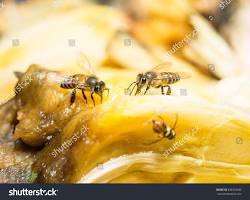
Jackfruit Fruit Flies are several species of destructive fruit flies in the family Tephritidae that infest developing jackfruit and other tropical fruits. The most serious species associated with jackfruit production is often the Oriental Fruit Fly (Bactrocera dorsalis), one of the world’s most economically damaging agricultural pests. These flies attack fruit by laying eggs beneath the skin, allowing the developing maggots to feed internally on the soft pulp.
Infested jackfruit rapidly becomes soft, rotten, foul-smelling, and completely inedible. Severe infestations can destroy entire harvests, making fruit flies one of the primary barriers to successful jackfruit production in tropical and subtropical regions worldwide.
Quick Facts
- Common Name: Jackfruit Fruit Flies
- Main Species: Bactrocera dorsalis
- Order: Diptera
- Family: Tephritidae
- Main Hosts: Jackfruit and tropical fruits
- Main Conflict: Fruit destruction and crop loss
- Larval Stage: Maggots feeding inside fruit
- Status: Serious agricultural pest
Taxonomy and Classification
Jackfruit Fruit Flies belong to the order Diptera, commonly known as the true flies, and the family Tephritidae, often referred to as picture-winged fruit flies.
Important pest species attacking jackfruit include:
- Bactrocera dorsalis (Oriental Fruit Fly)
- Bactrocera correcta
- Bactrocera zonata
- Zeugodacus species
These insects undergo complete metamorphosis:
- Egg
- Larva (maggot)
- Pupa
- Adult fly
Female fruit flies possess a hardened ovipositor that allows them to puncture fruit skins and deposit eggs deep inside developing fruit tissues.
Physical Description
Adult fruit flies are small but highly active insects, typically measuring between 1/4 and 3/8 inch long.
Adult Fly Identification
- Yellowish-brown or black body
- Transparent wings with dark markings
- Large reddish eyes
- Slender legs
- Fast flight behavior
Many species have brightly patterned wings and colorful abdominal markings that distinguish them from ordinary house flies.
Larvae (Maggots)
The larval stage is responsible for nearly all fruit damage.
- Cream-colored
- Legless
- Cylindrical body
- Tapered front end
- Found feeding inside fruit pulp
Pupae
After completing development inside the fruit, mature maggots leave the fruit and pupate in the soil beneath the tree.
- Brown barrel-shaped pupae
- Hidden several inches below soil surface
- Protected from predators and environmental conditions
Distribution and Habitat
Jackfruit Fruit Flies are widespread throughout tropical and subtropical regions where jackfruit is cultivated.
Common Regions
- India
- Thailand
- Malaysia
- Indonesia
- Philippines
- Pacific Islands
- Caribbean
- Florida
- Tropical Africa
Their habitat includes:
- Jackfruit orchards
- Tropical gardens
- Fruit plantations
- Backyard fruit trees
- Soil beneath host trees
Warm temperatures and abundant fruit production allow populations to reproduce continuously throughout much of the year.
Behavior and Damage
Female fruit flies are highly attracted to ripening or developing fruit. Using chemical cues and fruit odors, they locate suitable hosts for egg-laying.
Egg Laying
The female punctures the fruit skin with her ovipositor and inserts eggs beneath the surface.
These punctures may appear as:
- Tiny dark spots
- Water-soaked lesions
- Sticky sap leaks
- Small scars on fruit surfaces
Larval Feeding Damage
Once eggs hatch, the maggots begin feeding internally on the fruit pulp.
This feeding causes:
- Softening of fruit tissue
- Internal rotting
- Fermentation odors
- Premature ripening
- Fruit collapse
- Secondary fungal infections
By the time external symptoms become obvious, the interior of the fruit is often heavily infested and unusable.
Fruit Drop
Heavily infested jackfruit often falls prematurely from the tree before reaching maturity.
Dropped fruit becomes a major breeding source for future generations if not removed quickly.
Economic Impact
Fruit flies are considered one of the most destructive tropical fruit pests globally.
Major Economic Problems
- Total fruit loss
- Reduced market quality
- Quarantine restrictions
- Export limitations
- Increased management costs
- Loss of commercial orchard productivity
Even small infestations can make fruit unsuitable for commercial sale because consumers reject maggot-infested produce.
Life Cycle
Egg Stage
Eggs hatch within a few days after being deposited inside the fruit.
Larval Stage
Maggots feed inside the fruit for one to two weeks depending on temperature and host quality.
Pupal Stage
Mature larvae exit the fruit and burrow into soil where they pupate.
Adult Stage
Adults emerge from the soil, mate, and begin searching for suitable fruit hosts.
Multiple overlapping generations may occur annually in warm climates.
Management and Prevention
Successful fruit fly control requires integrated pest management (IPM) using sanitation, exclusion, trapping, and monitoring.
Sanitation (Most Important)
Removing infested fruit is essential for breaking the life cycle.
- Collect fallen fruit daily
- Destroy infested fruit immediately
- Do not compost infested fruit openly
- Deeply bury or solarize damaged fruit
Failure to remove infested fruit allows maggots to complete development in the soil.
Fruit Bagging
Bagging young developing fruit is one of the most effective controls for backyard and small-scale production.
- Use paper bags
- Fine mesh cloth bags
- Protective fruit sleeves
Bagging physically prevents female flies from reaching the fruit surface.
Trapping Systems
Specialized fruit fly traps help monitor and reduce adult populations.
- Methyl eugenol traps
- Protein bait traps
- Pheromone lures
- Sticky traps
These traps are especially important in commercial orchards.
Protein Bait Sprays
Protein hydrolysate bait sprays attract adult flies before they lay eggs.
These targeted treatments:
- Reduce egg-laying females
- Lower environmental impact
- Minimize broad insecticide use
Biological Control
Natural enemies help suppress fruit fly populations in some regions.
- Parasitic wasps
- Predatory ants
- Entomopathogenic fungi
- Soil predators attacking pupae
Interesting Facts About Jackfruit Fruit Flies
- One infested fruit may contain dozens of maggots.
- Females can detect fruit chemically from long distances.
- Many species attack dozens of tropical fruit crops.
- Pupation occurs in soil beneath host trees.
- Fruit flies are major quarantine pests worldwide.
- Bagging fruit is highly effective for prevention.
Conservation and Research
Research involving fruit flies focuses heavily on agricultural protection and quarantine management.
Major Research Areas
- Sterile insect technique (SIT)
- Improved pheromone lures
- Biological control agents
- Reduced-risk bait systems
- Early detection technologies
- Quarantine prevention programs
Scientists continue developing environmentally safer management programs to reduce crop losses while minimizing pesticide use in tropical fruit production systems.