Overview
Hypoderma botflies are parasitic flies belonging to the genus Hypoderma in the family Oestridae. These insects are significant pests of livestock, particularly cattle, where they cause a condition known as warble fly infestation. Their larvae develop within the tissues of the host, leading to both health issues and economic losses.
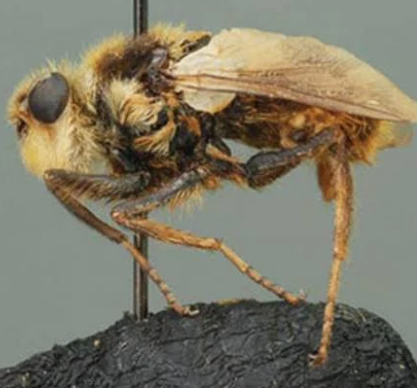
Two of the most well-known species are Hypoderma lineatum and Hypoderma bovis, both of which are widely distributed in regions with cattle production. These flies have a complex life cycle that involves migration of larvae through the host’s body before emerging to pupate in the soil.
The presence of Hypoderma larvae can lead to reduced weight gain, decreased milk production, and damage to hides, making them a major concern in the livestock industry.
Identification
Adult botflies resemble large, hairy flies and are often mistaken for bees. They are robust and typically brown or black in color.
Larvae are found beneath the skin of the host, forming visible lumps known as warbles. Each warble contains a breathing hole through which the larva receives air.
Habitat
Hypoderma botflies are found in regions where cattle and other livestock are present. They are most common in pasture-based systems.
Behavior and Life Cycle
Adult females lay eggs on the hair of host animals. After hatching, larvae penetrate the skin and begin migrating through the body.
They eventually settle beneath the skin along the back, where they form warbles. After maturing, larvae emerge, drop to the ground, and pupate.
Adults emerge to continue the cycle, typically completing one generation per year.
Damage and Impact
Infestations cause irritation, stress, and reduced productivity in livestock. Tissue damage from larval migration can affect animal health.
Hide damage reduces the value of leather, contributing to economic losses.
Prevention and Control
Regular treatment of livestock with appropriate medications can prevent infestations. Monitoring and timing treatments to target larvae are essential.
Good herd management practices reduce exposure.
Taxonomy
- Kingdom: Animalia
- Phylum: Arthropoda
- Class: Insecta
- Order: Diptera
- Family: Oestridae
- Genus: Hypoderma