Overview
Hyphantria webworms, commonly known as fall webworms (Hyphantria cunea), are widely distributed caterpillar pests known for their web-building behavior and ability to defoliate a variety of trees. These insects belong to the family Erebidae and are found across North America and other regions where they have been introduced.
Unlike tent caterpillars, which build webs in branch crotches, fall webworms construct large, loose webs at the ends of branches. These webs expand as the larvae grow and consume surrounding foliage.
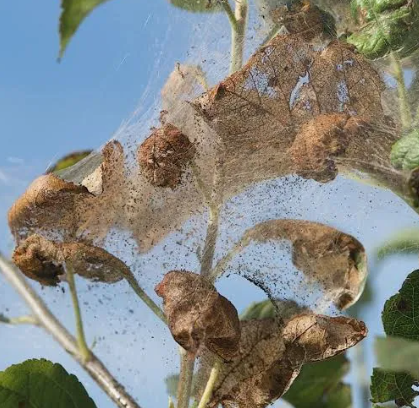
Hyphantria webworms feed on a wide range of host trees, including walnut, hickory, apple, and ornamental species. Their broad host range contributes to their success and widespread presence.
Identification
Larvae are pale yellow to green with long hairs and black or orange spots. They are often found within silken webs covering leaves.
Adult moths are white and relatively plain, with some individuals having black spots on the wings.
Habitat
These insects are found in forests, orchards, and urban landscapes. They prefer deciduous trees and are commonly seen in late summer and early fall.
Behavior and Life Cycle
Females lay eggs on the undersides of leaves. Larvae hatch and begin feeding, constructing webs that protect them from predators.
As they grow, they expand the web and continue feeding on enclosed foliage.
After completing development, larvae pupate in soil or debris, emerging as adults to repeat the cycle.
Damage and Impact
Feeding causes defoliation and reduced tree vigor. While rarely fatal, repeated infestations can weaken trees and reduce aesthetic value.
Webbing can be unsightly, especially in ornamental landscapes.
Prevention and Control
Pruning and removing webs can help reduce infestations. Encouraging natural predators such as birds can also help control populations.
Maintaining tree health improves resilience.
Taxonomy
- Kingdom: Animalia
- Phylum: Arthropoda
- Class: Insecta
- Order: Lepidoptera
- Family: Erebidae
- Species: Hyphantria cunea