Overview
Humpbacked flies, also known as phorid flies, belong to the family Phoridae. These small flies are commonly found in environments rich in decaying organic matter and are known for their distinctive humpbacked appearance and erratic running behavior. Unlike many flies that rely primarily on flight, phorid flies often run rapidly across surfaces, giving them a unique and recognizable movement pattern.
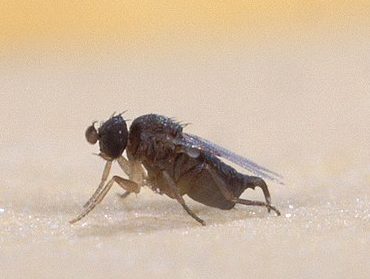
These flies are highly adaptable and can thrive in a wide range of environments, including homes, restaurants, hospitals, and agricultural settings. They are often associated with unsanitary conditions, as they breed in decomposing organic material such as food waste, sewage, and animal remains.
Humpbacked flies are particularly problematic in indoor environments, where they can indicate hidden sources of organic decay, such as clogged drains or decomposing pests within wall voids.
Identification
Adult phorid flies are very small, typically 1–5 mm in length. They have a characteristic humpbacked thorax and short wings.
They are often seen running across surfaces rather than flying, which distinguishes them from other small flies.
Habitat
These flies are found in areas with decaying organic matter, including kitchens, garbage areas, drains, and soil. They are also common in commercial environments such as restaurants and food processing facilities.
Behavior and Life Cycle
Females lay eggs in moist, decaying organic material. Larvae feed on this material and develop rapidly under favorable conditions.
The life cycle is short, allowing populations to increase quickly.
Adults are attracted to odors associated with decomposition.
Damage and Impact
While they do not typically cause structural damage, humpbacked flies can contaminate food and spread bacteria. Their presence often indicates sanitation issues.
In sensitive environments such as hospitals, they may pose additional concerns.
Prevention and Control
Eliminating breeding sources is essential. Cleaning drains, removing organic waste, and improving sanitation can help control infestations.
Identifying hidden sources, such as dead rodents, is often necessary.
Taxonomy
- Kingdom: Animalia
- Phylum: Arthropoda
- Class: Insecta
- Order: Diptera
- Family: Phoridae