Overview
Humpbacked caterpillars are a diverse group of moth larvae belonging primarily to the family Notodontidae, commonly known as prominent moths. These caterpillars are named for their distinctive body shape, which often includes raised segments or humps along the back. While many species are harmless and occur in low numbers, some can become defoliators of trees and shrubs, especially during population outbreaks.
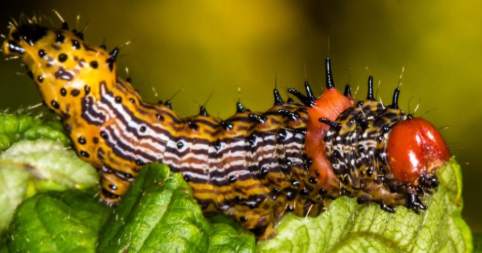
These caterpillars are found throughout North America and other temperate regions, where they inhabit forests, woodlands, and ornamental landscapes. They feed on a wide variety of host plants, including oak, maple, birch, and fruit trees. Their feeding can reduce foliage density and, in severe cases, weaken host plants.
Although humpbacked caterpillars are rarely as destructive as other defoliators like tent caterpillars or gypsy moths, their presence can still be noticeable and occasionally problematic, particularly in managed landscapes.
Identification
Humpbacked caterpillars vary widely in appearance depending on species, but most share a distinctive raised or humped back. Many species have unusual shapes, colors, or markings that help them blend into their surroundings.
Some species may have spines, projections, or camouflaged patterns that resemble twigs or leaves. Their size ranges from small to moderately large, typically reaching 1–2 inches in length.
Adults are moths with muted coloration and are rarely seen compared to their larval stage.
Habitat
These caterpillars are commonly found in forests, gardens, parks, and landscapes where host trees and shrubs are present. They prefer environments with abundant foliage and minimal disturbance.
Behavior and Life Cycle
Females lay eggs on host plant leaves. After hatching, larvae begin feeding and pass through several instars as they grow.
Many species feed at night and rest during the day, reducing exposure to predators. Some species display defensive behaviors such as raising their front end or thrashing when disturbed.
After completing development, larvae pupate in soil or leaf litter. Adults emerge and reproduce, completing the life cycle.
Damage and Impact
Humpbacked caterpillars feed on leaf tissue, creating irregular holes or consuming entire sections of leaves. Light infestations typically have minimal impact, but heavy populations can cause noticeable defoliation.
Repeated defoliation may weaken trees, reduce growth, and increase susceptibility to disease or other pests.
Prevention and Control
Monitoring foliage for early signs of feeding can help detect infestations. Hand removal of caterpillars is effective for small populations.
Encouraging natural predators such as birds and parasitic insects can help maintain balance. Maintaining plant health improves resilience against damage.
Taxonomy
- Kingdom: Animalia
- Phylum: Arthropoda
- Class: Insecta
- Order: Lepidoptera
- Family: Notodontidae