Overview
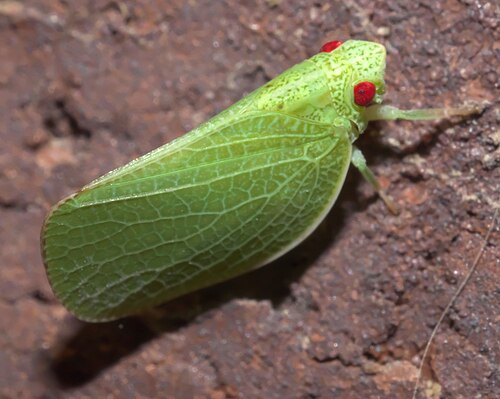
Hump-nosed leafhoppers are sap-feeding insects belonging to the family Cicadellidae, a large and diverse group commonly referred to as leafhoppers. These insects are known for their wedge-shaped bodies, powerful jumping ability, and specialized mouthparts used to extract plant fluids. The term “hump-nosed” refers to the slightly raised or curved shape of the head or thorax seen in certain species.
Leafhoppers are widely distributed and can be found in agricultural fields, gardens, forests, and grasslands. While many species cause minimal damage, others are significant pests due to their feeding behavior and ability to transmit plant pathogens such as viruses and phytoplasmas.
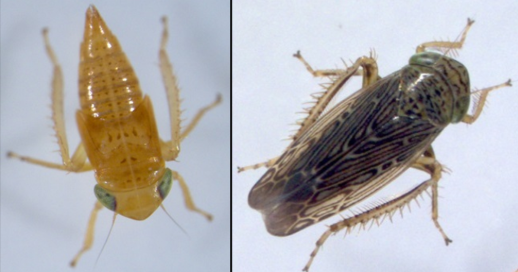
Hump-nosed leafhoppers are particularly important in crop systems where they can affect plant health directly through feeding and indirectly through disease transmission.
Identification
These insects are small, typically measuring 2–10 mm in length. They have elongated, wedge-shaped bodies and are often green, brown, or mottled in color.
Their hind legs are adapted for jumping, allowing them to quickly escape predators. The “hump-nosed” appearance is subtle but may be visible in profile.
Habitat
Hump-nosed leafhoppers are found on a wide range of plants, including crops, grasses, and ornamental species. They prefer environments with dense vegetation and abundant host plants.
Behavior and Life Cycle
Females lay eggs within plant tissue. Nymphs hatch and begin feeding on sap, passing through several stages before becoming adults.
Both nymphs and adults feed on plants, making them persistent pests throughout the growing season.
Many species are highly mobile and can disperse quickly between plants.
Damage and Impact
Feeding causes stippling, yellowing, and reduced plant vigor. In severe cases, leaves may curl or become distorted.
More significantly, some species transmit plant diseases, which can lead to major agricultural losses.
Prevention and Control
Monitoring populations and maintaining plant health are essential. Removing weeds and alternative host plants can reduce populations.
Encouraging natural predators such as spiders and predatory insects can help control leafhopper populations.
Taxonomy
- Kingdom: Animalia
- Phylum: Arthropoda
- Class: Insecta
- Order: Hemiptera
- Family: Cicadellidae