Overview
Humidity mites are a general term used to describe various mite species that thrive in environments with high moisture levels. These mites belong to the subclass Acari and are closely related to dust mites and storage mites. They are commonly found in homes, greenhouses, and storage areas where humidity levels are elevated.
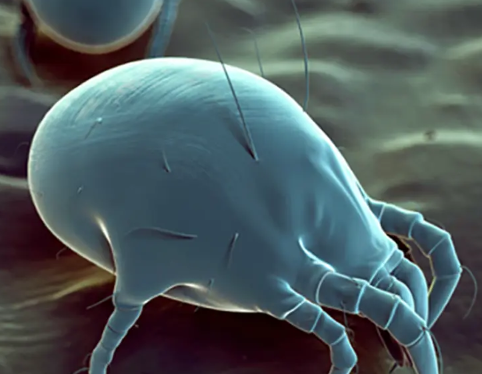
Unlike some pest mites that feed directly on plants or animals, many humidity mites feed on mold, fungi, and organic debris. Their presence is often an indicator of excessive moisture rather than a direct cause of damage. However, large populations can contribute to indoor air quality issues and trigger allergic reactions in sensitive individuals.
Humidity mites are particularly common in basements, bathrooms, kitchens, and poorly ventilated spaces where moisture accumulates.
Identification
These mites are extremely small, typically less than 1 mm in length, and are not easily visible without magnification. They may appear as tiny white or translucent specks.
Infestations are often detected through musty odors, visible mold growth, or allergic symptoms.
Habitat
Humidity mites thrive in damp environments, including carpets, upholstery, stored materials, and areas with poor ventilation. They are commonly found in homes with high humidity levels.
Behavior and Feeding
These mites feed on fungi, mold, and organic matter. Their populations increase rapidly when moisture levels are high and food sources are abundant.
They do not typically bite humans but can contribute to allergic reactions through airborne particles.
Impact
Humidity mites can negatively affect indoor air quality and trigger allergies or respiratory issues. Their presence often indicates underlying moisture problems.
Prevention and Control
Reducing humidity levels is the most effective control method. Using dehumidifiers, improving ventilation, and addressing water leaks can help eliminate infestations.
Regular cleaning and mold prevention are also important.
Taxonomy
- Kingdom: Animalia
- Phylum: Arthropoda
- Class: Arachnida
- Subclass: Acari