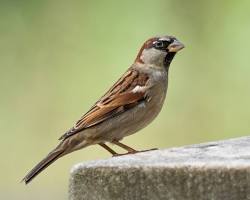
House Sparrows (Passer domesticus) are highly adaptable, invasive birds commonly found in cities, suburbs, farms, and commercial areas throughout much of the world. Originally native to Europe, North Africa, and parts of Asia, they were intentionally introduced into North America during the 1800s and quickly spread across the continent. Today, House Sparrows are among the most recognizable urban birds and are closely associated with human development.
Although small and familiar, House Sparrows are widely considered nuisance pests because of their aggressive behavior, rapid reproduction, noisy nesting habits, and tendency to displace native bird species. They commonly invade vents, signs, rooflines, warehouses, barns, and other structures where they build large, messy nests that create sanitation problems and structural concerns.
House Sparrows are also important agricultural and public health pests due to:
- Contamination of food and livestock feed
- Damage to crops and stored grains
- Aggression toward native cavity-nesting birds
- Large accumulations of droppings beneath roosting areas
- Potential spread of pathogens through feces and nesting material
Quick Facts
- Common Name: House Sparrow
- Scientific Name: Passer domesticus
- Family: Passeridae
- Type: Invasive urban bird
- Diet: Seeds, grains, insects, scraps
- Main Habitat: Urban and suburban environments
- Primary Problems: Nesting, droppings, native bird displacement
- Status in U.S.: Non-native invasive species
Taxonomy and Classification
House Sparrows belong to the bird family:
- Passeridae
Unlike many native North American songbirds, House Sparrows are:
- Non-native
- Highly adaptable
- Closely tied to human environments
Scientific Classification
- Kingdom: Animalia
- Phylum: Chordata
- Class: Aves
- Order: Passeriformes
- Family: Passeridae
- Species: Passer domesticus
In the United States, House Sparrows are not protected under the Migratory Bird Treaty Act because they are considered invasive.
Physical Description
House Sparrows are compact, chunky birds measuring approximately:
- 5 to 6 inches long
- 7 to 10 inches in wingspan
Male Appearance
Male House Sparrows are more colorful and distinctive.
- Gray crown
- Black throat patch (“bib”)
- White cheeks
- Reddish-brown markings on back and wings
- Short, thick bill
Female Appearance
Females are duller and less conspicuous.
- Plain brownish-gray coloration
- Pale stripe above the eye
- Lighter underparts
- Minimal patterning
Juveniles
Young birds resemble females and gradually develop adult plumage after molting.
Distribution and Habitat
House Sparrows are now among the most widespread birds in the world.
They thrive almost anywhere humans are present, including:
- Cities
- Suburbs
- Industrial areas
- Farms
- Transportation hubs
- Restaurants
- Shopping centers
Preferred Nesting Areas
House Sparrows strongly prefer man-made nesting locations such as:
- Roof voids
- Storefront signs
- Warehouse beams
- Barns
- Vent openings
- Traffic lights
- Building ledges
- Outdoor equipment
They rarely nest far from human activity.
Behavior and Ecology
House Sparrows are highly social, aggressive birds that often live in dense colonies.
Aggressive Territorial Behavior
One of their biggest ecological concerns is their tendency to aggressively displace native birds.
They commonly compete with:
- Bluebirds
- Tree swallows
- Purple martins
- Wrens
- Woodpeckers
House Sparrows frequently:
- Take over nesting cavities
- Destroy eggs
- Kill nestlings
- Attack adult birds
Feeding Habits
House Sparrows are opportunistic omnivores.
Their diet includes:
- Seeds
- Grains
- Insects
- Bread crumbs
- Garbage scraps
- Livestock feed
- Pet food
In agricultural settings, they may consume and contaminate large amounts of stored feed.
Reproduction
House Sparrows reproduce rapidly.
- 3–5 broods per year are common
- Each brood may contain 3–7 eggs
- Both parents care for young
This rapid breeding allows populations to grow quickly in favorable environments.
Nests and Structural Problems
House Sparrow nests are often large, messy, and problematic.
Nest Materials
Nests may contain:
- Straw
- Grass
- Paper
- Trash
- Plastic
- String
- Feathers
- Insulation fibers
Structural Risks
Large nest accumulations can create:
- Blocked vents
- Clogged gutters
- Fire hazards
- Water drainage problems
- Equipment damage
- Corrosion from droppings
Commercial signs and rooftop equipment are particularly vulnerable.
Damage and Health Concerns
Although small, House Sparrows can create significant sanitation and maintenance issues.
Droppings
Large flocks produce heavy accumulations of feces beneath:
- Roosts
- Signs
- Ledges
- Parking structures
- Warehouse beams
Droppings can:
- Create slippery surfaces
- Damage paint and metal
- Corrode building materials
- Contaminate food-handling areas
Disease Concerns
Bird droppings and nesting material may harbor:
- Fungal spores
- Bacteria
- Mites
- Parasites
Heavy accumulations are associated with diseases such as:
- Histoplasmosis
- Salmonellosis
The risk is highest in enclosed spaces with large roosting populations.
Agricultural Damage
In farms and feedlots, House Sparrows may:
- Consume grain
- Contaminate feed
- Spread pathogens
- Increase feed costs
Signs of Infestation
Common signs of House Sparrow activity include:
- Constant chirping and noise
- Messy nests in structures
- Heavy droppings beneath roosts
- Birds entering vents or signs
- Accumulated feathers and debris
- Aggressive bird behavior near feeders
Prevention and Control
Successful management focuses primarily on exclusion and habitat modification.
Exclusion (Most Effective)
Prevent birds from accessing nesting and roosting areas using:
- Bird netting
- Hardware cloth
- Vent screening
- Sealed openings
- Door and roof repairs
Nest Removal
Regular nest removal discourages territory establishment.
Nesting material should be removed:
- Frequently
- Safely
- Before eggs hatch
Roost Deterrents
Commercial bird control systems may include:
- Bird spikes
- Bird wire systems
- Shock track systems
- Netting barriers
Food Source Reduction
Reduce feeding opportunities by:
- Securing garbage
- Cleaning spilled seed
- Managing livestock feed
- Avoiding intentional feeding
Habitat Modification
Removing sheltered nesting cavities greatly reduces long-term infestations.
Interesting Facts
- House Sparrows were intentionally introduced into New York in the 1850s.
- They are among the world’s most successful invasive bird species.
- They can survive in deserts, cities, farms, and industrial zones.
- House Sparrows frequently dust-bathe to remove parasites.
- Despite their name, they are not true sparrows in the New World sparrow family.
Conservation and Research
Although invasive in North America, House Sparrows have declined in some parts of their native European range due to urban changes and habitat loss.
Research focuses on:
- Urban bird ecology
- Interactions with native birds
- Humane exclusion methods
- Disease transmission
- Population monitoring
In pest management, the primary goal is minimizing structural and ecological conflicts while protecting native bird populations.