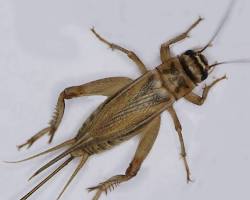
House Crickets (Acheta domesticus) are common, cosmopolitan insects known for the loud chirping songs produced by males during the night. Although often raised commercially as food for reptiles and other pets, house crickets are considered nuisance pests when they invade homes, commercial buildings, warehouses, and food storage areas. Their constant chirping, attraction to warmth, and tendency to hide in dark spaces make them particularly troublesome indoors.
House crickets are highly adaptable omnivores capable of feeding on a wide range of organic materials. While they rarely cause severe structural damage, they may chew on fabrics, paper products, leather, and food items. Their droppings, shed skins, and dead bodies can also contaminate surfaces and stored products. In many regions, infestations increase during cooler weather as crickets move indoors seeking warmth and moisture.
Quick Facts
- Common Name: House Cricket
- Scientific Name: Acheta domesticus
- Order: Orthoptera
- Main Conflict: Nocturnal chirping and indoor nuisance
- Diet: Omnivorous
- Habitat: Warm indoor spaces and sheltered outdoor areas
- Activity: Primarily nocturnal
- Distribution: Worldwide
Taxonomy and Classification
House crickets belong to the order Orthoptera, which also includes grasshoppers, katydids, and camel crickets.
Scientific Classification
- Kingdom: Animalia
- Phylum: Arthropoda
- Class: Insecta
- Order: Orthoptera
- Family: Gryllidae
- Species: Acheta domesticus
House crickets undergo incomplete metamorphosis, meaning they develop through:
- Egg
- Nymph
- Adult
Unlike butterflies or beetles, there is no pupal stage.
Physical Description
Adult house crickets are medium-sized insects with slender bodies and long antennae.
Appearance
- Yellowish-brown to tan coloration
- Three dark bands across the head
- Long thread-like antennae
- Large hind legs designed for jumping
- Two tail-like appendages called cerci
Adults typically measure:
- 3/4 to 1 inch long
Wings and Chirping
Male crickets produce chirping sounds through a process called:
- Stridulation
This occurs when the cricket rubs specialized structures on its wings together.
The chirping serves several purposes:
- Attracting females
- Territorial communication
- Warning rival males
Interestingly, the rate of chirping increases as temperatures rise.
Distribution and Habitat
House crickets are found worldwide and are strongly associated with human environments.
Outdoor Habitat
Outdoors they commonly inhabit:
- Mulch beds
- Wood piles
- Compost heaps
- Stone walls
- Trash piles
- Tall grass and weeds
Indoor Habitat
Indoors they prefer:
- Basements
- Boiler rooms
- Crawl spaces
- Utility rooms
- Garages
- Wall voids
Warmth, darkness, and moisture are critical factors that attract house crickets indoors.
Life Cycle
House crickets reproduce quickly in warm environments.
Egg Stage
Females lay eggs in:
- Moist soil
- Organic debris
- Cracks and crevices
A single female may lay hundreds of eggs during her lifetime.
Nymph Stage
After hatching, nymphs resemble miniature adults but lack fully developed wings.
Nymphs molt several times before adulthood.
Adult Stage
Adults become sexually mature within several weeks under warm conditions.
Indoor populations may continue reproducing year-round if temperatures remain favorable.
Behavior and Ecology
House crickets are primarily nocturnal and become most active after dark.
Feeding Behavior
These insects are opportunistic omnivores that feed on:
- Plant material
- Dead insects
- Food crumbs
- Paper products
- Fabric fibers
- Leather
- Pet food
They are especially attracted to items stained with:
- Sweat
- Grease
- Food residue
Activity Patterns
House crickets:
- Hide during the day
- Become active at night
- Jump rapidly when disturbed
- Use chirping for communication
Damage and Impact
The primary issue associated with house crickets is nuisance activity rather than severe destruction.
Nuisance Problems
- Loud nighttime chirping
- Indoor jumping insects
- Dead cricket accumulation
- Strong odors during large infestations
Persistent chirping can interfere with sleep and become extremely frustrating in residential settings.
Material Damage
House crickets may chew:
- Cotton fabrics
- Wool clothing
- Silk materials
- Paper products
- Wallpaper glue
- Stored foods
Food Contamination
Crickets can contaminate:
- Stored grains
- Pet food
- Kitchen surfaces
- Food packaging
Contamination occurs through droppings, body parts, and shed skins.
Signs of Infestation
Several signs may indicate a house cricket infestation.
Common Indicators
- Continuous chirping at night
- Visible crickets indoors
- Small dark droppings
- Chewed fabrics or paper
- Dead crickets near windows or lights
Infestations often become most noticeable during fall and winter when crickets migrate indoors.
Prevention and Control
Integrated pest management is highly effective against house crickets.
Exclusion
Prevent indoor entry by:
- Sealing cracks and gaps
- Installing door sweeps
- Repairing window screens
- Closing utility openings
Outdoor Sanitation
Reduce outdoor harborage by removing:
- Leaf piles
- Wood debris
- Tall weeds
- Excess mulch
Moisture Control
Reduce indoor humidity using:
- Dehumidifiers
- Improved ventilation
- Leak repairs
Traps and Baits
Effective control products include:
- Sticky traps
- Granular baits
- Gel baits
- Residual insecticides
Sticky traps work particularly well for monitoring indoor populations.
Interesting Facts
- Cricket chirping speed can estimate air temperature.
- Only male crickets chirp.
- House crickets are widely raised as reptile food.
- They cannot survive freezing temperatures outdoors.
- Crickets hear using organs located on their front legs.
Conservation and Research
Research involving house crickets focuses on:
- Commercial insect farming
- Protein production for animal feed
- Cricket bioacoustics
- Behavioral communication
- Urban pest management strategies
Scientists are also studying crickets as a sustainable alternative protein source for human food production in some regions.