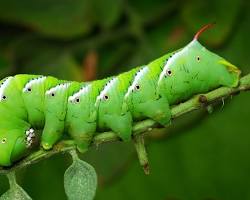
Hornworms is a general name commonly used for the large green caterpillars of two closely related sphinx moth species: the Tomato Hornworm (Manduca quinquemaculata) and the Tobacco Hornworm (Manduca sexta). These caterpillars are among the most destructive pests found in vegetable gardens and agricultural fields, especially on plants within the nightshade family (Solanaceae), including tomatoes, peppers, eggplants, potatoes, and tobacco.
Hornworms are notorious for their incredible feeding capacity and rapid growth. A single mature caterpillar can strip large amounts of foliage from a tomato plant in just a few days. Because their bright green coloration blends perfectly with plant leaves and stems, infestations often go unnoticed until severe defoliation has already occurred.
Despite their destructive larval stage, the adult moths are important nighttime pollinators. These large moths, often called hawk moths or sphinx moths, hover around flowers in a manner similar to hummingbirds while feeding on nectar.
Quick Facts
- Common Name: Hornworms
- Scientific Names: Manduca quinquemaculata, Manduca sexta
- Order: Lepidoptera
- Family: Sphingidae
- Main Hosts: Tomatoes, peppers, tobacco, potatoes, eggplants
- Damage: Severe defoliation and fruit feeding
- Adult Form: Sphinx or hawk moth
- Most Active: Summer growing season
Taxonomy and Classification
Hornworms belong to the family Sphingidae, commonly known as hawk moths or sphinx moths.
Scientific Classification
- Kingdom: Animalia
- Phylum: Arthropoda
- Class: Insecta
- Order: Lepidoptera
- Family: Sphingidae
- Genus: Manduca
The two primary species are:
- Tomato Hornworm — Manduca quinquemaculata
- Tobacco Hornworm — Manduca sexta
Both species undergo complete metamorphosis:
- Egg
- Larva (hornworm)
- Pupa
- Adult moth
Physical Description
Hornworms are among the largest caterpillars commonly encountered in gardens.
Larvae
- Bright green coloration
- Thick cylindrical body
- Grow up to 4 inches long
- Distinct horn at rear end
- Excellent camouflage among foliage
The horn itself is harmless and used mainly for identification.
Tomato Hornworm Identification
- White V-shaped markings along sides
- Dark blue or black horn
Tobacco Hornworm Identification
- Diagonal white stripes on sides
- Red or orange horn
Adult Moths
Adult hornworms become large hawk moths with:
- Gray-brown wings
- Heavy bodies
- Yellow-orange abdominal markings
- Rapid hovering flight
These moths are active primarily at night.
Distribution and Habitat
Hornworms are widespread across North and Central America.
- Tomato Hornworms are more common in northern regions
- Tobacco Hornworms dominate warmer southern climates
Their habitat is closely tied to host plants in the nightshade family.
Common Host Plants
- Tomatoes
- Tobacco
- Peppers
- Potatoes
- Eggplants
- Nightshade weeds
Hornworms are especially common in:
- Home vegetable gardens
- Commercial farms
- Greenhouses
- Urban raised beds
Life Cycle
Hornworms complete one or more generations each year depending on climate.
Egg Stage
Adult moths lay small green eggs individually on the undersides of leaves.
Eggs hatch within:
- 5–10 days
Larval Stage
After hatching, caterpillars feed aggressively for approximately:
- 3–4 weeks
During this stage they molt several times and rapidly increase in size.
Pupal Stage
Mature hornworms burrow into soil to pupate.
The pupae:
- Remain underground
- Overwinter in colder regions
- Produce adults in late spring or summer
Adult Stage
Adult hawk moths emerge and begin mating and egg-laying shortly afterward.
Behavior and Ecology
Hornworms are highly efficient herbivores capable of consuming massive quantities of foliage.
Feeding Behavior
Larvae typically feed:
- At night
- During cooler parts of the day
- Near upper plant growth
They consume:
- Leaves
- Flowers
- Stems
- Fruit surfaces
Camouflage
Their green coloration makes them extremely difficult to spot among tomato vines and foliage.
Many gardeners first notice:
- Defoliation
- Missing leaves
- Large droppings (frass)
Pollination Role
Adult sphinx moths are beneficial pollinators and help pollinate many night-blooming flowers.
Damage and Impact
Hornworms are among the most destructive garden caterpillars due to their size and feeding speed.
Plant Damage
- Rapid defoliation
- Destroyed foliage
- Chewed fruit
- Reduced crop production
- Plant stress
Small tomato plants may be stripped completely within days.
Economic Impact
In commercial agriculture, heavy infestations can:
- Reduce marketable yield
- Lower crop quality
- Increase pesticide costs
- Delay harvests
Signs of Infestation
Several signs help identify hornworm activity.
Common Indicators
- Large holes in leaves
- Missing foliage
- Chewed tomatoes or peppers
- Dark green or black frass pellets
- Visible green caterpillars on stems
Frass accumulation beneath plants is often the easiest way to locate hidden caterpillars.
UV Detection
Hornworms fluoresce under ultraviolet light.
Using a black light at night makes them much easier to locate during severe infestations.
Natural Enemies
Hornworms are attacked by several beneficial predators and parasitoids.
Braconid Wasps
One of the most important natural enemies is the Braconid Wasp (Cotesia congregata).
Parasitized hornworms display:
- White rice-like cocoons attached to the body
These hornworms should not be removed because the developing wasps help suppress future hornworm populations.
Other Predators
- Birds
- Predatory beetles
- Paper wasps
- Spiders
Prevention and Control
Hornworm management is highly effective using non-chemical methods.
Hand Removal
Hand-picking remains one of the best control methods.
- Inspect plants regularly
- Remove visible caterpillars
- Drop into soapy water
Biological Control
Organic control methods include:
- Bacillus thuringiensis var. kurstaki (Btk)
- Beneficial wasps
- Predatory insects
Btk works best against young caterpillars before they become large.
Garden Sanitation
- Remove plant debris
- Control nightshade weeds
- Rotate crops annually
- Till soil in fall or spring
Tilling exposes overwintering pupae to predators and weather.
Chemical Control
In severe infestations, insecticides labeled for caterpillar control may be used.
However, preserving beneficial insects is strongly recommended whenever possible.
Interesting Facts
- Hornworms can consume several times their body weight daily.
- Their horn is harmless despite intimidating appearance.
- Adult hawk moths hover like hummingbirds while feeding.
- Hornworms glow under ultraviolet light.
- They are among the largest garden caterpillars in North America.
Conservation and Research
Research on hornworms focuses on:
- Biological control methods
- Parasitoid wasp effectiveness
- Organic pest management
- Moth pollination ecology
- Integrated pest management strategies
Scientists also study hornworms extensively in laboratory research because of their large size and well-understood physiology.