Overview
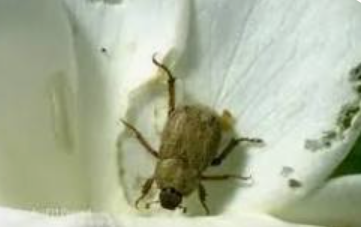
Hoplia beetles are small scarab beetles belonging to the genus Hoplia, within the family Scarabaeidae. These beetles are found in many regions around the world and are known for their dual-stage feeding behavior, with larvae feeding on roots and adults feeding on foliage and flowers. While often overlooked due to their size, Hoplia beetles can become pests in lawns, gardens, and agricultural systems when populations are high.
The larvae, commonly referred to as white grubs, live in soil and feed on plant roots, which can weaken or kill grasses and other plants. Adult beetles emerge during warm months and feed on leaves and flowers, sometimes causing visible damage to ornamental plants.
Although generally considered minor pests compared to larger scarab beetles, localized infestations can lead to noticeable plant stress and reduced aesthetic value.
Identification
Adult Hoplia beetles are small, usually under 1/2 inch in length, with oval-shaped bodies. They may appear brown, gray, or iridescent depending on species.
Larvae are typical scarab grubs: white, C-shaped, with a brown head and found in soil.
Habitat
These beetles are found in lawns, gardens, meadows, and agricultural fields. Larvae inhabit soil, while adults are found on vegetation.
They prefer environments with moist soil and abundant plant growth.
Behavior and Life Cycle
Females lay eggs in soil, where larvae hatch and begin feeding on roots. This stage may last several months depending on environmental conditions.
After pupation, adults emerge and feed on leaves, flowers, and other plant parts. Their activity is typically concentrated in late spring and early summer.
Most species complete one generation per year.
Damage and Impact
Larval feeding on roots can weaken plants, causing reduced growth, wilting, and in severe cases, plant death. Turfgrass may show patches of thinning or browning.
Adult feeding creates holes in leaves and may damage flowers, affecting ornamental plants.
While damage is often localized, infestations can become problematic in managed landscapes.
Prevention and Control
Maintaining healthy soil and proper irrigation can reduce susceptibility to larval damage. Monitoring adult populations can help detect infestations early.
Encouraging natural predators such as birds and beneficial insects can help control populations.
Taxonomy
- Kingdom: Animalia
- Phylum: Arthropoda
- Class: Insecta
- Order: Coleoptera
- Family: Scarabaeidae
- Genus: Hoplia