Overview
Hop loopers are caterpillar pests belonging primarily to moth species within the family Noctuidae, a large group that includes many agriculturally significant defoliators. These larvae are commonly associated with hop plants (Humulus lupulus) but may also feed on a variety of other herbaceous crops. Their importance lies in their ability to rapidly consume leaf tissue, reducing photosynthetic capacity and ultimately affecting plant growth and yield.
The term “looper” refers to their distinctive method of locomotion. Unlike most caterpillars, loopers have fewer prolegs, causing them to move in an arching, looping motion as they bring their hind end forward and then extend their body. This movement is a key identifying feature and often the first clue growers notice when scouting crops.
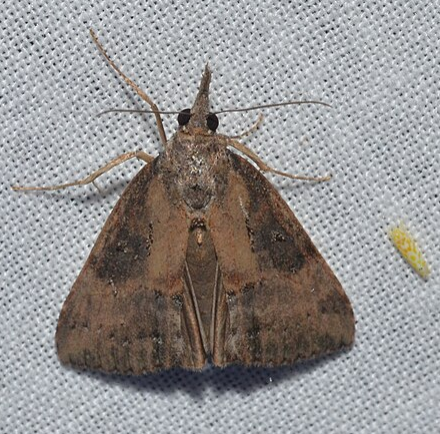
Hop loopers are particularly problematic in commercial hop production, where consistent leaf health is essential for proper cone development. Even moderate infestations can weaken plants, while severe outbreaks may lead to substantial yield losses.
Identification
Hop looper larvae are typically green and slender, allowing them to blend seamlessly with plant foliage. They often have faint white or yellow striping along the body. Mature larvae can reach lengths of 1–1.5 inches.
Adult moths are generally brown or gray with subtle wing patterns. They are nocturnal and are rarely observed during daylight hours.
Damage is often the most visible sign of infestation, with irregular holes appearing in leaves and edges becoming ragged from feeding.
Habitat
Hop loopers are found in hop yards, agricultural fields, and gardens where host plants are available. They thrive in warm, temperate climates and are most active during the growing season.
Eggs are typically laid on the underside of leaves, where larvae can begin feeding immediately upon hatching.
Behavior and Life Cycle
Female moths deposit eggs individually or in small groups on host plants. After hatching, larvae begin feeding on leaf tissue and pass through several instars (developmental stages).
As larvae grow, their feeding intensity increases, often resulting in significant defoliation. After completing development, they pupate either in plant debris or in the soil.
Multiple generations may occur in a single season, particularly in warmer climates, allowing populations to build rapidly if not controlled.
Damage and Agricultural Impact
Hop loopers are primarily defoliators, consuming large amounts of leaf tissue. This reduces the plant’s ability to photosynthesize, weakening growth and limiting energy available for cone production.
In severe infestations, entire sections of foliage may be stripped, leading to reduced yields and lower-quality harvests. Secondary effects include increased plant stress and susceptibility to disease.
In commercial operations, infestations can result in economic losses due to decreased productivity and increased management costs.
Prevention and Control
Early detection is critical. Regular scouting of leaves for eggs and young larvae allows for timely intervention.
Biological control agents such as parasitic wasps and predatory insects can help suppress populations. Maintaining biodiversity in and around hop fields supports these natural enemies.
Cultural practices such as removing plant debris and rotating crops can reduce overwintering populations.
Taxonomy
- Kingdom: Animalia
- Phylum: Arthropoda
- Class: Insecta
- Order: Lepidoptera
- Family: Noctuidae