Hog Lice
Meta Description: Hog lice infest swine and cause irritation and reduced productivity. Learn how to identify infestations and protect livestock. These lice are species-specific and cannot infect humans.
Overview
Hog lice (Haematopinus suis) are parasitic insects that infest domestic pigs and wild swine. They are among the largest species of lice affecting livestock and are significant pests in swine production systems. These lice feed on the blood of their host, causing irritation, stress, and potential health issues.
Hog lice are obligate parasites, meaning they spend their entire life cycle on the host animal. They are highly adapted to this lifestyle, with specialized claws for gripping hair and mouthparts designed for piercing skin and feeding on blood.
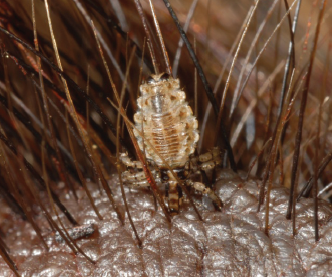
Infestations are more common in crowded or unsanitary conditions, where lice can spread easily between animals. They are particularly problematic in colder months, when animals are in closer contact and grooming behaviors are reduced.
Identification
Hog lice are large compared to other lice, measuring up to 1/4 inch in length. They are grayish-brown and can often be seen moving on the skin of infested animals.
Eggs, or nits, are attached to hair shafts and may be visible upon close inspection.
Habitat
These lice live exclusively on pigs and are commonly found on the neck, shoulders, and flanks. They prefer areas where hair is dense and the skin is accessible.
Behavior and Life Cycle
Female lice lay eggs on the host’s hair. Nymphs hatch and begin feeding immediately, developing through several stages before becoming adults.
The entire life cycle occurs on the host, and lice cannot survive long off the animal.
Damage and Impact
Infestations cause itching, skin irritation, and stress. Severe infestations may lead to anemia, reduced weight gain, and decreased productivity.
Scratching and rubbing may also lead to secondary infections.
Prevention and Control
Regular inspection and treatment of animals are essential. Maintaining clean housing and reducing overcrowding can help prevent infestations.
Taxonomy
- Kingdom: Animalia
- Phylum: Arthropoda
- Class: Insecta
- Order: Phthiraptera
- Family: Haematopinidae
- Species: Haematopinus suis