Overview
Hippoboscid louse flies, commonly referred to as louse flies, keds, or hippoboscid flies, are obligate ectoparasites belonging to the family Hippoboscidae. These insects are unique among flies due to their highly specialized parasitic lifestyle, feeding exclusively on the blood of birds and mammals. They are found worldwide and are commonly associated with livestock, wildlife, and occasionally domestic animals.
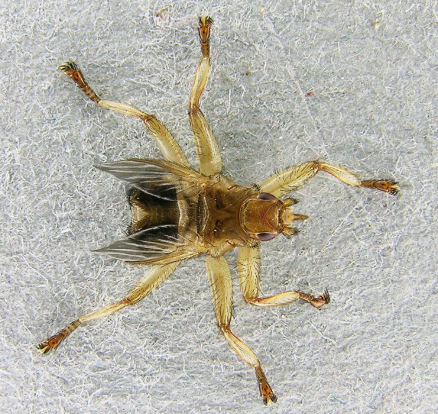
Unlike many flies that are free-living or only briefly parasitic, hippoboscid flies spend most or all of their adult life on a host. Their bodies are flattened and leathery, allowing them to move easily through fur or feathers while resisting removal. Some species retain functional wings, while others lose them after locating a host, making them even more adapted to a permanent parasitic existence.
These insects are important from both veterinary and ecological perspectives. While they rarely cause severe harm in small numbers, heavy infestations can lead to irritation, stress, reduced weight gain in livestock, and potential transmission of pathogens.
Identification
Hippoboscid flies are small to medium-sized, typically ranging from 2–10 mm in length. They have a flattened body, strong legs with claws for gripping, and a tough, leathery appearance.
Coloration is usually brown or tan. Some species have wings, while others are wingless. Their spider-like movement and flattened bodies can make them appear unusual compared to typical flies.
Habitat
These parasites are found directly on hosts such as birds, deer, sheep, and other mammals. They are rarely found off-host except during brief periods of host transfer or reproduction.
Common environments include forests, farms, and areas where wildlife or livestock are present.
Behavior and Life Cycle
Hippoboscid flies exhibit a unique reproductive strategy known as adenotrophic viviparity. Instead of laying eggs, females retain larvae internally and nourish them until they are ready to pupate. The larva is then deposited in the environment, where it quickly forms a puparium.
Adults emerge and seek a host, where they will spend the remainder of their lives feeding on blood. Their mouthparts are adapted for piercing skin and extracting blood.
Some species are highly host-specific, while others may feed on a range of animals.
Impact
Infestations can cause irritation, stress, and reduced productivity in livestock. In wildlife, they may contribute to disease transmission and overall health decline.
While they may occasionally bite humans, they are not considered major human pests.
Prevention and Control
Managing infestations involves treating host animals and maintaining clean living conditions. Monitoring livestock and reducing contact with infested wildlife can help limit spread.
Taxonomy
- Kingdom: Animalia
- Phylum: Arthropoda
- Class: Insecta
- Order: Diptera
- Family: Hippoboscidae