Overview
The hickory shoot curculio (Conotrachelus aratus) is a specialized weevil that targets hickory trees, particularly affecting developing shoots and nuts. As a member of the family Curculionidae, this insect shares many characteristics with other snout beetles, including a distinctive elongated rostrum used for feeding and egg-laying. Although not as widely recognized as some major agricultural pests, the hickory shoot curculio can significantly impact nut production and tree vigor when populations are high.
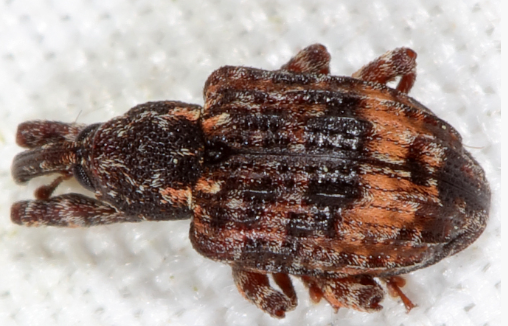
This pest is most commonly encountered in forests, orchards, and landscapes where hickory trees are present. Its activity is closely tied to the seasonal development of its host, with peak damage occurring during periods of active shoot and nut growth. Because of its relatively hidden life cycle, infestations may go unnoticed until visible damage appears.
Hickory shoot curculios play a minor ecological role in natural forests, but in managed environments or nut production systems, their presence can be more problematic.
Identification
Adult curculios are small, brownish beetles with a pronounced snout. They are typically less than 1/2 inch long and may have mottled coloration that helps them blend into bark and foliage.
Larvae are legless, white grubs found within plant tissues, particularly in shoots or developing nuts.
Habitat
These insects are found in areas where hickory trees grow, including forests, orchards, and residential landscapes.
They are closely associated with host trees and are rarely found far from them.
Behavior and Life Cycle
Adult females use their snouts to bore into shoots or nuts, where they lay eggs. After hatching, larvae feed internally, damaging plant tissues.
Larvae eventually exit the plant material and pupate in the soil. Adults emerge to continue the cycle.
Damage and Impact
Damage includes wilted or dying shoots, deformed growth, and damaged nuts. Infestations can reduce nut yields and weaken trees.
While typically not fatal to mature trees, repeated infestations may reduce overall tree health.
Prevention and Control
Monitoring trees and removing infested material can help reduce populations. Maintaining tree health improves resistance.
Taxonomy
- Kingdom: Animalia
- Phylum: Arthropoda
- Class: Insecta
- Order: Coleoptera
- Family: Curculionidae
- Genus: Conotrachelus