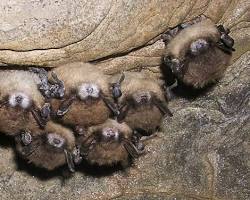
Hibernating Bats are highly beneficial flying mammals that occasionally become the focus of wildlife management concerns when they choose human-made structures as seasonal hibernation sites. Although bats are not considered pests in the traditional sense, their presence inside attics, barns, sheds, chimneys, and wall voids can create sanitation problems and raise public health concerns.
During winter, many bat species enter a state of deep torpor known as hibernation. In this state, their body temperature, breathing rate, and metabolism decrease dramatically, allowing them to survive long periods when insects are unavailable. Structures that provide cool, dark, stable conditions often become substitute hibernation sites, known as hibernacula.
Despite the concerns associated with indoor colonies, bats are ecologically essential animals that consume enormous numbers of insects every night, including:
- Mosquitoes
- Moths
- Beetles
- Crop pests
- Flying agricultural insects
Most native North American bat species are legally protected, and humane exclusion methods are required whenever conflicts occur.
Quick Facts
- Common Name: Hibernating Bats
- Order: Chiroptera
- Main Conflict: Guano buildup and structural occupation
- Diet: Primarily insects
- Activity: Nocturnal
- Protection Status: Protected wildlife in many regions
- Primary Risk: Rabies exposure and Histoplasmosis concerns
- Common Entry Gap: As small as 1/2 inch
Taxonomy and Classification
Bats belong to the order:
- Chiroptera
which means “hand-wing.”
They are the only mammals capable of sustained powered flight.
Scientific Classification
- Kingdom: Animalia
- Phylum: Chordata
- Class: Mammalia
- Order: Chiroptera
The bat species most commonly encountered in structures include:
- Little Brown Bat (Myotis lucifugus)
- Big Brown Bat (Eptesicus fuscus)
- Mexican Free-tailed Bat (Tadarida brasiliensis)
Different species may use buildings for:
- Maternity colonies
- Temporary roosting
- Seasonal migration stops
- Winter hibernation
Physical Description
Bats are small mammals covered in fur with wings formed from thin membranes stretched between elongated finger bones.
Appearance
Most common structural bats are:
- Dark brown
- Gray-brown
- Reddish-brown
depending on species and age.
Size
Most common house-roosting bats have:
- Body lengths of 3 to 5 inches
- Wingspans between 8 and 14 inches
Wing Structure
Bat wings are flexible skin membranes supported by elongated fingers, allowing highly maneuverable flight.
Echolocation
Most insect-eating bats use echolocation to navigate and locate prey in darkness.
They emit ultrasonic sounds and interpret returning echoes to:
- Avoid obstacles
- Locate insects
- Navigate tight spaces
Hibernation Behavior
Hibernation allows bats to survive winter when insect prey becomes scarce.
Torpor
During hibernation:
- Heart rate drops dramatically
- Body temperature decreases
- Breathing slows significantly
- Energy use becomes minimal
This state conserves fat reserves accumulated during warmer months.
Preferred Hibernation Sites
Bats seek locations that are:
- Cool
- Dark
- Humid
- Protected from predators
- Temperature stable
Common hibernation sites include:
- Caves
- Mines
- Attics
- Wall voids
- Basements
- Barns
- Chimneys
Winter Activity
Although hibernating, bats occasionally awaken during warm spells or disturbances.
Indoor sightings during winter often occur when bats accidentally enter heated living spaces.
Distribution and Habitat
Bats are found worldwide except in extremely cold polar regions.
North American Distribution
Numerous bat species occur throughout:
- The United States
- Canada
- Mexico
Structural Habitat
Human structures provide artificial substitutes for natural caves and hollow trees.
Common bat entry locations include:
- Roof gaps
- Loose siding
- Soffits
- Chimney gaps
- Roof vents
- Utility penetrations
Bats can enter through openings as small as:
- 1/2 inch wide
Life Cycle
Bats reproduce slowly compared to rodents and many pest species.
Mating
Mating often occurs in late summer or autumn before hibernation.
Delayed Fertilization
Some bat species store sperm during winter, with fertilization occurring in spring after hibernation ends.
Birth
Most species produce:
- Only one pup per year
occasionally twins.
Maternity Colonies
Female bats gather in warm roosts during spring and summer to raise young.
Young bats are flightless for several weeks.
Behavior and Conflict
Conflicts arise primarily when bats occupy buildings in large numbers.
Guano Accumulation
Bat droppings, known as:
- Guano
can accumulate beneath roosting sites.
Guano appears as:
- Dark pellets
- Dry droppings
- Crumbly material containing insect fragments
Odor and Staining
Large colonies may produce:
- Strong odors
- Urine staining
- Insulation contamination
- Ceiling discoloration
Noise
Scratching, squeaking, and movement noises may be heard:
- Inside walls
- In attics
- Near ceilings
Public Health Concerns
Although most bats are harmless, several health risks exist.
Rabies
A small percentage of bats may carry rabies.
People should:
- Never handle bats directly
- Avoid grounded bats
- Seek medical guidance after contact
Histoplasmosis
Bat guano can support fungal growth associated with:
- Histoplasmosis
a respiratory disease caused by inhaling fungal spores during cleanup or disturbance of contaminated material.
Signs of Bat Activity
- Guano accumulation
- Chirping or scratching sounds
- Staining near entry points
- Strong musky odors
- Bats emerging at dusk
- Grease marks near openings
Grease Marks
Repeated entry and exit can leave dark oily stains around openings from body oils and fur contact.
Prevention and Control
Bat management must always prioritize humane exclusion and legal compliance.
Timing Is Critical
Exclusion should never occur during:
- Maternity season (typically May–August)
- Winter hibernation periods
Improper exclusion can trap:
- Flightless pups
- Hibernating bats
inside structures.
One-Way Exclusion Devices
Professional wildlife specialists install:
- One-way bat valves
- Exclusion tubes
- Netting systems
that allow bats to exit but prevent reentry.
Sealing Entry Points
After bats leave, all openings should be sealed using:
- Hardware cloth
- Metal flashing
- Caulk
- Sealants
Guano Cleanup
Large guano accumulations should be removed by trained professionals using:
- Respirators
- Protective suits
- HEPA filtration equipment
Improper cleanup can aerosolize dangerous fungal spores.
Bat Houses
Installing outdoor bat houses may encourage colonies to relocate away from buildings while still supporting local bat populations.
Ecological Importance
Bats provide major environmental benefits.
Natural Pest Control
A single bat may consume hundreds or thousands of insects nightly.
This helps reduce:
- Mosquito populations
- Agricultural pests
- Flying nuisance insects
Pollination and Seed Dispersal
Some tropical bat species also pollinate plants and disperse seeds.
White-Nose Syndrome
One of the greatest threats to North American bats is:
- White-Nose Syndrome (WNS)
a devastating fungal disease affecting hibernating bats.
Symptoms of WNS
- White fungal growth on the muzzle
- Frequent winter awakening
- Rapid fat depletion
- Mass mortality in caves
Millions of bats have died from this disease since its discovery.
Interesting Facts
- Bats are the only mammals capable of sustained flight.
- Some bats can live over 30 years.
- Most North American bats eat insects rather than blood.
- Bats use echolocation to hunt in complete darkness.
- They can squeeze through openings smaller than many people expect.
- Bat guano was historically used as fertilizer.
Conservation and Research
Bats are among the most ecologically important mammals in North America.
Current research focuses on:
- White-Nose Syndrome treatment
- Population monitoring
- Habitat conservation
- Humane exclusion methods
- Urban bat ecology
- Disease prevention
Wildlife experts continue working to balance bat conservation with safe human living environments.