Overview
Hepialid ghost moths belong to the family Hepialidae, a group of primitive moths known for their distinctive life cycles and behaviors. These moths are found worldwide and are often associated with grasslands, forests, and agricultural areas. Their larvae, commonly referred to as “swift moth larvae,” live underground and feed on plant roots, making them potential pests in certain situations.
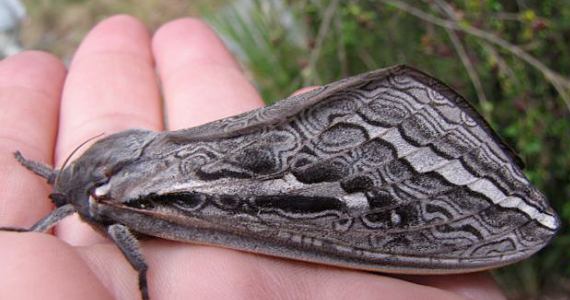
The name “ghost moth” comes from the pale coloration and hovering flight of some species, particularly during mating displays at dusk. Males of certain species are known for their unique flight patterns, which can appear almost ghost-like in low light.
While adult moths do not feed and live only briefly, their larval stage can last several years, during which they feed on roots and organic matter in the soil.
Identification
Adult ghost moths are medium-sized with pale or muted coloration. Their wings are often narrow, and they have a relatively simple wing structure compared to more advanced moths.
Larvae are grub-like and live underground, making them difficult to observe directly.
Habitat
These moths are found in a variety of habitats, including grasslands, forests, and agricultural fields. Larvae inhabit soil and root zones.
Behavior and Life Cycle
Females lay eggs on or near the soil surface. Larvae burrow into the soil and feed on roots or organic matter.
The larval stage can last several years before pupation and emergence as adults.
Impact
In most cases, ghost moths have minimal impact. However, heavy larval populations can damage plant roots and affect crop health.
Prevention and Control
Maintaining healthy soil and monitoring for signs of root damage can help manage populations.
Taxonomy
- Kingdom: Animalia
- Phylum: Arthropoda
- Class: Insecta
- Order: Lepidoptera
- Family: Hepialidae