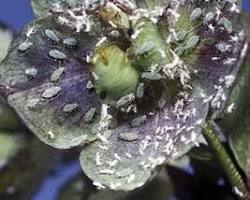
Hellebore Aphids (Macrosiphum hellebori) are specialized sap-feeding insects that infest plants in the genus Helleborus, commonly known as Christmas Roses or Lenten Roses. These aphids are highly adapted to hellebore plants and are most active during late winter and early spring when new foliage and flower stalks begin developing.
Although relatively small, Hellebore Aphids can cause significant ornamental damage by clustering densely on flower buds, stems, and emerging leaves. Their feeding weakens plants, distorts flowers, and leaves behind sticky honeydew that encourages the development of black sooty mold. In severe infestations, flowering performance and overall plant vigor may decline substantially.
These pests are especially problematic in:
- Shade gardens
- Perennial borders
- Woodland landscapes
- Nurseries
- Container-grown hellebores
because hellebores are prized ornamental plants valued for their winter and early spring blooms.
Quick Facts
- Common Name: Hellebore Aphid
- Scientific Name: Macrosiphum hellebori
- Order: Hemiptera
- Family: Aphididae
- Main Hosts: Hellebores (Helleborus spp.)
- Primary Damage: Distorted flowers and foliage
- Feeding Type: Sap-feeding
- Distribution: Worldwide where hellebores are cultivated
Taxonomy and Classification
Hellebore Aphids belong to the true bug order:
- Hemiptera
and the aphid family:
- Aphididae
They are members of the genus:
- Macrosiphum
which contains many medium to large aphid species that specialize on ornamental and agricultural plants.
Scientific Classification
- Kingdom: Animalia
- Phylum: Arthropoda
- Class: Insecta
- Order: Hemiptera
- Family: Aphididae
- Genus: Macrosiphum
- Species: Macrosiphum hellebori
Unlike migratory aphid species that alternate between unrelated host plants, Hellebore Aphids spend their entire life cycle on hellebore plants.
Physical Description
Hellebore Aphids are medium-sized aphids measuring approximately:
- 1/8 inch long
Adult Appearance
Adults are soft-bodied and pear-shaped with:
- Pale green coloration
- Yellow-green tones
- Grayish appearance from waxy coating
- Long antennae
- Slender legs
Dense colonies often give infested stems a dusty or gray appearance.
Cornicles
Like other aphids, they possess paired tube-like structures called:
- cornicles
on the rear of the abdomen.
These structures release defensive secretions when the aphids are disturbed.
Nymphs
Immature aphids resemble smaller versions of adults and begin feeding immediately after birth.
They gather in dense colonies around:
- Flower stalks
- Leaf stems
- Buds
- Tender foliage
Distribution and Habitat
Hellebore Aphids are found wherever hellebores are cultivated.
Preferred Habitat
They thrive in:
- Cool-season gardens
- Shaded landscapes
- Woodland plantings
- Moist perennial beds
- Protected nursery environments
Host Plants
Their host range is highly specialized and includes:
- Helleborus orientalis
- Helleborus niger
- Helleborus foetidus
- Helleborus hybridus
This strict host preference makes them easier to manage compared to highly mobile aphid species.
Life Cycle
Hellebore Aphids undergo incomplete metamorphosis.
Winter Survival
These aphids survive cold conditions by remaining associated with evergreen hellebore foliage during winter.
Mild winter temperatures allow populations to remain active earlier than many other garden pests.
Spring Population Growth
As hellebores produce:
- New leaves
- Flower stems
- Buds
aphid populations increase rapidly.
Asexual Reproduction
Most reproduction occurs through:
- parthenogenesis
meaning females give birth to live young without mating.
This allows explosive population growth within a short time.
Multiple Generations
Several overlapping generations may occur during the growing season, especially in cool and moist environments.
Damage and Impact
Hellebore Aphids damage plants primarily through sap extraction.
Flower Damage
The most serious damage occurs when colonies feed on:
- Developing flower buds
- Flower stems
- Emerging blooms
This may result in:
- Twisted flowers
- Distorted buds
- Failure to open
- Reduced bloom quality
Leaf Distortion
Feeding on foliage can cause:
- Curling leaves
- Stunted growth
- Yellowing
- Reduced vigor
Honeydew Production
As aphids feed, they excrete:
- honeydew
a sticky sugary waste product that coats nearby surfaces.
Sooty Mold
Honeydew promotes the growth of:
- sooty mold
which appears as a black fungal coating on leaves and stems.
This fungus interferes with:
- Photosynthesis
- Plant appearance
- Overall vigor
Signs of Infestation
Several symptoms indicate Hellebore Aphid activity.
Visible Colonies
Large groups of aphids are commonly found on:
- Flower stalks
- Leaf undersides
- Buds
- Stem joints
Plant Symptoms
- Twisted blooms
- Curled foliage
- Sticky residue
- Black mold growth
- Weak plant growth
Ant Activity
Ants are frequently attracted to the honeydew and may protect aphid colonies from predators.
Behavior and Feeding Habits
Hellebore Aphids are highly specialized feeders that concentrate on nutrient-rich growth.
Preferred Feeding Areas
They target:
- Tender stems
- Developing buds
- Young leaves
where sap flow is strongest.
Colony Formation
Aphids cluster densely together, creating heavy localized feeding pressure.
These colonies expand rapidly under favorable conditions.
Early-Season Activity
Unlike many insects that become active later in spring, Hellebore Aphids often begin feeding in:
- Late winter
- Early spring
before beneficial insect populations become established.
Prevention and Control
Integrated Pest Management (IPM) strategies provide the most effective control.
Regular Monitoring
Inspect hellebores frequently beginning in late winter.
Pay special attention to:
- Flower buds
- Stem joints
- Leaf undersides
Pruning
Remove heavily infested:
- Flower stems
- Leaves
- Bud clusters
to reduce populations quickly.
Water Sprays
Strong streams of water can dislodge aphids effectively.
Because aphids are weak crawlers, many fail to return to the plant.
Insecticidal Soap
Insecticidal soaps work well against soft-bodied aphids when applied thoroughly.
Coverage is critical because soaps kill through direct contact.
Horticultural Oils
Narrow-range horticultural oils help smother:
- Nymphs
- Adults
- Eggs
while remaining relatively safe for beneficial insects.
Biological Control
Natural predators often help suppress populations later in spring.
Beneficial insects include:
- Lady beetles
- Lacewings
- Hoverfly larvae
- Parasitic wasps
Interesting Facts
- Hellebore Aphids feed almost exclusively on hellebore plants.
- They are most active during late winter and early spring.
- Dense colonies may completely cover flower stems.
- Honeydew from aphids encourages black fungal growth.
- Many infestations begin before gardeners notice spring growth.
Conservation and Research
Hellebore Aphids are primarily managed as ornamental garden pests.
Research focuses on:
- Biological control strategies
- Reduced pesticide use
- Early-season predator activity
- Integrated ornamental pest management
- Host plant resistance
Because hellebores are increasingly popular in ornamental horticulture, sustainable management practices continue to receive growing attention.