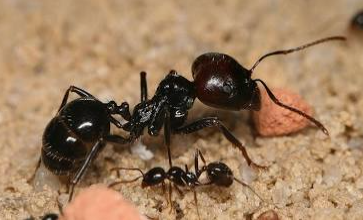
Harvester Ants are a diverse group of seed-collecting ants found throughout North America, South America, Africa, Europe, and Asia. These ants are best known for gathering, transporting, and storing seeds within underground chambers, earning them their common name. While Harvester Ants play an important ecological role in seed dispersal and soil improvement, they can also become nuisance pests in agricultural areas, rangelands, and residential landscapes where their large colonies and painful stings create concerns for humans and livestock.
Among the most recognizable species in the United States are the Red Harvester Ant (Pogonomyrmex barbatus) and several related species found throughout the arid and semi-arid regions of the Southwest. Their large, bare nest mounds and active foraging trails make them easy to identify in natural habitats. Despite their reputation as aggressive ants, Harvester Ants are valuable components of many ecosystems and contribute significantly to nutrient cycling and plant distribution.
Taxonomy and Classification
Harvester Ants belong to the family Formicidae and are distributed among several genera worldwide.
- Order: Hymenoptera
- Family: Formicidae
- Genera: Pogonomyrmex, Messor, Pheidole, and others
- Common Name: Harvester Ants
The evolutionary history of Harvester Ants extends back millions of years. Fossil evidence suggests that seed-harvesting behavior became highly specialized as grasslands and arid ecosystems expanded during the Miocene Epoch. Today, numerous species occupy ecological niches ranging from deserts to grasslands and Mediterranean climates.
Identification
Harvester Ants vary considerably in size and coloration depending on species.
Workers
- Size: 4–12 mm long.
- Color: Red, reddish-brown, black, or combinations of these colors.
- Body: Robust with large heads and powerful mandibles.
- Distinctive Feature: Many species possess a beard-like collection of hairs beneath the head used to carry seeds.
Queens
- Significantly larger than workers.
- Winged before mating flights.
- Capable of founding new colonies independently.
Nests
- Large soil mounds.
- Bare circular areas surrounding entrances.
- Multiple underground chambers.
- Visible foraging trails radiating from the colony.
The cleared vegetation around the nest entrance is often one of the easiest ways to identify Harvester Ant colonies.
Distribution and Habitat
Harvester Ants occur across multiple continents and occupy a variety of habitats.
- Deserts
- Grasslands
- Savannas
- Shrublands
- Open woodlands
- Agricultural fields
- Roadsides
- Rangelands
In the United States, they are especially common throughout Arizona, New Mexico, Texas, Nevada, and other western states where dry conditions favor their nesting behavior.
Life Cycle
Harvester Ants undergo complete metamorphosis.
- Egg Stage: The queen lays eggs within protected underground chambers.
- Larval Stage: Workers feed developing larvae with processed seeds and other food.
- Pupal Stage: Larvae transform into pupae before emerging as adults.
- Adult Stage: Workers assume colony maintenance, defense, and foraging duties.
Established colonies may survive for decades and contain thousands of workers.
Behavior and Ecology
Harvester Ants are most famous for their seed-gathering activities. Workers leave the nest daily to collect seeds from surrounding vegetation and transport them back to underground storage chambers.
Once collected, seeds are:
- Stored in subterranean granaries.
- Protected from moisture and mold.
- Processed for colony consumption.
- Used as a year-round food source.
Many species also consume insects, dead arthropods, nectar, and plant material when available.
Colonies maintain extensive tunnel systems containing specialized chambers for:
- Brood rearing.
- Food storage.
- Waste disposal.
- Queen protection.
The complexity of these underground structures demonstrates the remarkable engineering abilities of social insects.
Ecological Importance
Harvester Ants provide several important ecosystem services.
- Seed Dispersal: Transport seeds to new locations.
- Soil Aeration: Improve soil structure through excavation.
- Nutrient Cycling: Redistribute organic matter.
- Predation: Consume small insects and arthropods.
- Food Source: Support birds, reptiles, mammals, and other wildlife.
Their activities influence plant community composition and overall ecosystem health.
Interaction with Humans
Harvester Ants have both beneficial and negative impacts on human activities.
Benefits
- Natural seed dispersers.
- Soil improvement.
- Predation of some pest insects.
- Educational value in ecological research.
Problems
- Crop seed consumption.
- Landscape disturbance.
- Painful stings.
- Nest construction in recreational areas.
Large colonies near homes, schools, parks, or livestock facilities may create safety concerns due to their defensive behavior.
Stings and Medical Importance
Many Harvester Ant species possess potent venom delivered through a painful sting.
Common symptoms include:
- Immediate burning pain.
- Localized swelling.
- Redness.
- Itching.
- Small pustules in some individuals.
Although most reactions remain localized, sensitive individuals may experience severe allergic responses requiring medical attention.
The venom of some Pogonomyrmex species ranks among the most painful insect stings in North America.
Signs of Infestation
Common indicators include:
- Large soil mounds.
- Bare circular areas around nests.
- Visible worker trails.
- Seed husks near nest entrances.
- Active daytime foraging.
Colonies are particularly active during warm weather and are often most visible during morning and evening hours.
Management and Prevention
Management depends on the location of the colony and the level of human activity nearby.
Cultural Controls
- Reduce food sources.
- Maintain vegetation around structures.
- Monitor nest development.
- Avoid disturbing established colonies unnecessarily.
Physical Control
- Remove colonies from high-traffic areas.
- Modify landscaping to discourage nesting.
- Use barriers where appropriate.
Chemical Control
- Apply approved ant baits.
- Use mound treatments when necessary.
- Follow all product label directions.
Chemical treatments are generally reserved for colonies posing significant risks to people, pets, or agricultural operations.
Conservation and Research
The conservation status of Harvester Ants varies among species. While many remain common and widespread, some populations face threats from habitat destruction, urban development, invasive species, and agricultural intensification.
Researchers continue studying Harvester Ants because they provide valuable insights into:
- Social insect behavior.
- Colony organization.
- Foraging ecology.
- Seed dispersal mechanisms.
- Ecosystem engineering.
- Evolution of cooperative societies.
Harvester Ants remain among the most fascinating and ecologically significant ants in the world. Their remarkable seed-harvesting behavior, complex social organization, and important role in natural ecosystems make them valuable subjects of both scientific research and public interest.