Overview
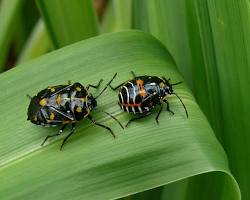
Harlequin bugs (Murgantia histrionica) are strikingly colored stink bugs that are considered serious pests of cruciferous crops such as cabbage, broccoli, kale, and mustard greens. Native to Central America but now widespread across much of North America, these insects are easily recognized by their bold black, orange, and yellow patterns. Despite their attractive appearance, harlequin bugs are destructive agricultural pests that can significantly impact crop yields.
They belong to the family Pentatomidae, the same group as other stink bugs, and share similar feeding habits. Using piercing-sucking mouthparts, they extract sap from plant tissues, causing damage that can stunt growth, deform leaves, and reduce overall plant health. Their feeding also introduces toxins that can exacerbate plant damage.
Harlequin bugs are particularly problematic in warm climates, where they can reproduce rapidly and produce multiple generations per year. Without proper management, populations can build quickly and overwhelm crops.
Identification
Adult harlequin bugs are shield-shaped and measure about 3/8 inch long. Their coloration is distinctive, with bright orange or red markings outlined in black, often forming symmetrical patterns.
Nymphs are smaller and may appear more rounded, with similar coloration but less defined markings.
Habitat
These bugs are commonly found in vegetable gardens, agricultural fields, and areas where cruciferous plants are grown. They prefer warm environments and are most active during the growing season.
Behavior and Damage
Harlequin bugs feed on plant sap, causing discoloration, wilting, and deformation of leaves. Heavy infestations can kill young plants or significantly reduce crop quality.
They tend to congregate in groups, which can amplify their impact on plants.
Impact
Harlequin bugs are major pests of cruciferous crops and can cause economic losses for growers.
Prevention and Control
Regular monitoring, removal of infested plants, and crop rotation can help manage populations. Encouraging natural predators may also reduce infestations.
Taxonomy
- Kingdom: Animalia
- Phylum: Arthropoda
- Class: Insecta
- Order: Hemiptera
- Family: Pentatomidae