Overview
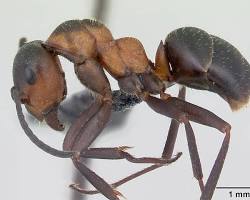
Hairy Wood Ants are a group of forest-dwelling ants belonging primarily to the genus Formica. These ants are well known for their large mound nests, aggressive colony defense, and important ecological role within woodland ecosystems. Their bodies are covered with fine hairs, giving them a slightly fuzzy appearance that helps distinguish them from smoother-bodied ant species.
Hairy wood ants are considered some of the dominant predatory insects in many forest environments. They actively hunt other insects, scavenge dead organisms, and help regulate populations of forest pests. In healthy ecosystems, they are highly beneficial and contribute significantly to nutrient recycling and ecological balance.
Although generally beneficial, hairy wood ants can occasionally become nuisance pests when colonies develop near homes, trails, campsites, or landscaped areas. Their large populations, painful bites, and aggressive defensive behavior may create problems for people working or recreating near active nests.
These ants are particularly famous for constructing large mound nests made from soil, pine needles, leaves, twigs, bark fragments, and other forest debris. Some colonies may persist for decades and contain hundreds of thousands of workers.
Hairy wood ants are common in cooler temperate forests throughout North America, Europe, and parts of Asia. They are especially associated with conifer forests, woodland edges, and sunny clearings where they can efficiently regulate nest temperatures.
Quick Facts
- Common Name: Hairy Wood Ants
- Scientific Group: Formica species
- Order: Hymenoptera
- Family: Formicidae
- Main Habitat: Forests and woodlands
- Diet: Predatory and scavenging
- Nest Type: Large debris mounds
- Ecological Role: Beneficial predator
Taxonomy and Classification
Hairy wood ants belong to the ant family Formicidae, one of the most successful insect groups on Earth.
- Kingdom: Animalia
- Phylum: Arthropoda
- Class: Insecta
- Order: Hymenoptera
- Family: Formicidae
- Genus: Formica
Many species referred to as hairy wood ants belong to the Formica rufa group, especially in Europe. North American species may vary but share similar ecological roles and behaviors.
Unlike carpenter ants, which often nest inside wood, hairy wood ants usually build external mound nests above ground.
Identification
Hairy wood ants are medium to large ants with elongated bodies and noticeable body hairs.
Coloration
Depending on species, coloration may include:
- Black
- Dark brown
- Reddish-brown
- Rust-red thoraxes
Many species display contrasting red and black coloration.
Body Features
- Fine hairs covering the body
- Strong mandibles
- Long legs for rapid movement
- Segmented antennae
- Distinct waist between thorax and abdomen
Workers are usually highly active and can be seen rapidly moving along foraging trails.
Nest Appearance
One of the easiest ways to identify hairy wood ants is by their large mound nests.
These nests may reach:
- Several feet wide
- Over 3 feet tall
- Extensive underground tunnel systems
Nest materials commonly include:
- Pine needles
- Twigs
- Leaves
- Bark fragments
- Soil
Habitat and Distribution
Hairy wood ants are primarily associated with forests and natural woodland environments.
Preferred Habitats
- Conifer forests
- Mixed woodlands
- Forest edges
- Sunny clearings
- Mountain forests
- Parks and natural reserves
They prefer areas that provide:
- Sunlight for nest warming
- Abundant insect prey
- Vegetation cover
- Moist but well-drained soil
Geographic Distribution
Hairy wood ants are widely distributed across:
- North America
- Europe
- Asia
They are especially common in temperate and boreal forest ecosystems.
Life Cycle
Hairy wood ants undergo complete metamorphosis.
Egg Stage
Queens lay eggs within the protected nest chambers.
Larval Stage
Larvae are fed and cared for by worker ants.
Workers provide food, grooming, and protection throughout development.
Pupal Stage
Pupation occurs inside the nest before adult emergence.
Adult Stage
Colonies contain several castes:
- Queens
- Workers
- Winged reproductive males
- Winged reproductive females
Mature colonies may survive for many years and continuously expand.
Behavior and Ecology
Hairy wood ants are highly organized social insects with complex colony structures.
Predatory Behavior
These ants actively hunt:
- Caterpillars
- Beetles
- Flies
- Sawfly larvae
- Other small arthropods
This predatory behavior makes them beneficial natural pest controllers.
Honeydew Collection
Hairy wood ants commonly tend aphids and other sap-feeding insects for honeydew production.
Workers protect aphids from predators in exchange for sugary secretions.
Territorial Defense
Colonies aggressively defend their nests and foraging territories.
When disturbed, workers may:
- Swarm intruders
- Bite aggressively
- Spray formic acid
Formic acid can cause burning sensations on sensitive skin.
Foraging Trails
Hairy wood ants establish well-defined trails between:
- Food sources
- Aphid colonies
- Neighboring nests
- Forest resources
These trails may remain active for years.
Ecological Importance
Hairy wood ants are considered keystone species in many forest ecosystems.
Pest Suppression
Their predatory behavior helps reduce populations of:
- Defoliating caterpillars
- Wood-boring insects
- Forest pest larvae
Nutrient Cycling
By scavenging dead insects and organic matter, these ants contribute to decomposition and nutrient recycling.
Soil Aeration
Their tunneling activity improves:
- Soil structure
- Water movement
- Root aeration
Impact and Human Conflicts
Although beneficial overall, hairy wood ants may create problems in certain situations.
Nuisance Issues
- Large visible nests
- Aggressive behavior
- Biting
- Trail formation near homes
- Colonies near recreational areas
Landscaping Problems
Mound nests may interfere with:
- Lawns
- Gardens
- Walking paths
- Outdoor recreation
Indoor Encounters
Hairy wood ants rarely establish indoor infestations, but workers may occasionally enter structures searching for food.
Signs of Activity
- Large mound nests
- Visible ant trails
- Groups of aggressive worker ants
- Aphid activity on trees
- Ants carrying prey insects
- Soil and debris accumulation
Prevention and Control
Management is usually unnecessary unless colonies create significant nuisance issues.
Avoid Disturbance
Large nests should generally be left undisturbed because of their ecological benefits.
Reduce Nesting Opportunities
Near structures, reduce:
- Rotting logs
- Wood debris
- Dense ground litter
- Untended vegetation
Barrier Methods
Physical barriers and exclusion methods may reduce ant activity around buildings.
Professional Control
In rare cases involving dangerous placement or excessive nuisance activity, professional pest management may be necessary.
Control efforts should minimize ecological disruption whenever possible.
Interesting Facts
- Some hairy wood ant colonies contain hundreds of thousands of workers.
- Colonies may survive for decades.
- Workers spray formic acid as a defense weapon.
- These ants help regulate forest pest outbreaks.
- Mound nests can significantly alter local soil conditions.
- Hairy wood ants are highly territorial predators.
Conservation and Research
In many regions, hairy wood ants are considered ecologically valuable and may receive conservation protection due to their role in maintaining healthy forest ecosystems.
Research focuses on:
- Forest ecosystem dynamics
- Biological pest control
- Colony communication
- Ant social behavior
- Climate impacts on ant populations
Scientists continue studying how these ants influence biodiversity and forest health over long periods.