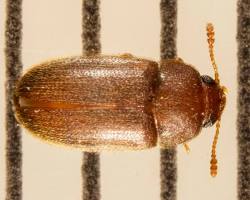
Hairy Fungus Beetles (Mycetophagus spp.) are small scavenger beetles that feed exclusively on fungi, mold, mildew, and decaying organic material. Although harmless to humans and structures directly, they become nuisance pests when they invade homes, basements, crawl spaces, or storage areas in search of fungal growth. Their presence indoors is almost always a warning sign of excessive moisture, hidden mold, water leaks, or damp building materials.
These beetles are considered important ecological recyclers in natural forests, where they help break down rotting wood and fungal growth. However, when indoor conditions mimic those damp forest environments, Hairy Fungus Beetles may establish breeding populations inside human structures.
Unlike wood-boring beetles or fabric pests, Hairy Fungus Beetles do not attack healthy wood, clothing, or structural materials directly. Instead, they consume the fungi growing on damp surfaces, making them more of an indicator species than a destructive pest.
Quick Facts
- Scientific Genus: Mycetophagus
- Order: Coleoptera
- Family: Mycetophagidae
- Common Habitat: Damp wood, moldy areas, crawl spaces
- Main Food Source: Mold and fungi
- Primary Conflict: Indicates chronic moisture problems
- Activity: Mostly nocturnal
- Risk Level: Low direct risk
Taxonomy and Classification
Hairy Fungus Beetles belong to the beetle family:
- Mycetophagidae
commonly known as fungus beetles.
Their name literally means:
- “fungus eater”
which accurately describes their ecological role.
Scientific Classification
- Kingdom: Animalia
- Phylum: Arthropoda
- Class: Insecta
- Order: Coleoptera
- Family: Mycetophagidae
- Genus: Mycetophagus
These beetles undergo:
- Complete metamorphosis
with four life stages:
- Egg
- Larva
- Pupa
- Adult
Physical Description
Adult Hairy Fungus Beetles are small and oval-shaped, usually measuring:
- 1/8 to 1/4 inch long
Appearance
Most species are:
- Dark brown
- Black
- Reddish-brown
often with lighter patches or mottled markings.
Hairy Texture
Their bodies are covered in fine hairs that create a fuzzy or dusty appearance.
This “hairy” covering helps distinguish them from smoother pantry beetles and carpet beetles.
Larvae
Larvae are:
- Cream-colored
- Cylindrical
- Soft-bodied
- Slightly hairy
They develop directly within moldy or fungus-infested materials.
Movement
Adults move quickly and often scatter when disturbed.
Because they are primarily nocturnal, they may only become noticeable at night or when populations become large.
Distribution and Habitat
Hairy Fungus Beetles are widely distributed throughout North America, Europe, and many temperate regions worldwide.
Natural Habitat
Outdoors, they are commonly found:
- Under bark
- Inside rotting logs
- In decaying stumps
- Within leaf litter
- Near fungal growth
Their natural role is to recycle decaying organic matter and fungal colonies.
Indoor Habitat
Indoors, they are strongly associated with:
- Water-damaged wood
- Moldy drywall
- Damp insulation
- Leaky plumbing areas
- Basements
- Crawl spaces
- Stored grain products
- Mildewed cardboard or paper
Any environment supporting fungal growth can potentially attract these beetles.
Life Cycle
The life cycle begins when adult females lay eggs near suitable fungal food sources.
Egg Stage
Eggs are deposited:
- Inside moldy materials
- Near fungal colonies
- In damp organic debris
Larval Stage
Larvae feed directly on:
- Molds
- Mildew
- Wood-decay fungi
- Yeasts
This stage is responsible for most feeding activity.
Pupal Stage
Pupation occurs within protected damp environments where fungal growth remains stable.
Adult Stage
Adults continue feeding on fungi while seeking additional breeding sites.
Multiple generations may occur annually in warm, humid indoor environments.
Behavior and Ecology
Hairy Fungus Beetles are highly specialized fungal feeders.
Unlike structural pests, they do not consume:
- Healthy wood
- Fabric
- Dry food products
- Structural cellulose
Instead, they require fungal growth to survive.
Indicator Species
Their presence indoors is important because it strongly suggests:
- Hidden water leaks
- Chronic humidity
- Poor ventilation
- Mold growth
- Structural moisture damage
In many cases, the moisture problem is far more serious than the beetles themselves.
Nocturnal Activity
Adults are primarily active at night and may:
- Crawl across walls
- Gather near windows
- Appear around damp storage areas
Damage and Impact
Hairy Fungus Beetles are generally considered nuisance pests rather than destructive insects.
Indirect Structural Concerns
Although the beetles themselves do not damage buildings directly, the fungal growth supporting them may indicate:
- Wood rot
- Mold infestations
- Water intrusion
- Deteriorating insulation
- Structural decay
Stored Product Concerns
In some cases, these beetles may infest:
- Moldy flour
- Damp grains
- Stored pet food
- Old cereal products
However, they only target products already compromised by moisture or fungal contamination.
Nuisance Activity
Large indoor populations can become bothersome when beetles:
- Appear on walls
- Accumulate near windows
- Spread throughout basements or crawl spaces
Signs of Infestation
- Small fuzzy beetles indoors
- Mold or mildew odors
- Visible fungal growth
- Beetles near leaks or damp areas
- Water-damaged building materials
- Larvae in moldy stored products
Common Problem Areas
Hairy Fungus Beetles are frequently found near:
- Leaking pipes
- Basement corners
- HVAC condensation lines
- Roof leaks
- Flood-damaged materials
Prevention and Control
Successful control depends almost entirely on eliminating moisture and fungal growth.
Moisture Control (Most Important)
Identify and repair:
- Plumbing leaks
- Roof leaks
- Foundation seepage
- Condensation problems
Indoor humidity should ideally remain below:
- 60 percent
Ventilation Improvements
Improve airflow in:
- Basements
- Crawl spaces
- Bathrooms
- Storage areas
using:
- Fans
- Vents
- Dehumidifiers
Remove Moldy Materials
Discard:
- Moldy cardboard
- Damp insulation
- Water-damaged paper
- Spoiled stored food
where fungal growth is active.
Cleaning and Fungus Removal
After drying the area:
- Clean surfaces thoroughly
- Use appropriate mold-cleaning products
- Eliminate organic debris
Chemical Control
Insecticides are usually unnecessary unless populations remain high after moisture correction.
If needed, residual insecticides may be applied:
- In cracks and crevices
- Along baseboards
- Near moisture sources
However, pesticides alone will not solve the problem unless fungal growth is removed.
Relationship With Mold
Hairy Fungus Beetles are closely tied to indoor fungal ecology.
Their appearance may help homeowners detect:
- Hidden mold colonies
- Water intrusion
- Rotting wood
- Ventilation failures
For this reason, pest professionals sometimes treat their presence as an early warning sign of structural moisture problems.
Interesting Facts
- They feed entirely on fungi and mold.
- They do not bore into healthy wood.
- Their fuzzy appearance comes from tiny body hairs.
- They are beneficial decomposers in forests.
- Indoor infestations usually signal hidden moisture problems.
- They are primarily active at night.
Conservation and Research
Hairy Fungus Beetles are important decomposers in natural ecosystems.
Research focuses on:
- Forest decomposition cycles
- Fungal ecology
- Indoor moisture detection
- Historic building preservation
- Biological indicators of mold problems
Scientists also study their ecological role in nutrient recycling within decaying wood habitats.