Overview
Hackberry Nipple Gall Makers are highly specialized gall-forming insects that create small, cone-shaped growths on the leaves of hackberry trees (Celtis species). These unusual structures, known as nipple galls, are among the most recognizable leaf deformities found on hackberry foliage and are commonly caused by certain species of psyllids and gall midges.
Although the appearance of these galls may initially concern homeowners and landscapers, they are generally considered minor pests that cause mostly cosmetic damage. Mature hackberry trees typically tolerate infestations with little to no long-term health impact.
The formation of nipple galls is the result of a remarkable biological interaction between the insect and the plant. As the insect feeds or lays eggs on developing leaves, it triggers hormonal and chemical changes within the leaf tissue. These changes stimulate abnormal growth around the feeding site, producing a protective gall chamber that shelters the developing insect.
Hackberry nipple gall makers are closely associated with urban landscapes, parks, and natural woodlands where hackberry trees grow. Their highly specialized life cycle depends almost entirely on these trees.
Quick Facts
- Common Name: Hackberry Nipple Gall Makers
- Main Hosts: Hackberry trees (Celtis spp.)
- Primary Damage: Cone-shaped leaf galls
- Activity Period: Spring through summer
- Threat Level: Mostly cosmetic
- Common Gall Shape: Pointed nipple-like projections
- Main Habitat: Hackberry foliage
Taxonomy and Classification
Hackberry nipple gall makers are typically associated with psyllids (jumping plant lice) and occasionally gall midges.
Scientific Classification (Psyllid Species)
- Kingdom: Animalia
- Phylum: Arthropoda
- Class: Insecta
- Order: Hemiptera
- Family: Psyllidae
Some gall-making species may instead belong to:
- Order: Diptera
- Family: Cecidomyiidae (Gall Midges)
Most species associated with nipple galls undergo incomplete metamorphosis when they are psyllids, while midge species undergo complete metamorphosis.
Identification
The most recognizable sign of infestation is the distinctive nipple-shaped gall projecting from the leaf surface.
Gall Appearance
These galls are usually:
- Small and cone-shaped
- Pointed at the tip
- Green when young
- Yellow, brown, or reddish as they mature
The galls may appear:
- On upper leaf surfaces
- On lower leaf surfaces
- Scattered individually or densely clustered
Heavy infestations can cover large portions of foliage, giving leaves a rough or distorted appearance.
Adult Insects
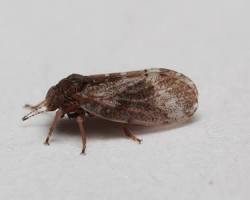
Adult psyllids are tiny insects resembling miniature cicadas.
They typically have:
- Transparent wings
- Brown or green coloration
- Strong jumping legs
- Soft, delicate bodies
The insects themselves are rarely observed because the immature stages remain protected inside the galls.
Habitat and Distribution
Hackberry nipple gall makers are found wherever hackberry trees naturally grow.
Common Locations
- Residential landscapes
- Urban street tree plantings
- Parks
- Riparian forests
- Natural woodland habitats
They are especially common in regions where hackberry trees dominate the landscape.
Host Trees
Primary host species include:
- Celtis occidentalis (Common Hackberry)
- Celtis laevigata (Sugarberry)
- Other Celtis species
Because these insects are highly host-specific, they are rarely found on unrelated trees.
Life Cycle
The life cycle begins in spring when adult insects become active during leaf emergence.
Egg Stage
Females lay eggs on:
- Young leaves
- Leaf buds
- Fresh spring growth
Gall Formation
As the eggs hatch, the young nymphs begin feeding on leaf tissue.
Their feeding activity triggers hormonal changes within the plant that stimulate gall formation.
The gall functions as:
- A food source
- A shelter
- A protective chamber
- A barrier against predators and weather
Nymph Development
The immature insect remains inside the gall throughout development.
Protected by the surrounding plant tissue, the nymph feeds safely while molting through several growth stages.
Adult Emergence
Once mature:
- The adult exits the gall
- Mates
- Begins the next generation
Some species may produce multiple generations per year in warmer climates.
Behavior and Ecology
Hackberry nipple gall makers are highly specialized plant feeders.
Their entire life cycle depends on the ability to manipulate hackberry leaf tissue.
Gall Manipulation
Scientists continue studying the exact chemical signals these insects use to trigger gall development.
The gall provides several important survival advantages:
- Protection from predators
- Stable humidity
- Physical shelter
- Continuous nutrient access
Jumping Behavior
Adult psyllids are known for their strong jumping ability.
When disturbed, they leap quickly away from foliage using enlarged hind legs.
Damage and Impact
Most hackberry nipple gall infestations are considered aesthetic rather than destructive.
Cosmetic Damage
The unusual leaf growths can:
- Reduce ornamental appearance
- Create distorted foliage
- Cause concern for property owners
Despite the dramatic appearance, healthy trees usually tolerate infestations very well.
Photosynthesis Reduction
Heavy galling may slightly reduce photosynthetic efficiency by:
- Distorting leaf surfaces
- Reducing healthy tissue area
- Causing premature leaf aging
Severe infestations occasionally contribute to:
- Minor leaf drop
- Reduced vigor in young trees
- Temporary stress during drought conditions
Long-Term Impact
Long-term damage is rare on established trees.
Most mature hackberries recover fully without treatment.
Signs of Infestation
- Pointed nipple-like leaf projections
- Raised bumps on hackberry leaves
- Leaf discoloration
- Distorted foliage
- Tiny jumping insects near leaves
- Clusters of galls covering foliage
Prevention and Control
Control is usually unnecessary because infestations are mostly cosmetic.
Tree Health Maintenance
Maintaining vigorous trees is the best long-term management strategy.
Recommended practices include:
- Proper watering during drought
- Mulching around root zones
- Avoiding soil compaction
- Reducing mechanical injury
Leaf Cleanup
Removing heavily infested leaves may reduce local populations, especially on small ornamental trees.
However, this is usually impractical for large mature trees.
Chemical Control
Insecticides are rarely recommended because:
- The insects are protected inside galls
- Damage is usually cosmetic
- Mature trees tolerate infestations well
- Treatment timing is difficult
Systemic insecticides may occasionally be used for valuable ornamental trees with repeated severe infestations.
Ecological Importance
Hackberry nipple gall makers are part of larger ecological food webs.
Their galls provide resources for:
- Predatory insects
- Parasitic wasps
- Spiders
- Birds
The insects themselves also serve as prey for many beneficial organisms.
Interesting Facts
- Each gall contains a developing insect inside.
- The shape of the gall can help identify the insect species.
- Hackberry trees may host multiple gall species at once.
- The insects chemically manipulate plant growth.
- Most infestations are harmless to mature trees.
- Adult psyllids can jump surprisingly long distances relative to their size.
Conservation and Research
Research on hackberry nipple gall makers focuses on:
- Gall formation mechanisms
- Plant hormone interactions
- Host specialization
- Urban tree ecology
- Natural biological controls
Scientists continue studying how these tiny insects trigger such highly specialized plant structures using complex chemical signaling.