Overview
The name “gypsy ants” is used informally for highly mobile, opportunistic ants that establish shifting nesting sites and forage aggressively over broad areas. Unlike more familiar ants that maintain a single long-term nest in one obvious location, these ants are often associated with temporary or semi-nomadic colony behavior, frequent relocation, and rapid exploitation of changing food sources. Because the common name is used loosely rather than for a single universally recognized species, it is most useful as a descriptive label for ants that combine mobility, adaptability, and nuisance potential.
In both natural and human-managed environments, gypsy ants can become problematic when their colonies expand near homes, gardens, or commercial sites. Their foraging behavior allows them to exploit sweet substances, proteins, dead insects, seeds, and household food debris. Once established near structures, they may enter kitchens, pantries, or utility spaces in search of resources. In outdoor settings, they may interfere with ecological balance by competing with native ants, disturbing other ground-dwelling invertebrates, and tending sap-feeding pests such as aphids or scale insects.
Their adaptability is one of their defining traits. Colonies may move in response to heat, moisture, food availability, or disturbance, allowing them to persist even when individual nest sites are disrupted. This can make management challenging, since destroying one visible nest may not eliminate the broader colony network.
Identification
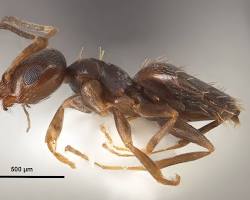
Because “gypsy ants” is a general common name rather than a precise taxonomic label, appearance may vary. Most are small to medium-sized ants with brown, reddish-brown, dark brown, or black coloration. Workers typically form obvious foraging trails and may be seen moving rapidly between food sources and sheltered nesting areas. Colonies often contain large numbers of workers, and activity may seem to shift from place to place over time.
The most important identifying clues are behavioral. Ants that repeatedly appear in new locations, exploit a wide variety of food sources, and maintain multiple or movable nesting sites are often the ones described by this name. Their mobility can distinguish them from more localized species with stable nesting habits.
Habitat
Gypsy ants can occupy a wide range of habitats, including forest edges, gardens, lawns, urban landscapes, wall voids, mulch beds, rotting wood, under stones, and beneath paving materials. In buildings, they may nest in wall spaces, insulation, foundations, or moisture-prone areas near plumbing. Outdoors, they often take advantage of disturbed environments where food is abundant and competition patterns have been altered.
Their nests may be found in soil, leaf litter, decomposing wood, cracks, or portable materials such as boards, plant containers, and stored items. This flexibility allows them to expand easily through landscapes and move with minimal disturbance.
Behavior and Ecology
These ants are active foragers and may travel considerable distances relative to their size. Workers often exploit sugary substances such as nectar, honeydew, syrups, and spilled drinks, but they also collect proteins from dead insects, grease, pet food, and human food waste. Their broad diet makes them especially successful around homes and gardens.
In outdoor environments, they may protect honeydew-producing insects like aphids, mealybugs, and scale insects from predators. This mutualistic behavior indirectly worsens plant pest problems by allowing sap-feeding pests to multiply more successfully. In addition, dense ant activity can displace smaller native insects and alter local food webs.
Some colonies may contain multiple queens or satellite nesting sites, which can help explain why infestations seem to reappear even after treatment. When disturbed, the colony may split and relocate rather than collapse.
Impact
The impact of gypsy ants depends on where they occur and how large the colony becomes. In homes, they are primarily nuisance pests that contaminate food and create persistent trail activity. In gardens, they may protect plant pests and interfere with beneficial predators. In natural areas, highly mobile ant populations can influence native insect communities and nesting competition.
Their tendency to relocate and spread across multiple microhabitats makes them harder to manage than ants that remain in a single accessible nest. Even when they do not sting or bite aggressively, their numbers and persistence can make them unwelcome.
Prevention and Control
Management begins with sanitation and habitat reduction. Eliminate food residues, seal stored food, clean sugary spills promptly, and reduce outdoor nesting opportunities such as debris, mulch buildup against foundations, and rotting wood near structures. Indoors, seal gaps around entry points and monitor for trail patterns that reveal where ants are entering.
Because colonies may be diffuse, baiting is often more effective than simply spraying visible workers. Baits allow foraging ants to carry food back to nestmates. Outdoors, managing aphids and scale insects can also reduce attractive honeydew sources. Long-term control depends on reducing resources and locating the broader colony system rather than focusing only on ants currently visible on surfaces.
Taxonomy
- Kingdom: Animalia
- Phylum: Arthropoda
- Class: Insecta
- Order: Hymenoptera
- Family: Formicidae