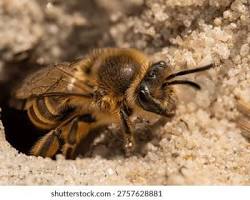
Ground-Nesting Bees are a large and diverse group of native bees that dig tunnels and nesting chambers directly into soil rather than living in hives or cavities. This category includes important pollinators such as Mining Bees (Andrena spp.), Digger Bees (Anthophora spp.), Sweat Bees (family Halictidae), and many other solitary bee species. Unlike honeybees or yellowjackets, these bees are overwhelmingly gentle, non-aggressive, and highly beneficial to gardens, farms, and natural ecosystems.
Most native bee species in North America are actually solitary ground nesters rather than hive-building bees. Scientists estimate that approximately 70% of the world’s bee species nest underground.
Although large numbers of bees suddenly appearing in lawns or flower beds can alarm homeowners, Ground-Nesting Bees are temporary seasonal pollinators that rarely sting and usually remain active for only a few weeks each year.
Quick Facts
- Order: Hymenoptera
- Main Groups: Mining Bees, Digger Bees, Sweat Bees
- Habitat: Well-drained soil, lawns, gardens, slopes
- Diet: Nectar and pollen
- Status: Beneficial native pollinators
- Nesting Style: Solitary underground burrows
- Aggression Level: Extremely low
- Seasonality: Usually spring through early summer
Taxonomy and Classification
Ground-Nesting Bees belong to the order Hymenoptera, which also includes wasps, ants, and honeybees. Unlike social honeybee colonies, most Ground-Nesting Bees are solitary, meaning each female independently digs and provisions her own nest.
Important groups of Ground-Nesting Bees include:
- Mining Bees (Andrena spp.)
- Digger Bees (Anthophora spp.)
- Sweat Bees (Halictidae)
- Plasterer Bees (Colletes spp.)
- Alkali Bees (Nomia melanderi)
Although many species nest close together in large aggregations, each female maintains her own separate nest tunnel and brood chambers.
Ground-Nesting Bees undergo complete metamorphosis through four life stages:
- Egg
- Larva
- Pupa
- Adult
Physical Description
Ground-Nesting Bees vary enormously in size, coloration, and appearance depending on species.
Appearance
These bees may appear:
- Metallic green or blue
- Black and fuzzy
- Striped like honeybees
- Coppery or bronze
- Hairy and robust
- Tiny and delicate
Many Ground-Nesting Bees possess dense body hairs that help collect pollen efficiently.
Nest Entrances
The most noticeable sign of Ground-Nesting Bees is the sudden appearance of small soil mounds in lawns or bare ground.
Typical nest entrances include:
- Small volcano-shaped soil mounds
- Pencil-sized entrance holes
- Loose excavated dirt
- Clusters of multiple nests
These nesting sites often resemble tiny anthills.
Male Activity
Males frequently hover and fly erratically above nesting areas while searching for females. Although this behavior appears aggressive, male bees lack stingers entirely and are harmless.
Distribution and Habitat
Ground-Nesting Bees are found worldwide and represent the majority of native bee diversity. They inhabit:
- Lawns
- Gardens
- Prairies
- Woodland edges
- Deserts
- Agricultural fields
- Sunny slopes
- Open grasslands
Most species prefer:
- Dry or sandy soil
- Loose well-drained ground
- Sparse vegetation
- Sunny nesting areas
Dense turfgrass, landscape fabric, and thick mulch layers often discourage nesting.
Behavior and Pollination
Ground-Nesting Bees are among the most important pollinators in both natural and agricultural ecosystems.
Pollination Importance
Native solitary bees pollinate approximately 80% of flowering plants worldwide.
These bees are essential for:
- Wildflowers
- Fruit trees
- Blueberries
- Apples
- Cherries
- Vegetable crops
- Native plants
Some species specialize in particular flowers and bloom periods.
Nest Construction
Female bees excavate tunnels extending several inches into the ground. Side chambers are created where the female places:
- Pollen
- Nectar
- A single egg
Each chamber is sealed before the female begins another brood cell.
Short Adult Lifespan
Most Ground-Nesting Bees are active as adults for only 3–6 weeks each year before dying off.
Conflict With Humans
Conflict usually results from misunderstanding rather than actual danger.
Fear and Misidentification
Large numbers of bees emerging from lawns can appear alarming. However:
- Most females rarely sting
- Males cannot sting
- They do not defend colonies
- They are not aggressive
Ground-Nesting Bees are commonly mistaken for aggressive yellowjackets or wasps.
Lawn Appearance
The small soil mounds may temporarily affect the appearance of manicured lawns, but the bees actually help aerate soil and improve water penetration.
Management and Prevention
Control is strongly discouraged because these bees are vital pollinators and generally harmless.
Tolerance
The best management approach is simple tolerance during their brief seasonal activity.
Avoid:
- Walking barefoot through nesting areas
- Disturbing active nests
- Applying pesticides
Habitat Modification
If nesting becomes undesirable in specific locations, homeowners may discourage future activity by:
- Increasing lawn density
- Watering dry soil more frequently
- Applying mulch
- Reducing bare ground exposure
Ground-Nesting Bees strongly prefer dry, exposed soil.
Avoid Insecticides
Broad-spectrum insecticides can devastate native pollinator populations and should never be used against Ground-Nesting Bees unless absolutely necessary for public safety.
Conservation and Ecological Importance
Ground-Nesting Bees are considered high-priority pollinators for conservation programs worldwide.
Major threats include:
- Habitat loss
- Pesticides
- Urban development
- Climate change
- Overly manicured landscapes
Organizations such as the Xerces Society encourage homeowners to preserve patches of bare ground and reduce pesticide use to support native bee populations.
Interesting Facts About Ground-Nesting Bees
- Approximately 70% of bee species nest underground.
- Most Ground-Nesting Bees are solitary.
- Males cannot sting.
- They are often more efficient pollinators than honeybees.
- Some species emerge for only a few weeks annually.