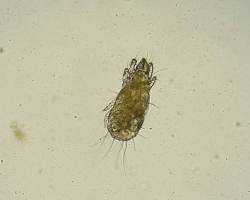
Grain Mites are tiny soft-bodied arachnids that infest stored cereal grains, flour, pet food, cheese, dried fruits, and other food products with elevated moisture levels. The most common and economically important species is the Flour Mite (Acarus siro), a widespread storage pest responsible for contamination, spoilage, reduced seed viability, and serious allergy problems.
Although nearly invisible individually, grain mites can reproduce explosively in warm, humid storage conditions. Heavy infestations may appear as a moving layer of dust across the surface of grain or flour. Their feeding activity also increases moisture and heat within stored products, encouraging fungal growth and accelerating spoilage.
Grain mites are considered major hygiene pests in grain storage facilities, warehouses, food processing plants, and residential pantries.
Quick Facts
- Scientific Name: Acarus siro (common species)
- Class: Arachnida
- Subclass: Acari
- Habitat: Stored grain and damp food products
- Diet: Grain germ, fungi, organic material
- Status: Major stored-product pest
- Size: Less than 0.5 mm long
- Preferred Conditions: Warm, humid environments
Taxonomy and Classification
Grain mites belong to the subclass Acari, which includes mites and ticks. They are arachnids rather than insects, meaning they are more closely related to spiders than beetles or moths.
Unlike insects, adult mites possess:
- Eight legs
- No antennae
- Soft unsegmented bodies
Grain mites undergo simple metamorphosis through the following stages:
- Egg
- Larva
- Nymph
- Adult
One of the most important survival adaptations of grain mites is their ability to enter a specialized resistant stage called the hypopus. During unfavorable environmental conditions such as drought or food shortages, the mite transforms into this non-feeding, highly durable stage that can survive extended periods until conditions improve.
Physical Description
Grain mites are extremely small, pale, and soft-bodied organisms usually measuring less than 0.5 millimeters long.
Appearance
The body is generally:
- Creamy white or translucent
- Oval or globular
- Soft-bodied
- Covered with fine hairs
Because of their tiny size, individual mites are barely visible without magnification.
Heavy infestations often resemble:
- Moving dust
- A dusty sheen
- White powder in motion
Signs of Infestation
Infested products commonly develop:
- Dusty surface movement
- Sweet or minty odor
- Musty smell
- Clumped grain or flour
- Mold growth
- Moisture buildup
The combination of mites, shed skins, fecal material, and fungal growth rapidly renders food unsuitable for consumption.
Distribution and Habitat
Grain mites are cosmopolitan pests found worldwide in grain storage systems, warehouses, food processing facilities, farms, and homes.
They thrive in environments where:
- Moisture content exceeds 13–15%
- Relative humidity remains above 65%
- Temperatures are warm
- Ventilation is poor
Common infestation sites include:
- Stored grain bins
- Flour bags
- Cereal products
- Pet food containers
- Dried fruit storage
- Cheese aging facilities
- Feed storage rooms
- Pantries
Grain mites frequently infest products already affected by excessive moisture and mold growth.
Behavior and Feeding Habits
Grain mite populations expand rapidly in warm, humid environments with abundant food and fungal growth.
Feeding Behavior
These mites feed primarily on:
- Grain germ tissue
- Fungal mycelium
- Mold spores
- Damaged grain particles
- Organic debris
Their feeding activity damages grain quality while encouraging additional fungal contamination.
Metabolic Heating
Large infestations generate significant heat and moisture through metabolic activity. This creates ideal conditions for mold development, accelerating food spoilage.
Severe infestations may produce localized “hot spots” within stored grain masses.
Damage and Health Risks
Grain mites cause serious economic and hygiene problems in stored food products.
Food Spoilage
Infested products become contaminated with:
- Dead mites
- Cast skins
- Fecal pellets
- Fungal growth
- Body fragments
The contamination renders food unsuitable for human consumption.
Reduced Seed Viability
By feeding on grain germ tissue, mites destroy seed viability. This creates major losses for:
- Planting seed
- Brewing barley
- Seed storage facilities
Allergy Problems
Grain mites are important sources of allergens.
Exposure may trigger:
- Dermatitis
- Asthma
- Respiratory irritation
- Skin reactions
- Digestive discomfort
Workers handling infested grain are particularly vulnerable to “storage mite allergy.”
Life Cycle
The life cycle of grain mites progresses rapidly under favorable conditions.
Females lay eggs directly into food products or storage debris. Larvae hatch and feed immediately before molting into nymphal stages and eventually becoming adults.
Under warm, humid conditions, development may occur within only a few weeks, allowing populations to explode rapidly.
When conditions become unfavorable, mites may enter the highly resistant hypopus stage, enabling survival through drought or food shortages.
Management and Prevention
Control focuses heavily on environmental management rather than direct pesticide applications.
Moisture Control
Moisture management is the single most important control strategy.
- Store grain below 13% moisture content
- Reduce humidity below 65%
- Improve ventilation
- Prevent condensation inside storage bins
Temperature Control
Cooling stored products below 50°F (10°C) greatly slows or stops mite development.
Sanitation
Thorough cleaning removes food residues and breeding sites.
- Clean storage bins regularly
- Remove spilled grain and dust
- Vacuum shelves and machinery
- Discard heavily infested products
Chemical Control
Residual insecticides are generally ineffective against mites on food surfaces.
For severe commercial infestations, fumigation may be used under highly regulated conditions.
Conservation and Research
Researchers continue studying grain mites to improve food storage safety and reduce economic losses.
Current research focuses include:
- Safer grain drying technologies
- Humidity management systems
- Hypopus-stage biology
- Non-toxic storage methods
- Allergen reduction strategies
Improved environmental control remains the most effective long-term management strategy.
Interesting Facts About Grain Mites
- Heavy infestations may resemble moving dust.
- They are arachnids rather than insects.
- Grain mites can survive harsh conditions in the hypopus stage.
- They thrive in humid environments.
- Infested products often develop a sweet or minty odor.