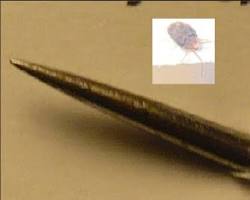
Goose Mites (Dermoglyphus spp.) are specialized feather mites that live on geese, ducks, and other waterfowl. These microscopic arachnids spend their entire lives among the feathers of their host birds, feeding primarily on oils, feather debris, fungi, and dead skin material trapped within the plumage. Unlike blood-feeding poultry mites, Goose Mites are generally considered mild parasites or commensal organisms that usually cause limited harm unless infestations become excessive. :contentReference[oaicite:1]{index=1}
Heavy infestations may interfere with feather quality, waterproofing, insulation, and comfort, especially in commercial goose flocks raised for meat, eggs, or down feather production. Large mite populations can also contribute to feather damage, excessive preening, and stress in domestic birds.
Because these mites are highly specialized for living on waterfowl feathers, they are closely associated with the structure and maintenance of plumage. Researchers continue studying feather mites to better understand bird evolution, symbiosis, and parasite-host relationships. :contentReference[oaicite:2]{index=2}
Quick Facts
- Genus: Dermoglyphus
- Subclass: Acari
- Habitat: Goose and duck feathers
- Diet: Feather oils, skin debris, fungi
- Status: Minor external parasite
- Size: Usually less than 0.5 mm long
- Host Range: Geese, ducks, and waterfowl
- Transmission: Direct contact between birds
Taxonomy and Classification
Goose Mites belong to the subclass Acari, which includes mites and ticks. Feather mites represent several highly specialized mite groups adapted specifically for life on birds. :contentReference[oaicite:3]{index=3}
Unlike blood-feeding poultry pests such as the Red Poultry Mite, Goose Mites generally do not feed on blood or living tissue. Instead, they consume:
- Preening oils
- Dead skin cells
- Feather fragments
- Organic debris
- Microorganisms trapped in feathers
Many feather mites are believed to have evolved alongside their bird hosts over millions of years, creating highly specialized relationships between particular mite species and specific bird groups. :contentReference[oaicite:4]{index=4}
Goose Mites undergo simple development consisting of:
- Egg
- Larva
- Nymph
- Adult
Physical Description
Goose Mites are microscopic organisms typically measuring less than 0.5 millimeters long.
Appearance
Under magnification, the mites appear:
- Pale white or translucent
- Oval or globular
- Soft-bodied
- Equipped with eight legs
To the naked eye, heavy infestations may resemble:
- Fine dust on feathers
- Whitish specks
- Dirty feather shafts
- Powdery buildup
Feather mites are flattened and streamlined, allowing them to move easily between feather barbs and barbules. Specialized structures help them cling tightly to plumage during swimming and flight. :contentReference[oaicite:5]{index=5}
Location on the Bird
Goose Mites are most commonly found:
- Along feather shafts
- Within down feathers
- Between feather barbs
- Near the skin surface
They often concentrate within dense plumage where warmth, moisture, and oils are abundant.
Distribution and Habitat
Goose Mites occur worldwide wherever geese, ducks, swans, and other waterfowl are found.
They are present in:
- Wild goose populations
- Commercial goose farms
- Domestic poultry flocks
- Waterfowl breeding operations
- Zoos and aviaries
Their entire life cycle occurs directly on the host bird. Unlike some poultry mites that hide in nesting material or structures, feather mites remain permanently associated with feathers. :contentReference[oaicite:6]{index=6}
Transmission occurs primarily through:
- Direct bird-to-bird contact
- Shared nesting sites
- Parent-to-offspring transfer
- Crowded flock conditions
Behavior and Feeding Habits
Goose Mites are considered permanent ectosymbionts that spend their lives within plumage.
Feeding Behavior
Unlike parasitic blood-feeding mites, Goose Mites feed on:
- Uropygial gland oils
- Sloughed skin cells
- Fungi and microbes
- Organic feather debris
Many researchers believe some feather mites may actually help clean feathers by removing excess oils and debris. :contentReference[oaicite:7]{index=7}
Reproduction
Females lay eggs directly on feather shafts and feather structures. Mites reproduce rapidly under favorable conditions, particularly in crowded or poorly managed flocks.
Preening Interaction
Bird preening behavior strongly influences feather mite populations. Healthy grooming often helps regulate mite numbers naturally.
Damage and Conflict
Low populations of Goose Mites generally cause little noticeable harm. Problems occur when infestations become excessive.
Feather Damage
Heavy infestations may result in:
- Matted feathers
- Dirty plumage
- Broken feather barbs
- Reduced feather quality
- Loss of waterproofing
This is particularly important in commercial down and feather production industries.
Bird Irritation
High mite populations may trigger:
- Excessive preening
- Restlessness
- Feather pulling
- Stress
- Reduced comfort
Severe infestations can reduce insulation efficiency, especially during cold or wet weather.
Commercial Impact
In goose down production, contaminated feathers may require:
- Additional cleaning
- Decontamination processing
- Discarding damaged feathers
This can reduce the commercial value of harvested plumage.
Management and Prevention
Management is usually necessary only when feather quality or bird health becomes affected.
Quarantine and Inspection
New birds should be isolated and inspected before introduction into established flocks.
This helps prevent spreading mites between birds.
Water Access
Providing clean bathing water helps birds naturally groom and dislodge some external parasites.
Healthy preening behavior is important for maintaining feather condition.
Flock Sanitation
- Keep bedding clean
- Reduce overcrowding
- Maintain dry housing
- Improve ventilation
Good flock management helps minimize excessive mite populations.
Veterinary Treatments
Severe infestations may require approved veterinary acaricides such as:
- Dust formulations
- Sprays
- Topical treatments
Treatment should be supervised carefully to avoid toxicity risks, especially in birds used for food production.
Ecological and Scientific Importance
Feather mites are important subjects in evolutionary biology and ornithology.
Researchers study them to better understand:
- Host-parasite coevolution
- Bird migration patterns
- Species relationships
- Symbiotic interactions
Some feather mite species appear highly host-specific, making them useful indicators of bird evolutionary history. :contentReference[oaicite:8]{index=8}
Interesting Facts About Goose Mites
- Most feather mites do not feed on blood.
- They spend their entire lives on birds.
- Some feather mites may help clean feathers.
- Goose Mites are microscopic arachnids.
- Heavy infestations can reduce feather waterproofing.