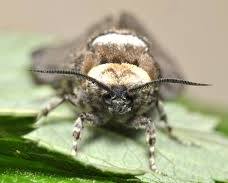
Goat Moths (genus Cossus), including the European Goat Moth (Cossus cossus) and the Carpenterworm or American Goat Moth (Prionoxystus robiniae), are large wood-boring moths whose larvae are serious pests of hardwood trees and timber. These insects are best known for their destructive tunneling behavior and the strong musky odor emitted by the caterpillars.
The larval stage spends several years boring extensive tunnels, known as galleries, deep into sapwood and heartwood. Over time, these galleries weaken tree structure, disrupt nutrient flow, encourage fungal decay, and reduce timber value. Severe infestations may eventually lead to branch breakage, tree decline, or death.
Goat moth larvae are among the longest-lived moth caterpillars in the world due to their extended development inside wood. Their hidden feeding habits make infestations difficult to detect and challenging to control.
Quick Facts
- Order: Lepidoptera
- Family: Cossidae
- Habitat: Hardwood trees and forests
- Diet: Wood and tree tissue
- Status: Destructive wood-boring pest
- Larval Duration: 1 to 4 years
- Primary Hosts: Oak, willow, ash, maple, fruit trees
Taxonomy and Classification
Goat moths belong to the family Cossidae, commonly known as carpenter moths or wood-boring moths. They are members of the order Lepidoptera, which includes butterflies and moths.
Cossid moths are distinguished by their:
- Wood-boring larvae
- Long developmental periods
- Large body size
- Cryptic bark-like coloration
The European Goat Moth (Cossus cossus) is widespread across Europe and Asia, while the Carpenterworm (Prionoxystus robiniae) is common in North America.
These insects undergo complete metamorphosis with four stages:
- Egg
- Larva (caterpillar)
- Pupa
- Adult moth
The larval stage is responsible for nearly all structural and economic damage.
Physical Description
Adult Moth
Adult goat moths are large, heavy-bodied moths with cryptically patterned gray, brown, or mottled wings that blend perfectly against tree bark. This camouflage helps protect them from predators during daylight hours.
Adults are nocturnal and rarely observed because they remain inactive during the day and fly mostly at night.
Wingspans may exceed 3 inches in larger species.
Larvae (Caterpillars)
The caterpillars are the destructive stage and may grow up to 3 or 4 inches long depending on species.
Larval characteristics include:
- Reddish or pinkish upper body
- Yellowish underside
- Large dark head capsule
- Strong chewing mandibles
- Muscular segmented body
The larvae emit a strong musky odor often compared to goats, which is the source of the common name “Goat Moth.”
Signs of Infestation
The most obvious signs of active infestation include:
- Large entrance holes in trunks
- Wet sawdust-like frass
- Sap oozing from bore holes
- Wood debris accumulation near tree bases
- Branch dieback
- Foul or musky odor near infested trees
The frass is often mixed with sap and larval excrement as the caterpillar excavates tunnels deeper into the wood.
Distribution and Habitat
Goat moths are distributed throughout temperate regions of the Northern Hemisphere, including Europe, Asia, and North America.
Preferred habitats include:
- Hardwood forests
- Urban landscapes
- Orchards
- Parks
- Woodlots
- Riparian forests
These insects infest a wide variety of hardwood trees, especially:
- Oak
- Willow
- Ash
- Maple
- Elm
- Apple
- Pear
- Poplar
Female moths are particularly attracted to weakened, stressed, wounded, or aging trees for egg-laying.
Life Cycle
Goat moths have unusually long life cycles compared to many other moths. Larval development may last from one to four years depending on environmental conditions and host quality.
Egg Stage
Females lay eggs in bark crevices, wounds, cracks, or damaged areas near the lower trunk or large limbs.
Larval Stage
After hatching, young larvae bore beneath the bark and eventually tunnel deeply into sapwood and heartwood.
As larvae grow, they create extensive galleries inside the tree. Feeding continues for multiple years while the caterpillars remain protected inside the wood.
Pupal Stage
When mature, larvae pupate within tunnels or near tunnel entrances inside the wood.
Adult Stage
Adult moths emerge during warm months, mate, and begin the cycle again by depositing eggs on suitable host trees.
Behavior and Damage
The primary damage caused by goat moths results from the larval tunneling process.
Structural Weakness
Large galleries weaken trunk integrity and make trees more susceptible to:
- Wind breakage
- Branch collapse
- Storm damage
- Internal cracking
Wood Decay
Tunnels provide entry points for fungi, bacteria, and secondary wood-boring insects. This often leads to internal decay and rot.
Physiological Stress
The galleries interfere with the movement of water and nutrients through vascular tissues, resulting in:
- Leaf thinning
- Branch dieback
- Reduced growth
- Tree decline
Timber Losses
Infested timber becomes structurally weakened and commercially undesirable due to internal tunneling and discoloration.
Management and Prevention
Control is difficult because larvae remain protected deep within the wood for most of their lives.
Mechanical Removal
For valuable ornamental trees, visible larvae may sometimes be removed manually using flexible wires inserted into active tunnels.
Injectable Insecticides
Professional arborists may inject specialized insecticides directly into bore holes before sealing openings.
Tree Health Maintenance
Healthy trees are less attractive to egg-laying females.
- Avoid bark wounds
- Water trees during drought
- Prevent mechanical injury
- Maintain proper pruning practices
Tree Removal
Heavily infested trees may require removal and destruction to prevent moth emergence and spread.
Conservation and Research
Goat moths are considered important forest and orchard pests in many regions. Researchers continue investigating:
- Pheromone-based monitoring systems
- Biological controls
- Parasitic nematodes
- Natural predators
- Improved detection methods
Because larvae remain hidden for years, early detection is one of the most important aspects of successful management.
Interesting Facts About Goat Moths
- The larvae can live inside trees for up to four years.
- The caterpillars emit a strong goat-like odor.
- Adult moths are rarely seen because they are nocturnal.
- Some larvae exceed 4 inches in length.
- The tunnels created by larvae are called galleries.