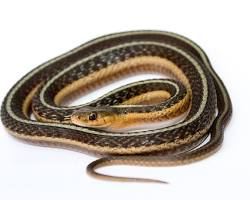
Garter Snakes (Thamnophis spp.) are among the most widespread and recognizable snakes in North America. These slender, striped snakes are highly adaptable, non-aggressive, and extremely beneficial to gardens, wetlands, and natural ecosystems. They are commonly encountered in residential landscapes, parks, marshes, and near water sources where they help control pest populations.
Although often described as non-venomous, garter snakes actually possess a very mild venom in their saliva that helps subdue small prey. However, this venom is harmless to humans and pets, and garter snakes are considered non-dangerous. Their bites, if they occur at all, are generally no more severe than minor scratches. :contentReference[oaicite:1]{index=1}
Because they consume slugs, insects, worms, amphibians, and small rodents, garter snakes are widely considered beneficial wildlife and important natural pest controllers.
Quick Facts
- Genus: Thamnophis
- Family: Colubridae
- Habitat: Gardens, wetlands, forests, ponds, lawns
- Diet: Worms, slugs, amphibians, insects, small fish
- Status: Beneficial non-dangerous snake
- Length: Typically 1.5 to 3 feet
- Reproduction: Live-bearing (viviparous)
Taxonomy and Classification
Garter snakes belong to the family Colubridae, the largest snake family in the world. The genus Thamnophis contains approximately 37 recognized species and numerous subspecies distributed across North and Central America. :contentReference[oaicite:2]{index=2}
Common species include:
- Common Garter Snake (Thamnophis sirtalis)
- Western Terrestrial Garter Snake (Thamnophis elegans)
- Ribbon Snakes (Thamnophis saurita)
- Giant Garter Snake (Thamnophis gigas)
Unlike many reptiles, garter snakes are viviparous, meaning females give birth to live young instead of laying eggs.
These snakes play important ecological roles as both predators and prey within terrestrial and aquatic ecosystems.
Physical Description
Garter snakes are slender, small to medium-sized snakes generally measuring between 1.5 and 3 feet long, although some species can grow larger.
Coloration and Patterns
Their appearance varies greatly depending on species and region, but most garter snakes feature:
- Three longitudinal stripes
- Dark background coloration
- Yellow, cream, blue, or red stripes
- Black, brown, olive, or green body colors
The classic garter snake pattern consists of:
- One stripe running down the center of the back
- One stripe along each side of the body
These stripes inspired the common name “garter snake” because they resemble decorative garters once worn on clothing. :contentReference[oaicite:3]{index=3}
Defense Mechanisms
When threatened or handled, garter snakes commonly release a strong-smelling musk from glands near the base of the tail. This foul odor helps deter predators.
They also use a black forked tongue to collect scent particles from the environment.
Distribution and Habitat
Garter snakes have one of the widest distributions of any snake genus in North America. They occur from southern Canada through the United States and into parts of Central America. :contentReference[oaicite:4]{index=4}
Preferred habitats include:
- Pond edges
- Wet meadows
- Marshes
- Streams
- Gardens
- Lawns
- Woodlands
- Vacant lots
They are especially common near water where prey such as frogs, worms, and fish are abundant.
Garter snakes adapt extremely well to suburban and urban environments when cover and food sources are available.
Behavior and Feeding Habits
Garter snakes are primarily active during the day and are frequently seen basking in sunny areas to regulate body temperature.
Diet
These snakes are active hunters that feed on a wide variety of prey including:
- Earthworms
- Slugs
- Snails
- Insects
- Tadpoles
- Frogs
- Salamanders
- Small fish
- Occasionally rodents
Because they consume slugs and insect pests, garter snakes are highly beneficial to gardeners. :contentReference[oaicite:5]{index=5}
Hibernation
During cold weather, garter snakes gather in communal overwintering sites called hibernacula.
These sites may include:
- Rock crevices
- Burrows
- Foundations
- Underground cavities
Many snakes return to the same hibernation site year after year.
Social Behavior
Unlike many snakes, garter snakes may form social aggregations. Large groups sometimes gather during mating season or hibernation periods. :contentReference[oaicite:6]{index=6}
Venom and Human Safety
Garter snakes were long considered completely non-venomous, but research has shown that some species possess mild neurotoxic saliva produced by specialized glands. :contentReference[oaicite:7]{index=7}
However:
- The venom is extremely mild
- It is primarily effective against small prey
- It poses little to no danger to humans
- Bites are rare and defensive only
Most bites cause only minor swelling, redness, or irritation if symptoms occur at all. :contentReference[oaicite:8]{index=8}
Garter snakes are shy animals that avoid human contact whenever possible.
Ecological Importance
Garter snakes are important components of healthy ecosystems.
Their ecological benefits include:
- Controlling slug populations
- Reducing insect pests
- Managing rodent numbers
- Supporting food webs
They also serve as prey for:
- Hawks
- Owls
- Raccoons
- Foxes
- Larger snakes
Management and Conservation
Management strategies focus on conservation and exclusion rather than eradication.
Encourage Their Presence
Garter snakes should generally be welcomed in gardens because of their beneficial role.
Exclusion
If snakes are entering unwanted areas:
- Seal foundation gaps
- Install snake-proof fencing
- Repair cracks beneath doors
- Close crawlspace openings
Habitat Modification
Reduce hiding places near buildings by removing:
- Rock piles
- Wood debris
- Dense brush
- Excess mulch
Safe Relocation
If a snake enters a building, it can usually be gently captured using gloves and released into a nearby natural habitat.
Interesting Facts About Garter Snakes
- Some species retain toxins from poisonous newts they consume.
- Garter snakes give birth to live young instead of laying eggs.
- They are among the most widespread snakes in North America.
- They release a foul-smelling musk when threatened.
- Many species are excellent swimmers.