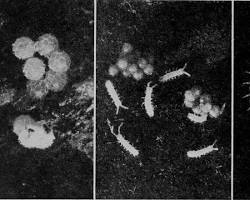
Garden Centipedes, more accurately known as Garden Symphylans (Scutigerella immaculata), are tiny soil-dwelling arthropods that resemble miniature white centipedes. Despite their appearance, they are not true centipedes but members of the class Symphyla, a separate group of myriapods closely related to centipedes and millipedes. These pests are notorious in vegetable gardens, greenhouses, nurseries, and commercial agriculture because they aggressively feed on delicate plant roots and root hairs. :contentReference[oaicite:1]{index=1}
Garden Symphylans are especially destructive to seedlings and young transplants. Feeding damage causes stunting, yellowing, wilting, and poor plant establishment, often mimicking plant diseases or nutrient deficiencies. Because they live underground and move rapidly through soil pores, infestations can be difficult to detect until crop damage becomes severe. :contentReference[oaicite:2]{index=2}
These pests thrive in cool, moist, organic-rich soils and are considered major agricultural pests in many regions of North America, particularly in greenhouse production and irrigated vegetable systems. :contentReference[oaicite:3]{index=3}
Quick Facts
- Scientific Name: Scutigerella immaculata
- Class: Symphyla
- Habitat: Moist soil, gardens, greenhouses
- Diet: Root hairs, root tips, fungi, organic matter
- Status: Serious soil pest
- Size: Approximately 1/16 to 1/4 inch long
- Main Damage: Root destruction and seedling loss
- Preferred Conditions: Cool, moist, high-organic soils
Taxonomy and Classification
Garden Symphylans belong to the class Symphyla, a distinct group of myriapods separate from true centipedes (Chilopoda) and millipedes (Diplopoda). Although commonly called “garden centipedes,” they are actually pseudocentipedes or symphylans. :contentReference[oaicite:4]{index=4}
The most destructive agricultural species is Scutigerella immaculata, a cosmopolitan species distributed worldwide through agricultural transport and plant movement. :contentReference[oaicite:5]{index=5}
Garden Symphylans undergo gradual development and continue molting throughout life.
Their life stages include:
- Egg
- Juvenile
- Adult
Young symphylans hatch with only six pairs of legs and gain additional segments and legs after successive molts until reaching the adult stage with 12 pairs of legs. :contentReference[oaicite:6]{index=6}
Physical Description
Garden Symphylans are tiny, slender, soft-bodied arthropods usually measuring between 1/16 and 1/4 inch long. :contentReference[oaicite:7]{index=7}
Appearance
Adults are characterized by:
- White or translucent coloration
- Slender centipede-like bodies
- Long segmented antennae
- Soft flexible exoskeletons
- 12 pairs of legs
- Absence of eyes
The body is segmented and highly flexible, allowing the symphylan to move rapidly through tiny soil spaces. :contentReference[oaicite:8]{index=8}
Movement
Garden Symphylans are extremely fast runners and quickly disappear deeper into the soil when exposed to light or disturbance. :contentReference[oaicite:9]{index=9}
Root Damage Symptoms
Plants damaged by symphylans often display:
- Wilting
- Stunting
- Yellowing
- Poor stand establishment
- Reduced vigor
- Death of seedlings
Damaged roots may show:
- Loss of feeder roots
- Brown scarring
- Pruned root tips
- Reduced root mass
These symptoms frequently resemble disease or drought stress. :contentReference[oaicite:10]{index=10}
Distribution and Habitat
Garden Symphylans occur worldwide and are considered cosmopolitan agricultural pests. They are especially problematic in:
- Greenhouses
- Vegetable gardens
- Nurseries
- Organic farms
- Irrigated crop fields
The pests prefer:
- Cool soil temperatures
- Moist environments
- High organic matter
- Loose soil structure
- Humus-rich soil
They are commonly found within the top 6–8 inches of soil but migrate deeper during hot or dry conditions. :contentReference[oaicite:11]{index=11}
Garden Symphylans do not create tunnels themselves but instead move through existing soil pores, worm channels, and root pathways. :contentReference[oaicite:12]{index=12}
Behavior and Feeding Habits
Garden Symphylans feed primarily on tender root tissues.
Root Feeding
They attack:
- Root hairs
- Root tips
- Young roots
- Seedling roots
- Underground stems
Feeding prevents plants from absorbing sufficient water and nutrients. :contentReference[oaicite:13]{index=13}
Host Range
Garden Symphylans attack numerous crops, including:
- Lettuce
- Tomatoes
- Potatoes
- Corn
- Beans
- Beets
- Asparagus
- Flowers
- Greenhouse ornamentals
Their broad host range makes crop rotation less effective than with many other soil pests. :contentReference[oaicite:14]{index=14}
Movement in Soil
Symphylans migrate vertically in response to moisture levels.
- After irrigation or rain, they move toward the soil surface
- During dry conditions, they retreat deeper underground
This movement pattern complicates management and monitoring. :contentReference[oaicite:15]{index=15}
Life Cycle
Garden Symphylans can survive for several years and continue molting throughout life. :contentReference[oaicite:16]{index=16}
Egg Stage
Females lay eggs individually in moist protected areas within soil or organic matter.
Juvenile Development
Newly hatched juveniles possess only six pairs of legs and gain additional legs after each molt. :contentReference[oaicite:17]{index=17}
Adult Longevity
Adults may survive several years under favorable conditions, contributing to persistent infestations in greenhouses and long-term agricultural systems. :contentReference[oaicite:18]{index=18}
Management and Prevention
Managing Garden Symphylans is difficult because they live underground and move rapidly through soil.
Monitoring
Monitoring techniques include placing:
- Potato slices
- Apple pieces
- Moist bait traps
slightly below the soil surface to attract symphylans for counting. :contentReference[oaicite:19]{index=19}
Cultural Control
Effective cultural practices include:
- Allowing soil to dry before planting
- Deep tilling or plowing
- Improving drainage
- Reducing excessive organic matter
- Encouraging vigorous plant growth
Healthy rapidly growing plants may outgrow moderate root damage. :contentReference[oaicite:20]{index=20}
Chemical Control
Commercial operations sometimes rely on:
- Soil fumigation
- Granular soil insecticides
- Pre-plant soil treatments
However, chemical management can be expensive and difficult due to the pest’s mobility and subterranean habitat. :contentReference[oaicite:21]{index=21}
Biological Research
Researchers continue studying:
- Beneficial nematodes
- Soil predators
- Heat sterilization
- Biological controls
as alternatives to chemical soil treatments. :contentReference[oaicite:22]{index=22}
Interesting Facts About Garden Symphylans
- They are not true centipedes.
- Adults possess 12 pairs of legs.
- They continue molting throughout life.
- They can move extremely quickly through soil pores.
- Most species are harmless detritivores, but some are serious crop pests.