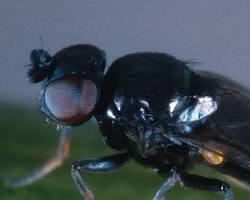
Frit Flies (Oscinella frit) are small agricultural pest flies belonging to the family Chloropidae, commonly known as grass flies. These insects are serious pests of cereal crops such as oats, barley, wheat, and occasionally rice, as well as turfgrass and pasture grasses. Although the adult flies are tiny and relatively harmless, the larval stage causes economically significant crop damage by feeding inside stems, shoots, and developing seed heads.
The most destructive injury caused by Frit Flies occurs when larvae attack young cereal seedlings during spring. The maggots bore into the central shoot and destroy the growing point, producing a characteristic symptom known as a “dead heart.” This damage can prevent normal tiller development and significantly reduce crop yields. In heavily infested fields, widespread seedling loss and reduced grain production may occur.
Because of their adaptability and rapid reproductive cycle, Frit Flies are considered major cereal pests in temperate agricultural regions around the world.
Taxonomy and Classification
- Kingdom: Animalia
- Phylum: Arthropoda
- Class: Insecta
- Order: Diptera
- Family: Chloropidae
- Genus: Oscinella
- Species: Oscinella frit
- Common Name: Frit Fly
Frit Flies belong to the order Diptera, the true flies, and undergo complete metamorphosis with egg, larva, pupa, and adult stages.
The species is believed to have originated in Europe but has spread globally through the widespread cultivation of cereal crops and grasses. Today, it occurs in many cereal-growing regions across Europe, North America, Asia, and other temperate agricultural zones.
Several closely related grass fly species exist, but Oscinella frit is among the most economically important because of its impact on cereal production.
Physical Description
Adult Frit Flies are extremely small insects measuring approximately 1/16 to 1/8 inch long. Despite their tiny size, they can be highly destructive when present in large numbers.
Important identifying features include:
- Glossy black body
- Small compact appearance
- Distinct reddish-orange eyes
- Short antennae
- Transparent wings
The larvae are the damaging stage. They are creamy-white, legless maggots that remain hidden inside plant stems or seed heads during feeding.
Pupae develop within plant tissue or nearby soil before adults emerge to begin the next generation.
Because the larvae feed internally, infestations may go unnoticed until visible plant symptoms develop.
Distribution and Habitat
Frit Flies occur in most major cereal-growing regions throughout the world. They are especially common in temperate and subtropical climates where cereal crops and grasses are abundant.
Primary habitats include:
- Oat fields
- Barley fields
- Wheat crops
- Rice cultivation areas
- Turfgrass systems
- Pastures
- Wild grasslands
- Hay fields
Adult flies are attracted to young actively growing grasses where females deposit eggs. Dense cereal plantings and favorable spring temperatures often support rapid population development.
Wild grasses also serve as alternative hosts and overwintering sites, helping populations persist between growing seasons.
Life Cycle
The Frit Fly undergoes complete metamorphosis consisting of four stages:
- Egg
- Larva
- Pupa
- Adult
Females lay eggs on young cereal plants, stems, leaves, or seed heads depending on the generation and crop stage.
After hatching, larvae bore into plant tissues where they feed internally and remain protected from many natural enemies and pesticide applications.
Under favorable conditions, Frit Flies may produce up to three overlapping generations each year.
Their development speed depends on:
- Temperature
- Host plant availability
- Crop growth stage
- Humidity
- Seasonal weather conditions
Larvae of the final annual generation often overwinter inside grasses or fall-sown cereals before completing development the following spring.
Behavior and Feeding Damage
Frit Flies damage cereal crops primarily during the larval stage. The larvae feed internally within shoots, stems, or seed heads depending on crop growth stage and generation timing.
Spring Generation
The spring generation is usually the most damaging. Adults emerge during spring and lay eggs on young cereal seedlings.
After hatching, larvae tunnel into the central shoot and destroy the growing point. This causes the classic symptom known as the “dead heart.”
Symptoms include:
- Yellowing central shoot
- Wilting of the main tiller
- Dead central stem
- Outer leaves remaining green temporarily
- Poor tiller development
Plants with dead hearts often fail to produce seed heads, significantly reducing yield potential.
Summer Generation
During summer, adults may lay eggs on developing cereal heads or wild grasses. Larvae feed on developing kernels and reproductive tissues.
This may result in:
- Stunted seed heads
- Reduced grain quality
- Poor kernel development
- Barren heads
Fall Generation
The fall generation often develops in grasses or fall-sown cereals where larvae overwinter before completing development the following season.
Economic Importance
Frit Flies are important agricultural pests because they attack crops during vulnerable growth stages. Early seedling damage can reduce stand density and yield potential significantly.
Economic losses may include:
- Reduced cereal yields
- Lower grain quality
- Poor tillering
- Reduced seed production
- Damage to turfgrass systems
Oats are often considered especially susceptible, though barley and wheat may also experience serious infestations.
Because larvae feed inside plant tissues, control can be difficult once infestation occurs.
Signs of Infestation
- Yellow or wilted central shoots
- “Dead heart” symptoms in seedlings
- Stunted cereal plants
- Barren or poorly formed seed heads
- Small black flies present in cereal fields
- Reduced tillering in young crops
Field scouting during spring is important because early infestations are easier to manage before widespread crop injury develops.
Management and Control (IPM)
Effective management of Frit Flies relies heavily on Integrated Pest Management (IPM) strategies combining cultural practices, resistant varieties, monitoring, and targeted insecticide use.
Delayed Sowing
Adjusting planting dates is one of the most effective cultural controls. Delaying spring sowing until after peak adult emergence may reduce egg-laying on vulnerable seedlings.
Plant Vigor and Fertility
Maintaining healthy vigorous crops helps plants compensate for damaged tillers. Well-fertilized cereals may produce replacement shoots more effectively.
Resistant Varieties
Plant resistant or tolerant cereal varieties whenever available. Some cultivars are less attractive to egg-laying females or better able to recover from damage.
Seed Treatments
Insecticidal seed treatments are highly effective against young larvae attempting to enter seedlings. These treatments help protect crops during the vulnerable establishment phase.
Monitoring and Thresholds
Monitor fields regularly during spring emergence. Foliar insecticides may be used when economic thresholds are exceeded, though timing is critical because larvae quickly enter plant tissues.
Grass Management
Control wild grasses near cereal fields when possible. Alternative grass hosts may support overwintering populations and contribute to reinfestation.
Research and Agricultural Importance
Researchers continue studying improved management strategies for Frit Flies, including:
- Optimized sowing schedules
- Biological control options
- Improved seed treatments
- Resistant cereal varieties
- Predictive population models
Because climate and planting practices strongly influence infestation levels, research focuses heavily on integrated management rather than reliance on a single control method.
Conclusion
Frit Flies (Oscinella frit) are important agricultural pests of cereal crops and grasses worldwide. Their larvae damage seedlings, stems, and developing grain heads by feeding internally within plant tissues. The characteristic “dead heart” symptom caused by spring larval feeding can lead to severe yield losses in oats, barley, wheat, and other cereals. Effective management relies on integrated pest management practices including adjusted planting dates, crop vigor, resistant varieties, and targeted seed treatments to protect vulnerable seedlings and reduce economic losses.