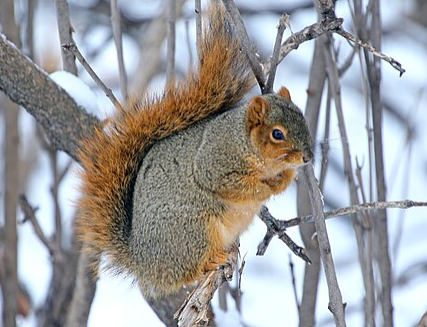
Overview
The Fox Squirrel is one of the largest tree squirrel species in North America and is often recognized by its bushy tail, reddish or rusty coloration, and bold, adaptable behavior. Although many people view fox squirrels as familiar backyard wildlife, they can also become nuisance pests when they invade attics, chew on structures, raid bird feeders, dig in gardens, or damage crops and ornamental plantings. Their intelligence, climbing ability, and persistence make them particularly difficult to exclude once they establish regular feeding or nesting habits near homes and outbuildings.
Fox squirrels are highly adaptable and can thrive in rural woodlots, suburban neighborhoods, city parks, farms, and forest edges. They feed on nuts, seeds, buds, bark, fruits, grains, birdseed, and occasionally insects or eggs. This broad diet helps them survive year-round and often brings them into close contact with human structures. In landscapes, they may strip bark from branches, dig up bulbs, gnaw on irrigation components, or scatter insulation and nesting material in attics and wall voids. Their nesting activity can also create noise, odors, and sanitation concerns.
Identification
- Large-bodied squirrel with a long, bushy tail
- Coat often varies from gray and orange-brown to rusty or black-mottled
- Pale underside and strong hind legs for climbing and jumping
- Often larger and heavier than the Eastern Gray Squirrel
- Produces loud chattering vocalizations and noticeable movement in trees
Habitat
Fox squirrels are commonly found in open woodlands, agricultural edges, neighborhoods with mature trees, golf courses, parks, and suburban developments. They build leaf nests in trees and may also use natural cavities, chimneys, sheds, barns, garages, and attic spaces. Homes with overhanging limbs, roof gaps, or loose vent covers are especially attractive to squirrels looking for sheltered den sites. In urban and suburban areas, bird feeders and ornamental nut-producing trees can support frequent squirrel activity.
Behavior and Pest Concerns
Fox squirrels are active during the day and spend much of their time foraging, caching food, and patrolling their territory. Their strong incisors grow continuously, so they must gnaw regularly to keep them worn down. This chewing can damage fascia boards, soffits, vents, wires, wood trim, and stored items. In attics, squirrels may shred insulation, contaminate surfaces with droppings and urine, and create fire hazards if electrical wiring is chewed. On farms and in gardens, they may feed on corn, fruit, bulbs, and seedlings.
Because squirrels often return to known food sources, bird feeders can unintentionally encourage repeated activity around homes. Once a squirrel discovers a structural entry point, it may use the same route repeatedly or enlarge the opening over time. Female squirrels may also select attics or wall voids as nursery sites, especially during breeding periods.
Ecological Role
Fox squirrels are important seed dispersers and contribute to forest regeneration by burying nuts and seeds. They are also prey for raptors, snakes, foxes, and other predators. In natural ecosystems, they play a beneficial role in woodland dynamics. Problems arise when that same adaptability brings them into conflict with human property, landscaping, and structures.
Prevention and Control
Exclusion is the most effective long-term management strategy. Tree limbs should be trimmed back from rooflines, openings in soffits and vents should be sealed, and chimney caps should be installed where needed. Bird feeders may need squirrel guards or relocation away from buildings. Garden produce and fallen fruit should be removed promptly to reduce attractants. When squirrels are already nesting inside a structure, humane removal and one-way exclusion methods are typically more effective than repeated deterrents alone. Because squirrels are persistent and often protected by local regulations, control methods should be selected carefully and in compliance with local wildlife rules.