Overview
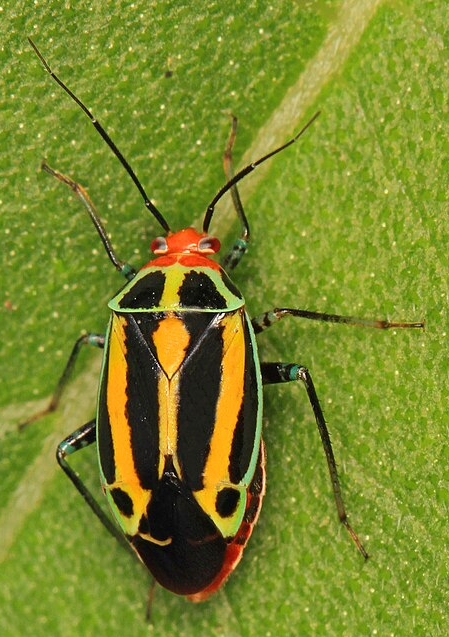
The Four-lined Plant Bug is a brightly colored sap-feeding insect in the family Miridae and is well known for damaging ornamental plants, herbs, and garden foliage. Despite its attractive appearance, this insect is considered a plant pest because both its nymphs and adults feed by piercing leaves and sucking out plant fluids. The result is a distinctive pattern of small, round, dark spots or sunken lesions that can make leaves appear diseased or scorched. In home gardens, the four-lined plant bug is especially frustrating because injury often appears suddenly in late spring and early summer, just as plants are entering active growth.
Unlike chewing insects that remove entire sections of foliage, four-lined plant bugs cause damage through repeated punctures. Each feeding puncture destroys plant tissue in a small area, and large numbers of bugs feeding on tender leaves can leave plants badly blemished. While the damage is often cosmetic rather than fatal, repeated feeding can stunt growth, reduce ornamental value, and weaken young plants. This species is commonly associated with mint, basil, sage, currants, gooseberries, chrysanthemums, dahlias, and a range of perennials and shrubs.
Identification
- Adults are yellow-green with four distinct black stripes running lengthwise on the wings
- Nymphs are bright red or orange with darker developing wing pads
- Body is slender, soft, and fast-moving
- Leaf damage appears as small black, brown, or translucent spots
- Most active in late spring and early summer
Habitat
Four-lined plant bugs are most often found in home gardens, perennial beds, herb plantings, nursery stock, and ornamental landscapes. They prefer lush plant growth and commonly inhabit the upper portions of host plants where tender new leaves are easiest to pierce. Eggs are typically laid into stems, where they remain protected until the following season. This hidden overwintering habit allows infestations to return year after year in the same planting beds if host plants are left unmanaged.
Behavior and Damage
Both immature and adult four-lined plant bugs feed by inserting needle-like mouthparts into leaves and extracting sap. Their saliva damages surrounding cells, causing collapsed spots that later turn dark. As these spots accumulate, leaves may curl, distort, or drop prematurely. On herbs and ornamentals grown for appearance, this injury can be particularly noticeable. Because the insects are quick and often drop or hide when disturbed, homeowners may first notice the feeding symptoms rather than the bugs themselves.
The timing of damage is one of the more useful clues for identification. Injury often peaks in early summer, after which adults disappear and visible activity declines. However, the leaf spots remain, leading gardeners to suspect fungal disease, sun scorch, or chemical burn. Correct identification is important because fungicides will not solve the problem.
Ecological Role and Garden Impact
Like many true bugs, four-lined plant bugs are part of broader plant-feeding insect communities and serve as prey for spiders, birds, and predatory insects. In balanced ecosystems they are not always severe pests, but in cultivated landscapes with favored host plants, their feeding can become highly noticeable. Dense perennial plantings, minimal cleanup, and repeated planting of susceptible species can support recurring populations.
Prevention and Control
Good garden sanitation is one of the best preventive measures. Because eggs are laid in stems, cutting back and removing heavily infested plant material at the end of the season can reduce the next year’s population. Hand-picking nymphs early in the season may help in smaller gardens. Watering plants at the base, improving airflow, and avoiding overly dense host plant groupings can make infestations easier to detect and manage. In severe cases, insecticidal soap or other targeted controls may be used against young nymphs, which are easier to control than fast-moving adults.