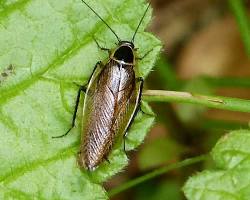
Forest Cockroaches are a broad group of outdoor cockroach species that inhabit forests, woodlands, gardens, leaf litter, and other natural environments. Unlike the well-known household pest cockroaches such as the German Cockroach or American Cockroach, Forest Cockroaches are beneficial decomposers that rarely infest human structures. These insects play an important ecological role by breaking down decaying wood, fungi, leaf litter, and organic debris in forest ecosystems.
Many Forest Cockroach species belong to genera such as Parcoblatta and Ectobius. They are commonly encountered under bark, inside rotten logs, beneath stones, within compost piles, or in damp woodland habitats. Occasionally, adult males may accidentally wander indoors or become attracted to lights at night, but they do not establish infestations inside homes because indoor environments are generally too dry and lack suitable food sources.
Despite their resemblance to household cockroaches, Forest Cockroaches are considered harmless and environmentally beneficial insects.
Taxonomy and Classification
- Kingdom: Animalia
- Phylum: Arthropoda
- Class: Insecta
- Order: Blattodea
- Common Genera: Parcoblatta, Ectobius
- Common Name: Forest Cockroaches
Forest Cockroaches belong to the order Blattodea, the same insect order as termites and household cockroaches.
Unlike structural pest cockroaches, these species evolved specifically for outdoor woodland environments and depend on moist organic habitats for survival.
Common examples include:
- Pennsylvania Woods Cockroach (Parcoblatta pensylvanica)
- Tawny Cockroach (Ectobius pallidus)
- Various Ectobius woodland species
Forest Cockroaches undergo incomplete metamorphosis with three main life stages:
- Egg
- Nymph
- Adult
Physical Description
Forest Cockroaches vary in appearance depending on species, but most are medium-sized cockroaches measuring between 1/2 and 1 inch long.
Typical characteristics include:
- Flattened oval body shape
- Reddish-brown or tan coloration
- Long antennae
- Fast-running behavior
- Spiny legs adapted for crawling
Unlike some indoor pest cockroaches, Forest Cockroaches often lack distinct dark stripes behind the head.
Adult males of many species possess fully developed wings that cover the abdomen and allow short-distance flight. Flying males are often mistaken for beetles or large flies when attracted to outdoor lights.
Females and nymphs typically have shorter wings or are wingless entirely. These stages are more commonly found hidden beneath bark, wood, and debris.
Nymphs resemble smaller wingless versions of adults and gradually develop through a series of molts.
Distribution and Habitat
Forest Cockroaches are widely distributed throughout forested and wooded regions of North America, Europe, and parts of Asia.
They thrive in moist outdoor environments rich in decaying organic matter.
Common habitats include:
- Under loose bark
- Rotting logs
- Leaf litter
- Wood piles
- Mulch beds
- Compost piles
- Decaying stumps
- Damp forest soil
- Garden debris
Moisture is extremely important for their survival. Unlike indoor pest species adapted to human structures, Forest Cockroaches depend on humid environments and decomposing organic material.
Most species avoid dry indoor conditions and cannot reproduce successfully inside homes.
Behavior and Ecology
Forest Cockroaches are primarily nocturnal and spend daylight hours hidden beneath bark, wood, stones, or leaf litter.
At night, they emerge to forage for decaying organic material and fungal growth.
Their diet commonly includes:
- Rotting wood
- Leaf litter
- Fungi
- Decaying plant material
- Organic debris
- Compost material
By consuming and breaking down decomposing matter, these cockroaches contribute significantly to nutrient recycling and soil formation within forest ecosystems.
They serve as important decomposers alongside beetles, fungi, worms, and other forest organisms.
Forest Cockroaches are also prey for:
- Birds
- Spiders
- Small mammals
- Amphibians
- Predatory insects
Their ecological role makes them valuable members of natural woodland environments.
Life Cycle
Forest Cockroaches undergo incomplete metamorphosis with gradual development from egg to adult.
Females produce egg capsules called oothecae, which contain multiple eggs.
Eggs hatch into small nymphs that resemble miniature adults without wings. Nymphs molt repeatedly while growing.
Development speed depends on:
- Temperature
- Humidity
- Food availability
- Species type
Many woodland species complete development seasonally and overwinter in protected outdoor habitats.
Human Interaction and Nuisance Issues
Forest Cockroaches are frequently misunderstood because people associate all cockroaches with household infestations and unsanitary conditions.
However, Forest Cockroaches differ greatly from indoor pest species.
They do not:
- Infest kitchens or bathrooms
- Breed indoors
- Damage structures
- Contaminate stored food
- Cause significant sanitation problems
Most human conflict occurs when adult males are attracted to porch lights, windows, or screen doors during warm evenings.
Occasionally, individual cockroaches may accidentally wander indoors seeking shelter or attracted by light. These accidental intruders usually die quickly because homes lack the humidity and organic habitat they require.
Unlike German Cockroaches, Forest Cockroaches cannot establish permanent indoor populations under normal household conditions.
Signs of Activity
- Cockroaches under bark or logs outdoors
- Flying reddish-brown cockroaches near lights
- Cockroaches found in wood piles or mulch
- Occasional accidental indoor sightings
- Activity in damp wooded areas
Most activity occurs outdoors, especially during warm humid weather.
Management and Prevention
Because Forest Cockroaches are beneficial outdoor insects, control is usually unnecessary. Management focuses mainly on exclusion and reducing accidental indoor entry.
Exclusion
Seal cracks and gaps around doors, windows, utility openings, and foundations to prevent accidental entry.
Maintain weather stripping on doors and windows.
Woodpile Management
Store firewood outdoors and away from the house foundation. Elevated storage helps reduce insect harborage.
Inspect firewood before bringing it indoors.
Outdoor Lighting
Reduce exterior lighting attraction by using yellow or sodium vapor bulbs that are less attractive to nocturnal insects.
Landscape Sanitation
Remove excessive leaf litter and debris directly adjacent to the home foundation.
Keep mulch, compost, and decaying wood away from entry points.
Chemical Control
Chemical treatment is rarely necessary because Forest Cockroaches are not structural pests and do not establish indoor infestations.
Outdoor pesticide use is generally discouraged unless populations become an exceptional nuisance.
Ecological Importance
Forest Cockroaches are important decomposers within forest ecosystems. By feeding on decaying organic matter, they help recycle nutrients and contribute to soil health.
Their feeding activity accelerates decomposition processes and supports the breakdown of woody material and leaf litter.
These cockroaches also provide food for numerous predators and contribute to overall forest biodiversity.
Research and Evolutionary Importance
Scientists study Forest Cockroaches to better understand:
- Cockroach evolution
- Decomposition ecology
- Forest nutrient cycling
- Differences between pest and non-pest cockroaches
- Behavioral adaptation to outdoor environments
Research also helps clarify the evolutionary relationships between harmless woodland species and structural pest cockroaches.
Conclusion
Forest Cockroaches are beneficial outdoor cockroach species that inhabit wooded and damp natural environments rather than human structures. Unlike pest cockroaches, they feed on decaying wood, fungi, and leaf litter, playing an important ecological role as decomposers. Although adult males may occasionally enter homes or gather around lights, these insects rarely survive indoors and do not establish infestations. Proper exclusion, firewood management, and reduced outdoor lighting usually prevent nuisance encounters while allowing these ecologically valuable insects to continue their role in forest ecosystems.