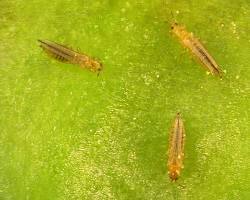
Flower Thrips (Frankliniella spp.), especially the highly destructive Western Flower Thrips (Frankliniella occidentalis), are among the most economically important greenhouse and agricultural pests in the world. These tiny insects attack flowers, vegetables, fruits, ornamentals, and nursery plants by piercing plant tissues and sucking out cellular contents. Their feeding causes cosmetic injury, deformation, reduced plant vigor, and fruit scarring. Even more importantly, Flower Thrips are major vectors of devastating plant viruses such as Tomato Spotted Wilt Virus (TSWV).
Although extremely small and difficult to detect, Flower Thrips can rapidly multiply under warm conditions and quickly become severe pests in greenhouses, gardens, farms, and commercial ornamental production systems. Their ability to hide deep within flowers and buds, combined with their high reproductive rate and growing resistance to pesticides, makes them particularly difficult to control.
Because of their major economic impact, Flower Thrips are considered one of the most important pests in integrated pest management (IPM) programs worldwide.
Taxonomy and Classification
- Kingdom: Animalia
- Phylum: Arthropoda
- Class: Insecta
- Order: Thysanoptera
- Family: Thripidae
- Genus: Frankliniella
- Common Species: Frankliniella occidentalis
- Common Name: Flower Thrips
Thrips belong to the insect order Thysanoptera, meaning “fringe wings,” a reference to their narrow wings lined with fine hairs.
The Western Flower Thrips is the most notorious species because of:
- Its enormous host range
- Rapid reproduction
- Ability to spread plant viruses
- Strong pesticide resistance
- Adaptation to greenhouse environments
Flower Thrips undergo a unique developmental process that includes:
- Egg
- Larval stages
- Prepupal stage
- Pupal stage
- Adult
The prepupal and pupal stages usually occur in soil, growing media, or hidden protected areas.
Physical Description
Flower Thrips are extremely small insects, usually measuring less than 1/20 inch long.
Despite their tiny size, they possess distinctive characteristics:
- Slender elongated body
- Yellow, tan, brown, or black coloration
- Two pairs of narrow fringed wings
- Short antennae
- Rapid movement when disturbed
Because they are so small, infestations often go unnoticed until visible plant damage appears.
The larvae resemble smaller wingless adults and are often pale yellow or translucent.
Distribution and Habitat
Flower Thrips are cosmopolitan pests found worldwide.
They infest a tremendous variety of environments including:
- Greenhouses
- High tunnels
- Vegetable fields
- Fruit orchards
- Floriculture facilities
- Home gardens
- Nurseries
- Indoor ornamental plants
Preferred host plants include:
- Roses
- Orchids
- Tomatoes
- Peppers
- Strawberries
- Citrus
- Chrysanthemums
- Cucumbers
- Lettuce
- Hundreds of ornamental species
Flower Thrips prefer concealed feeding locations such as:
- Flower buds
- Leaf axils
- Under sepals
- Inside blossoms
- Developing fruit surfaces
Greenhouses provide ideal conditions because warm temperatures and abundant host plants allow continuous reproduction year-round.
Life Cycle
Flower Thrips reproduce rapidly, especially in warm protected environments.
Under favorable greenhouse conditions, a complete generation may develop in as little as two weeks.
Egg Stage
Females insert eggs directly into soft plant tissue using a saw-like ovipositor.
Eggs are protected inside leaves, stems, petals, or buds.
Larval Stage
The larvae are highly active feeders and cause significant plant damage.
This stage is also critical for virus acquisition. Larvae feeding on infected plants can acquire Tomato Spotted Wilt Virus and retain it throughout development.
Pupal Stages
The prepupal and pupal stages typically occur in:
- Soil
- Growing media
- Plant debris
- Protected crevices
During these stages, feeding stops while the insect transforms into an adult.
Adult Stage
Adults emerge fully winged and capable of dispersal and virus transmission.
Adult females can reproduce rapidly and continuously under greenhouse conditions.
Behavior and Feeding
Flower Thrips feed by puncturing plant cells with specialized mouthparts and sucking out cellular contents.
Their feeding behavior damages:
- Leaves
- Petals
- Buds
- Fruit surfaces
- Growing tips
As the plant cells collapse and fill with air, affected tissue develops a silvered or scarred appearance.
Thrips prefer tender actively growing plant tissue and often remain hidden deep within flowers or buds, making detection difficult.
Damage and Symptoms
Flower Thrips cause both direct feeding injury and indirect viral damage.
Leaf Damage
Feeding on leaves creates:
- Silver streaks
- Stippling
- Bronzing
- Leaf distortion
- Curling
Severely damaged foliage may become dry, brittle, or deformed.
Flower Damage
Flower infestations often result in:
- Brown petal edges
- Distorted blossoms
- Failure of buds to open
- Silver streaking on petals
- Reduced ornamental quality
Even minor damage can make ornamental flowers unmarketable.
Fruit Damage
Feeding on fruit surfaces may cause:
- Corking
- Scarring
- Russeting
- Surface blemishes
- Reduced market value
Strawberries, citrus, peppers, and tomatoes are especially vulnerable.
Virus Transmission
The most serious threat posed by Flower Thrips is their ability to transmit plant viruses.
The Western Flower Thrips is a primary vector of:
- Tomato Spotted Wilt Virus (TSWV)
- Impatiens Necrotic Spot Virus (INSV)
- Other tospoviruses
These viruses can cause:
- Plant death
- Leaf necrosis
- Stunted growth
- Fruit deformities
- Severe crop losses
Virus transmission makes Flower Thrips among the most feared greenhouse pests globally.
Signs of Infestation
- Silvery leaf streaking
- Brown flower edges
- Tiny black fecal spots (frass)
- Distorted blossoms
- Scarred fruit surfaces
- Tiny fast-moving insects inside flowers
- Virus symptoms on plants
Thrips are often detected by tapping flowers over white paper and observing the tiny moving insects.
Management and Control (IPM)
Control of Flower Thrips requires aggressive integrated pest management strategies.
Monitoring
Blue or yellow sticky traps are essential for early detection and population monitoring.
Traps should be placed throughout greenhouses and near susceptible crops.
Biological Control
Biological control is one of the most important tools for sustainable thrips management.
Effective natural enemies include:
- Predatory mites (Amblyseius spp.)
- Neoseiulus predatory mites
- Minute pirate bugs (Orius spp.)
- Entomopathogenic fungi
These predators feed on thrips larvae and adults.
Sanitation
Remove weeds, old flowers, and plant debris that may harbor thrips or plant viruses.
Prune and destroy heavily infested flowers and buds.
Chemical Control
Flower Thrips are notorious for developing insecticide resistance.
Effective management requires:
- Rotating insecticide classes
- Using selective products
- Targeting larvae and pupae
- Thorough spray coverage
Common control products include:
- Spinosad
- Horticultural oils
- Insecticidal soaps
- Entomopathogenic fungi
- Selective systemic insecticides
Environmental Management
Reducing excessive humidity and maintaining airflow may help limit outbreaks in greenhouse environments.
Research and Scientific Importance
Because of their economic impact, Flower Thrips are major subjects of agricultural research.
Current studies focus on:
- Biological control improvements
- Virus transmission mechanisms
- Insecticide resistance management
- Greenhouse IPM systems
- Host plant resistance breeding
Researchers continue seeking sustainable methods to manage these difficult pests while minimizing pesticide dependence.
Conclusion
Flower Thrips, particularly the Western Flower Thrips (Frankliniella occidentalis), are among the world’s most destructive greenhouse and ornamental crop pests. Their feeding damages flowers, leaves, and fruit while their ability to transmit serious plant viruses greatly increases their economic importance. Because they reproduce rapidly, hide deep within plant tissue, and develop pesticide resistance quickly, successful management depends on integrated pest management strategies combining monitoring, biological control, sanitation, and selective insecticides. Despite their tiny size, Flower Thrips remain one of the most challenging pests in modern horticulture and greenhouse production.