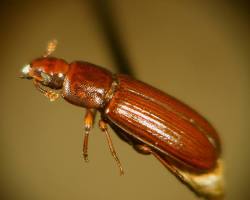
Flour Beetles are small stored product pests most often associated with the genus Tribolium, especially the Red Flour Beetle (Tribolium castaneum) and the Confused Flour Beetle (Tribolium confusum). These insects are among the most common pantry pests found in homes, grocery stores, warehouses, bakeries, mills, food processing plants, and grain storage facilities. They infest dry foods such as flour, cereal, cornmeal, cake mix, crackers, pasta, dried pet food, spices, nuts, and other grain-based products.
Unlike some grain pests that attack whole kernels, flour beetles usually prefer broken grain, milled products, and processed foods. They do not bite, sting, or damage buildings, but they can make food unusable by contaminating it with eggs, larvae, shed skins, fecal material, dead insects, and chemical secretions. In severe infestations, flour may develop a pinkish tint and an unpleasant sour or moldy odor.
Taxonomy and Classification
- Kingdom: Animalia
- Phylum: Arthropoda
- Class: Insecta
- Order: Coleoptera
- Family: Tenebrionidae
- Genus: Tribolium
- Common Names: Flour Beetles, Red Flour Beetles, Confused Flour Beetles
Flour beetles belong to the darkling beetle family, Tenebrionidae. The two most important household and commercial species are the Red Flour Beetle and the Confused Flour Beetle. These species look very similar and are often difficult to distinguish without close inspection. One practical difference is that Red Flour Beetles are capable of flight and may spread more easily in warm conditions, while Confused Flour Beetles rarely fly and usually spread by crawling or through movement of infested products.
Physical Description
Adult Flour Beetles are small, flattened, reddish-brown beetles measuring about 1/8 inch long. Their flattened bodies allow them to move easily through flour, grain dust, packaging seams, shelf cracks, and small storage gaps. Adults have elongated bodies, visible antennae, and hardened wing covers typical of beetles.
The larvae are slender, worm-like grubs that range from creamy white to pale yellow. They are usually found within the infested food itself, feeding among particles of flour, meal, cereal, or grain fragments. Larvae may be difficult to notice at first because they blend into light-colored food products.
Eggs are tiny, white, and sticky. Because flour particles and food dust adhere to the eggs, they are often hidden from view. Pupae are also pale and usually remain within the food source or nearby cracks until adult beetles emerge.
Distribution and Habitat
Flour Beetles are found worldwide and are especially common in warm, humid environments. They are cosmopolitan pests, meaning they occur in many regions wherever stored grain products are available. Because they are easily transported in packaged goods, they can appear in homes, commercial kitchens, restaurants, warehouses, grain elevators, feed stores, bakeries, and food manufacturing plants.
Typical infestation sites include:
- Flour bags
- Cereal boxes
- Cake mixes
- Cornmeal
- Rice and grain products
- Crackers and dry snacks
- Dried pet food
- Spices
- Nuts and seeds
- Pantry shelf cracks and crevices
Flour beetles are highly skilled at hiding. Adults and larvae may remain behind shelf liners, in screw holes, under cabinet edges, inside folded packaging, and in spilled food dust. This makes thorough inspection and cleaning essential for complete control.
Behavior and Life Cycle
Flour beetles undergo complete metamorphosis with four stages: egg, larva, pupa, and adult. Females lay eggs directly into food products, where the larvae hatch and begin feeding. A single female may lay hundreds of eggs during her lifetime, allowing populations to grow rapidly when food is abundant.
In warm conditions, the life cycle can be completed in as little as seven weeks. In cooler environments, development takes longer. Multiple generations may occur each year inside heated buildings, especially in pantries, mills, warehouses, and food processing areas.
Adults are long-lived compared to many pantry pests and may survive for months. This persistence makes flour beetle infestations difficult to eliminate if even a small amount of infested material remains hidden.
Damage and Economic Importance
Flour Beetles are important stored product pests because they contaminate food rather than simply consuming it. Their feeding and breeding activity reduces food quality and can make products unfit for use. Infested flour, meal, and cereal may contain larvae, adults, eggs, shed skins, frass, and dead beetles.
Heavy infestations can cause flour to appear discolored or develop a pinkish tone. The beetles may also release defensive chemicals known as quinones, which can create a sharp, unpleasant odor and taste. This makes infested food unpalatable and unsuitable for consumption.
In commercial settings, flour beetles can cause major economic losses. Contaminated products may need to be discarded, processing lines cleaned, shipments rejected, and storage areas treated. Their presence may also trigger regulatory concerns in food handling facilities.
Signs of Infestation
- Small reddish-brown beetles in flour, cereal, or pantry shelves
- Larvae or grubs inside dry food products
- Unpleasant sour or moldy odor in flour or grain products
- Pinkish discoloration in heavily infested flour
- Beetles crawling in cabinets, drawers, or food storage areas
- Fine food dust, frass, or shed skins near stored products
Management and Control (IPM)
Control of Flour Beetles begins with finding and removing the source of infestation. Pesticides are rarely the first step in home pantries because beetles are usually breeding inside food packages.
Inspect all dry goods, including unopened packages. Flour beetles can enter damaged packaging or may already be present when products are purchased.
Discard infested products by sealing them in a plastic bag and placing them in an outdoor trash container. Do not simply move infested products to another cabinet, as beetles may continue spreading.
Vacuum shelves, cracks, corners, and cabinet seams thoroughly. Pay close attention to spilled flour, grain dust, crumbs, and gaps behind shelf liners. After vacuuming, empty the vacuum outdoors.
Wash shelves and storage areas with soap and water. A mild vinegar solution may also be used after cleaning, but sanitation and removal of food residue are the most important steps.
Use cold or heat treatment for small quantities of suspected but salvageable food. Freezing products at 0°F for four to seven days can kill eggs, larvae, and adults. Heating dry goods to about 130°F for 30 minutes may also be effective when safe for the product.
Store food in airtight containers made from glass, metal, or rigid plastic with tight-fitting lids. Thin cardboard boxes and paper bags are not reliable barriers against pantry pests.
Prevention
Preventing flour beetles requires careful food storage and routine pantry maintenance. Buy dry goods in quantities that can be used within a reasonable time. Inspect packaging before purchase and avoid bags or boxes with tears, holes, dust, or signs of insect activity.
After bringing flour, cereal, or grains home, transfer them into sealed containers. Keeping older products rotated forward helps prevent forgotten items from becoming hidden breeding sites. Pantries should be cleaned regularly to remove crumbs, spilled flour, and food dust.
Conservation and Research
Although flour beetles are serious pests in stored products, they are also important research organisms. Species such as Tribolium castaneum are widely used in studies of genetics, population ecology, evolution, pest management, and insect development. Research continues to improve pheromone traps, monitoring systems, biological control methods, and integrated pest management strategies for commercial storage facilities.
Conclusion
Flour Beetles are persistent pantry and stored product pests that infest flour, cereal, cornmeal, pet food, spices, and other dry goods. While they do not bite or damage structures, they contaminate food and can create unpleasant odors and discoloration during heavy infestations. Effective control depends on identifying the source, discarding contaminated products, deep cleaning storage areas, and using airtight containers to prevent reinfestation. With careful pantry management and routine inspection, flour beetle problems can usually be eliminated and prevented.