Overview
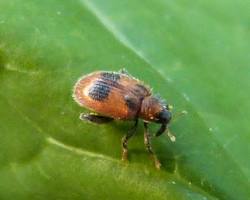
Flea Weevils are small plant-feeding beetles known for their ability to jump when disturbed. Most species associated with this common name belong to the genus Orchestes, a group of snout beetles in the family Curculionidae. Their name comes from their unusual combination of weevil-like features and flea-like jumping behavior. Unlike many slow-moving weevils, Flea Weevils have enlarged hind legs that allow them to spring away rapidly from leaves, stems, or branches when threatened.
These insects are considered occasional to moderate pests of trees, shrubs, crops, and ornamental plants. They are especially notable because both the adult and larval stages can damage plants in different ways. Adults chew small holes in foliage, while larvae often feed inside leaves as leaf miners. This combination of external and internal feeding can reduce photosynthesis, create unsightly foliage, and stress young or newly planted trees.
Flea Weevils are most commonly associated with deciduous trees such as elm, apple, oak, birch, and hawthorn, though host preference varies by species. In gardens, nurseries, and orchards, their feeding damage may reduce plant vigor, lower ornamental quality, or contribute to premature leaf drop during heavy infestations.
Taxonomy and Classification
- Kingdom: Animalia
- Phylum: Arthropoda
- Class: Insecta
- Order: Coleoptera
- Family: Curculionidae
- Common Genus: Orchestes
- Common Name: Flea Weevils
Flea Weevils belong to the true weevil family, Curculionidae. This family includes thousands of species of snout beetles, many of which are important plant feeders. Although Flea Weevils are sometimes compared to Flea Beetles, they are not the same insects. Flea Beetles belong to the leaf beetle family, while Flea Weevils are true weevils with a short snout and elbowed antennae.
Like other beetles, Flea Weevils undergo complete metamorphosis with four life stages:
- Egg
- Larva
- Pupa
- Adult beetle
Physical Description
Adult Flea Weevils are tiny, compact beetles, usually only a few millimeters long. Their small size and dark coloration make them easy to overlook until feeding injury appears on host plants.
Common identifying features include:
- Small oval or rounded body
- Dark brown, black, or mottled coloration
- Short snout typical of weevils
- Strong enlarged hind legs
- Ability to jump when disturbed
- Chewing mouthparts
Their jumping behavior is one of the easiest field clues. When foliage is shaken or disturbed, adults may leap away quickly rather than simply crawling or dropping.
The larvae are small, pale, legless grubs that feed concealed within plant tissue. In many species, larvae mine leaves by tunneling between the upper and lower leaf surfaces. Because they remain protected inside the leaf, they are rarely seen directly unless damaged foliage is opened.
Distribution and Habitat
Flea Weevils occur in many temperate regions where suitable host plants are available. They are found in natural woodlands, orchards, gardens, nurseries, hedgerows, and landscaped areas.
Common habitats include:
- Fruit orchards
- Shade trees
- Ornamental plantings
- Tree nurseries
- Woodland edges
- Gardens and field margins
Adults are usually found on foliage during the growing season. They may overwinter in leaf litter, bark crevices, plant debris, or protected ground cover near host plants. In spring, adults become active and begin feeding on emerging leaves.
Behavior and Feeding
Flea Weevils are plant feeders with two important damage phases. Adults feed externally, while larvae often feed internally as leaf miners.
Adult feeding appears as small round holes or notches in leaves. This injury is often called shot-hole damage because the foliage looks as though it has been peppered with tiny holes.
Larval feeding creates blotch mines, usually visible as brown, swollen, or papery patches within the leaf. These mines form when larvae consume the inner tissue between leaf surfaces.
Damage is often mistaken for:
- Fungal leaf spots
- Nutrient deficiency
- Environmental stress
- Leaf miner damage from flies or moths
Because both adults and larvae damage leaves, infestations may create a mixed pattern of holes, blotches, browning, and early leaf drop.
Life Cycle
The Flea Weevil life cycle is usually synchronized with spring leaf development. Adults emerge or become active as new foliage appears.
Females lay eggs on or inside leaf tissue, depending on species. After hatching, larvae begin feeding internally and create mines within the leaves. Once mature, larvae pupate either within the leaf, in leaf litter, or in the soil.
New adults emerge later in the season and may feed briefly before seeking sheltered overwintering sites.
Many species produce one generation per year, though the number of generations may vary by climate and species.
Damage and Economic Importance
Flea Weevil damage is usually most serious on young trees, nursery stock, orchard trees, and ornamental plants where appearance and plant vigor are important.
Common damage symptoms include:
- Small holes in leaves
- Brown blotch mines
- Tattered foliage
- Premature leaf drop
- Reduced photosynthesis
- Stunted growth in young plants
Established mature trees can usually tolerate light feeding. However, repeated heavy infestations may weaken trees, especially if they are already stressed by drought, transplant shock, poor soil, or disease.
In nurseries and ornamental landscapes, cosmetic damage may reduce plant value even when long-term health effects are limited.
Signs of Infestation
- Tiny jumping beetles on leaves
- Shot-hole feeding damage
- Brown blotches or mines in leaves
- Premature yellowing or browning foliage
- Leaf drop during heavy infestations
- Damage concentrated on young spring growth
Management and Control (IPM)
Management of Flea Weevils is usually based on monitoring, plant health, and properly timed treatments. Because larvae feed inside leaves, control is most effective before eggs are laid or when adults first become active.
Monitoring
Inspect susceptible plants in early spring as new leaves unfold. Look for small adult beetles, shot-hole feeding, and early blotch mines.
Plant Health
Healthy plants are better able to tolerate feeding damage. Proper watering, mulching, pruning, and avoiding transplant stress can reduce the impact of infestations.
Sanitation
Remove fallen infested leaves where practical, especially around small ornamental trees and nursery plants. This can reduce overwintering or pupating populations.
Biological Control
Natural enemies such as parasitic wasps, predatory beetles, spiders, and birds may help suppress populations. Avoid unnecessary broad-spectrum insecticide use that can kill beneficial predators.
Chemical Control
If damage is severe, treatments should be timed against adults before egg-laying occurs. Once larvae are protected inside leaves, contact sprays are much less effective. In high-value trees or nursery stock, systemic products may sometimes be considered according to local recommendations and label directions.
Prevention
Preventive care focuses on keeping host plants vigorous and reducing pest buildup. Avoid drought stress, protect young trees after planting, and inspect nursery stock before installation. In orchards or landscapes with a history of damage, early spring scouting is especially important.
Conclusion
Flea Weevils are small jumping snout beetles that damage plants through adult leaf feeding and larval leaf mining. Adults create small shot-hole injuries, while larvae produce brown blotch mines inside leaves. Although light infestations are usually cosmetic, heavy feeding can weaken young trees, reduce ornamental quality, and contribute to premature leaf drop. Effective control depends on early monitoring, maintaining plant health, encouraging natural enemies, and using properly timed treatments when infestations threaten valuable plants.