Overview
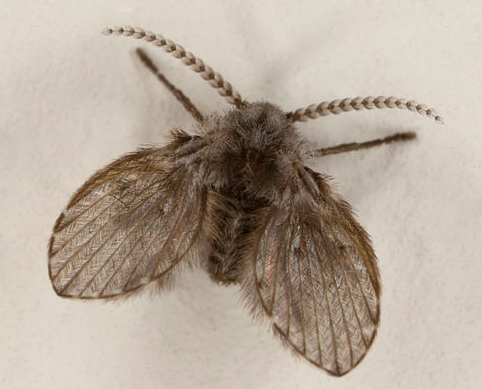
Filter Flies, commonly referred to as Drain Flies or Moth Flies, are small fuzzy insects belonging to the family Psychodidae. These flies are closely associated with moist environments where organic sludge and bacterial biofilm accumulate. They are frequently encountered around drains, sewage systems, septic tanks, filtration systems, sump pumps, and standing water sources inside homes and commercial buildings.
Although Filter Flies are not considered dangerous to humans, they can become persistent nuisance pests when populations grow indoors. Their presence usually indicates excess moisture, clogged drains, or organic buildup within plumbing systems.
Filter Flies are particularly recognizable because of their fuzzy moth-like appearance and weak fluttering flight. Unlike strong-flying house flies, these insects usually move in short hopping bursts or crawl slowly along walls near their breeding areas.
Because they breed directly within organic slime layers inside drains and pipes, eliminating infestations requires cleaning the breeding material itself rather than simply killing the adult flies.
Taxonomy and Classification
- Kingdom: Animalia
- Phylum: Arthropoda
- Class: Insecta
- Order: Diptera
- Family: Psychodidae
- Common Names: Filter Flies, Drain Flies, Moth Flies
Filter Flies belong to the fly family Psychodidae, which contains many species associated with moist organic environments.
Most nuisance species found in homes belong to the genera:
- Psychoda
- Clogmia
- Telmatoscopus
These insects undergo complete metamorphosis with four life stages:
- Egg
- Larva
- Pupa
- Adult fly
The larval stages develop entirely within moist organic biofilm and sludge deposits.
Physical Description
Filter Flies are tiny insects typically measuring about 1/16 to 1/8 inch long.
Key identifying characteristics include:
- Small fuzzy body
- Dense hair-like scales
- Broad heart-shaped wings
- Gray, tan, or brown coloration
- Weak fluttering flight
- Long antennae
The body and wings are covered with fine hairs that create a dusty or fuzzy appearance similar to tiny moths.
When resting, the wings are often held roof-like over the body.
Adults are weak fliers and usually travel only short distances from their breeding sites.
They are more commonly seen crawling on walls, ceilings, sinks, or around drains than actively flying.
Distribution and Habitat
Filter Flies are cosmopolitan insects found worldwide wherever moisture and organic buildup occur.
Common habitats include:
- Bathroom drains
- Kitchen sinks
- Floor drains
- Sewage systems
- Septic tanks
- Grease traps
- Condensation lines
- Sump pumps
- Standing water
- Industrial filtration systems
They thrive in environments with:
- High humidity
- Organic sludge
- Bacterial growth
- Poor drainage
- Accumulated biofilm
Filter Flies are especially common in neglected drains and plumbing systems that receive little water flow or cleaning.
Life Cycle
The life cycle of Filter Flies revolves around moist organic buildup known as biofilm.
Egg Stage
Females lay eggs directly within the gelatinous slime coating found inside drains, pipes, and filtration systems.
Egg masses may contain dozens of eggs and are protected within moist organic material.
Larval Stage
The larvae are elongated worm-like organisms that feed on:
- Bacteria
- Algae
- Organic sludge
- Decaying debris
- Microorganisms
Larvae help break down organic buildup and can actually be beneficial in some industrial wastewater treatment systems.
In homes, however, their presence signals sanitation or drainage problems.
Pupal Stage
The pupal stage occurs within the same moist breeding material where the larvae developed.
Adults emerge shortly afterward and remain close to the breeding site.
Adult Stage
Adult Filter Flies are nocturnal and most active during evening hours.
They are commonly observed resting on:
- Walls near drains
- Bathroom tiles
- Sink surfaces
- Basement walls
- Near sewage systems
The entire life cycle may be completed in as little as 1 to 3 weeks depending on temperature and moisture conditions.
Behavior and Feeding
Filter Fly larvae feed primarily on microorganisms and decaying organic matter within wet sludge layers.
Unlike biting flies, adult Filter Flies do not feed on blood or attack humans.
Adults consume moisture and organic residues but are relatively short-lived compared to many other fly species.
Their fuzzy water-repellent bodies allow them to survive in wet environments where many other insects would drown.
Because they remain close to their breeding sites, adult populations often indicate the precise location of plumbing or drainage problems.
Signs of Infestation
- Small fuzzy flies near drains
- Moth-like insects on bathroom walls
- Flies around sinks or tubs
- Persistent drain fly activity at night
- Organic slime inside drains
- Slow drainage or foul odors
Infestations are often most noticeable in:
- Bathrooms
- Kitchens
- Basements
- Laundry rooms
- Utility areas
Human Interaction
Filter Flies are nuisance pests rather than dangerous insects.
They do not:
- Bite humans
- Sting
- Transmit disease directly
- Damage structures
However, large infestations may create sanitation concerns and indicate underlying plumbing issues.
Their constant presence around sinks, showers, and drains often causes frustration in residential and commercial settings.
In healthcare or food-service environments, infestations may also reflect moisture and sanitation problems requiring correction.
Prevention and Control
Successful management of Filter Flies requires eliminating the organic biofilm where larvae develop.
Drain Cleaning
Physically scrub drains and pipes using stiff brushes to remove accumulated slime layers.
This is one of the most important control steps because larvae live directly within the biofilm.
Enzymatic Cleaners
Use enzyme-based drain cleaners designed to break down organic sludge and bacterial buildup.
These products are generally more effective than bleach alone.
Eliminate Standing Water
Repair leaks and improve drainage to reduce excess moisture around plumbing systems.
Check:
- Floor drains
- Condensation lines
- Sump pumps
- Unused sinks
- Overflow trays
Improve Ventilation
Reduce humidity and moisture in bathrooms, basements, and utility rooms using proper ventilation and dehumidification.
Regular Maintenance
Routine cleaning of drains and plumbing systems helps prevent future infestations.
Flush seldom-used drains periodically to prevent organic buildup.
Chemical Control
Aerosol sprays and adult fly insecticides may temporarily reduce visible flies, but they will not eliminate the infestation unless breeding material is removed.
Ecological Importance
Despite being nuisance pests indoors, Filter Fly larvae play useful ecological roles in decomposition and wastewater systems.
They help break down:
- Bacterial films
- Organic sludge
- Algae growth
- Wastewater residue
In industrial trickling filters and wastewater facilities, small populations may contribute to biological filtration efficiency.
Research and Scientific Importance
Researchers study Filter Flies because of their connection to:
- Wastewater ecology
- Biofilm formation
- Indoor pest management
- Drain sanitation
- Urban insect ecology
Modern research focuses on improved biological cleaners, plumbing sanitation methods, and environmentally safe pest control techniques.
Conclusion
Filter Flies, also commonly called Drain Flies or Moth Flies, are tiny fuzzy insects associated with moist environments and organic sludge buildup. These insects commonly breed in drains, sewage systems, standing water, and filtration systems where bacteria and biofilm accumulate. Although harmless to humans, they can become persistent nuisance pests in bathrooms, kitchens, basements, and commercial facilities. Effective control depends on physically removing the organic breeding material through deep cleaning, enzymatic treatment, moisture reduction, and improved sanitation practices.