Overview
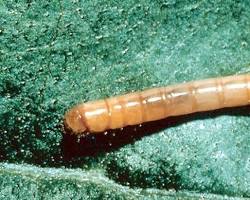
False Wireworms are the larval stage of darkling beetles belonging to the family Tenebrionidae. These soil-dwelling larvae are commonly confused with true wireworms because of their similar elongated shape, hard bodies, and underground feeding habits. However, False Wireworms differ significantly in biology, life cycle, and feeding behavior.
False Wireworms are important agricultural pests in many dryland farming systems and are commonly associated with cereal crops, vegetable fields, grasslands, and disturbed soils. They feed primarily on seeds, roots, and young seedlings, which can interfere with plant establishment and reduce crop yields.
Damage caused by False Wireworms is often most severe in:
- Dry soils
- Newly planted fields
- Minimum tillage systems
- Fields with heavy crop residue
Because these larvae live underground, infestations are frequently overlooked until poor germination or patchy crop emergence becomes visible.
Although they are not always as destructive as true wireworms (larvae of click beetles), large populations can still create serious economic losses in agricultural systems.
Taxonomy and Classification
- Kingdom: Animalia
- Phylum: Arthropoda
- Class: Insecta
- Order: Coleoptera
- Family: Tenebrionidae
- Common Name: False Wireworms
False Wireworms belong to the beetle family Tenebrionidae, commonly known as darkling beetles.
This family contains thousands of species worldwide, many adapted to:
- Dry climates
- Grasslands
- Agricultural systems
- Desert environments
False Wireworms undergo complete metamorphosis with four developmental stages:
- Egg
- Larva
- Pupa
- Adult darkling beetle
The larval stage is responsible for nearly all agricultural damage.
Physical Description
False Wireworm larvae are elongated, cylindrical, and heavily hardened.
Key identifying characteristics include:
- Hard smooth body
- Yellow, tan, or brown coloration
- Segmented appearance
- Cylindrical shape
- Strong chewing mouthparts
- Short legs near the head
Their tough exoskeleton gives them a shiny rigid appearance similar to true wireworms.
False Wireworms are often mistaken for click beetle larvae because of their shape, but several differences exist:
- False Wireworms are usually smoother
- They often move differently
- Their terminal body segments differ structurally
- They belong to entirely different beetle families
Adult darkling beetles are typically:
- Dark brown or black
- Oval-bodied
- Slow-moving
- Ground-dwelling
Many adult species are nocturnal and hide beneath debris during daylight hours.
Distribution and Habitat
False Wireworms occur worldwide in agricultural and natural ecosystems.
They are especially common in:
- Dry farming regions
- Cereal-producing areas
- Sandy soils
- Grasslands
- Disturbed agricultural land
- Arid and semi-arid climates
Preferred habitats include:
- Crop fields
- Pastures
- Gardens
- Field margins
- Soil beneath plant residue
False Wireworms are strongly associated with:
- Dry soil conditions
- Conservation tillage systems
- High crop residue
- Reduced soil disturbance
These environments provide protection and food resources for developing larvae.
Life Cycle
The life cycle of False Wireworms varies depending on species, temperature, and environmental conditions.
Egg Stage
Adult darkling beetles deposit eggs in soil near host plants or organic material.
Eggs are usually hidden within:
- Soil cracks
- Plant residue
- Loose sandy soils
Larval Stage
After hatching, larvae begin feeding underground on:
- Seeds
- Young roots
- Emerging shoots
- Organic matter
The larval stage may last several months depending on environmental conditions.
Larvae are highly adapted to dry soils and can survive in conditions unfavorable to many other soil insects.
Pupal Stage
Mature larvae create small chambers within the soil where pupation occurs.
The pupal stage transforms the larva into the adult beetle.
Adult Stage
Adult darkling beetles emerge from the soil and continue the reproductive cycle.
Many adults are active at night and hide during daytime beneath:
- Crop residue
- Stones
- Plant debris
- Soil cracks
Behavior and Feeding
False Wireworm larvae are underground feeders that attack seeds and young plants.
Common feeding targets include:
- Germinating seeds
- Seedling roots
- Emerging shoots
- Underground stems
Feeding damage often causes:
- Poor germination
- Seedling death
- Stunted growth
- Patchy crop establishment
Larvae are especially problematic in newly planted fields where vulnerable seedlings are abundant.
False Wireworms can survive long periods underground and may persist between growing seasons.
Damage and Economic Importance
False Wireworms are important agricultural pests in many grain-producing regions.
Damage symptoms include:
- Missing seedlings
- Patchy crop emergence
- Reduced plant density
- Root pruning
- Wilted seedlings
- Reduced yields
In severe infestations, entire sections of fields may fail to establish properly.
Crops commonly affected include:
- Wheat
- Barley
- Corn
- Sorghum
- Vegetables
- Legumes
Damage is often worse during:
- Dry weather
- Early planting periods
- Low soil moisture conditions
Because feeding occurs underground, infestations may remain undetected until stand loss becomes obvious.
Signs of Infestation
- Poor seed germination
- Patchy field emergence
- Missing seedlings
- Chewed seeds underground
- Root damage
- Larvae found in soil near roots
- Stunted or dying seedlings
Digging around damaged seedlings may reveal larvae within the root zone.
Management and Control (IPM)
Management of False Wireworms relies heavily on cultural and preventive practices.
Crop Rotation
Rotating crops can reduce population buildup by disrupting food availability.
Crop diversity helps prevent long-term establishment of high populations.
Soil Preparation
Tillage and soil disturbance may expose larvae and pupae to predators and environmental stress.
Proper soil preparation can also reduce favorable hiding sites.
Residue Management
Reducing excessive crop residue may limit larval survival and adult egg-laying sites.
Heavy residue layers often create ideal microhabitats for larvae.
Monitoring
Regular field monitoring is essential before planting.
Monitoring methods include:
- Soil sampling
- Bait traps
- Field scouting
Early detection allows growers to anticipate stand loss risks.
Seed Treatments
In some agricultural systems, insecticidal seed treatments may help protect vulnerable seedlings during establishment.
Treatments are usually most effective during early growth stages.
Encouraging Natural Predators
Beneficial organisms that prey on soil insects may help suppress populations, including:
- Ground beetles
- Birds
- Predatory insects
- Parasitic organisms
Ecological Importance
Although considered pests in agriculture, False Wireworms also contribute to natural soil ecosystems.
Some species feed partially on:
- Organic matter
- Decaying vegetation
- Soil microorganisms
They also serve as food for numerous predators within grassland and agricultural environments.
Research and Scientific Importance
Researchers study False Wireworms because of their importance in dryland agriculture and conservation tillage systems.
Research focuses on:
- Soil pest ecology
- Crop protection strategies
- Integrated pest management
- Biological control
- Reduced pesticide systems
- Climate impacts on soil pests
Modern agricultural research increasingly emphasizes sustainable control methods and reduced reliance on broad-spectrum insecticides.
Conclusion
False Wireworms are the larval stage of darkling beetles in the family Tenebrionidae. These hard-bodied soil-dwelling larvae attack seeds, roots, and emerging seedlings in agricultural systems, especially under dry soil conditions. Although often confused with true wireworms, they differ in biology and feeding behavior. Infestations can lead to poor crop establishment, patchy emergence, and reduced yields. Effective management depends on crop rotation, residue management, soil preparation, monitoring, and integrated pest management practices.