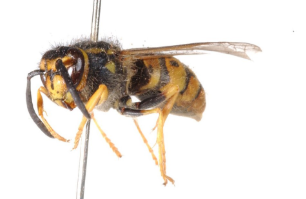
European Wasps (Vespula germanica) are an aggressive and highly invasive species of yellowjacket known for their persistent scavenging behavior, painful stings, and ability to thrive in urban environments. Native to Europe, they have spread to many regions worldwide, including Australia, New Zealand, and South America, where they are considered major nuisance and ecological pests. Their attraction to meat, sugary foods, and beverages makes them particularly disruptive around homes, parks, and outdoor dining areas.
Taxonomy and Classification
European Wasps belong to the family Vespidae and the genus Vespula, commonly referred to as yellowjackets. They are eusocial insects, forming highly organized colonies with queens, workers, and reproductive individuals. In their native range, colonies are typically annual; however, in mild climates, they may become perennial, surviving multiple years and growing to extremely large populations. Like other wasps, they undergo complete metamorphosis.
Physical Description
Adult European Wasps measure approximately 1/2 to 3/4 inch in length and have a robust body with bright black and yellow banding. A key identifying feature is the anchor-shaped or dagger-shaped black marking on the face (clypeus), along with distinct black dots on the abdominal segments that remain separate from the banding.
Their nests are constructed from chewed wood fibers mixed with saliva, forming paper-like structures. These nests are typically multi-layered and hidden in protected locations such as underground burrows, wall voids, tree cavities, or under roof eaves.
Distribution and Habitat
Originally native to Europe and parts of Asia, European Wasps are now widely distributed across many continents. They thrive in both rural and urban environments and are particularly successful in areas where food sources and nesting sites are abundant. Their preference for concealed nesting locations often leads them to establish colonies within human structures, making control more difficult.
Behavior and Life Cycle
The colony begins in spring when a single queen establishes a nest and lays eggs. Workers emerge and expand the colony by foraging for protein sources to feed developing larvae and sugars for adult energy needs.
By late summer and fall, colonies reach peak size and begin producing new queens and males. During this period, worker wasps become more aggressive and shift their feeding behavior toward scavenging sugary foods, increasing interactions with humans.
European Wasps are highly defensive and will attack in large numbers if their nest is disturbed. Their smooth stingers allow them to sting repeatedly, making them particularly dangerous compared to bees.
Feeding and Conflict
European Wasps are opportunistic feeders, consuming a wide range of food sources including insects, meat, fruit, and sugary substances. Their interactions with humans and ecosystems create several problems:
- Nuisance and Health Risk: Their attraction to food and aggressive behavior make them a common hazard during outdoor activities. Their stings are painful and can trigger allergic reactions.
- Ecological Impact: In invaded regions, they prey heavily on native insects, including beneficial pollinators such as bees, reducing biodiversity.
- Agricultural Damage: They feed on ripening fruit, causing economic losses in orchards and vineyards.
Management and Prevention
Managing European Wasp populations requires a combination of sanitation, exclusion, and targeted treatment methods.
- Baiting Programs: Protein or sugar-based baits containing slow-acting insecticides can be used to eliminate entire colonies.
- Nest Treatment: Applying insecticidal dust directly into nest entrances—preferably at night—is the most effective method for destroying colonies.
- Sanitation: Keeping garbage sealed, cleaning up food spills, and avoiding exposed food outdoors reduces attraction.
- Exclusion: Sealing wall voids, cracks, and entry points helps prevent nesting in buildings.
Conservation and Research
European Wasps are considered serious invasive pests in many regions. Research efforts focus on developing more effective and species-specific baiting systems, as well as exploring biological control methods such as parasitic organisms and pathogens. Long-term management strategies aim to reduce their ecological impact while protecting native species and ecosystems.