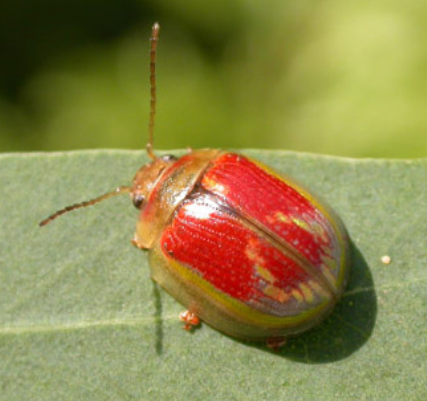
Eucalyptus Beetles

Eucalyptus Beetles is a general term applied to several beetle species, particularly the **Eucalyptus Snout Beetle** (*Gonipterus scutellatus*) and the Eucalyptus Tortoise Beetle (*Paropsis charybdis*). These insects are severe pests of *Eucalyptus* species, which are extensively grown outside of their native Australia for timber, pulp, and ornamental use. Both the adult and larval stages voraciously consume the leaves, causing severe defoliation, stunted growth, and death of young trees and seedlings, posing a major economic threat to forestry worldwide.

Taxonomy and Classification

The most damaging species belong to the families Curculionidae (weevils, like the Snout Beetle) and Chrysomelidae (leaf beetles, like the Tortoise Beetle) in the order Coleoptera. They undergo complete metamorphosis. These species became global pests after Eucalyptus was widely planted in regions (like South Africa, New Zealand, Europe, and the U.S. West Coast) where the beetles’ natural Australian enemies were absent.

Physical Description

Eucalyptus Snout Beetle (*Gonipterus*): Adult is a brown, elongated weevil, about 1/2 inch long, with a prominent snout. The larvae are the most damaging: pale green, worm-like grubs that leave a characteristic trail of black, sticky, string-like frass (excrement) as they feed.

Eucalyptus Tortoise Beetle (*Paropsis*): Adult is a rounded, dome-shaped leaf beetle (like a lady beetle), often brightly colored red, yellow, or metallic green. The larvae are stout, fleshy, hump-backed grubs that also cause defoliation.

Distribution and Habitat

Native to Australia, these beetles are now found in virtually every country with established *Eucalyptus* plantations. Their habitat is restricted to the foliage of the host tree. The most severe damage typically occurs in areas with warm climates that allow for rapid, multi-generational reproduction cycles.

Behavior and Life Cycle

These beetles often have multiple, overlapping generations per year. Adults and larvae feed on the foliage. The female lays eggs on the leaves, often in conspicuous, waxy, communal masses (Snout Beetle) or singly (Tortoise Beetle). The larvae hatch and begin aggressive feeding, causing skeletonization and leaf loss. Overwintering occurs as adults in sheltered spots, such as under bark or in leaf litter.

A key factor in their invasiveness is their ability to attack the hardened, mature foliage of *Eucalyptus*, whereas in Australia, most pests feed on the more tender juvenile leaves.

Feeding and Damage

Both the larvae and adults cause severe damage by consuming the leaf tissue:

  • Defoliation: Heavy populations can completely strip a tree of its leaves, reducing growth by over 50%.
  • Tree Death: Repeated defoliation of young trees or seedlings can deplete their energy reserves and lead to death.
  • Aesthetic Loss: Ornamental trees are rendered unsightly by the loss of foliage and the presence of feeding scars.

Susceptibility of Eucalyptus Species to Key Pests

Not all Eucalyptus species share the same level of vulnerability to insect pests such as tortoise beetles, longhorned borers, and psyllids. Some species, like blue gum (Eucalyptus globulus), are notably more susceptible—not only to pests but also to becoming invasive in certain regions. Others, selected or bred for local conditions, can offer greater resistance to these threats.

For growers and landscapers, species selection is critical. Consider these key points:

  • Highly Susceptible Species: Blue gum (E. Globulus) and certain hybrids tend to be more prone to tortoise beetle defoliation and psyllid damage. These species are also known to attract longhorned borers, especially when stressed by drought or poor growing conditions.
  • Moderately Susceptible Species: Species like Eucalyptus camaldulensis (River Red Gum) and E. Viminalis (Manna Gum) show moderate tolerance but can still suffer significant pest pressure under favorable conditions for beetle populations.
  • More Resistant Species: Some species—including E. Sideroxylon (Ironbark) and E. Nicholii (Narrow-leaved Black Peppermint)—demonstrate improved resistance to common pests. These trees often fare better in regions with high insect pressure or where minimal chemical intervention is preferred.

Selecting the right Eucalyptus species for your region and purpose, and matching them to site conditions, can dramatically reduce pest problems and the need for ongoing management. Consult regional planting guides or extension tables for a side-by-side comparison of susceptibility before making your choice.

Management and Prevention

Control is primarily achieved through classical biological control.

  • Biological Control (Most Effective): The introduction of natural enemies from Australia has been highly successful. For the Snout Beetle, the parasitic egg wasp (*Anaphes nitens*) is widely used, laying its eggs inside the beetle’s eggs.
  • For Eucalyptus Tortoise Beetles, natural enemies in their native Australia usually keep populations in check—significantly limiting outbreaks except in cultivated stands. In regions where these beetles have become invasive, similar approaches have been deployed. For example, egg parasites such as the tiny wasp Enoggera reticulata have been introduced abroad, targeting tortoise beetle eggs by searching beneath eucalyptus bark and in leaf crevices to lay their own eggs inside. The wasp larvae then consume the beetle eggs from within, reducing pest numbers.

    While Enoggera reticulata has successfully established and controlled tortoise beetle populations in places like South Africa, establishment has been less reliable elsewhere, and ongoing monitoring is necessary. Additionally, some newer pests—such as Chrysophtharta m-fuscum—have not yet been targeted by biological control research, highlighting the need for continued vigilance and adaptation as new species emerge.

  • Chemical Control (Limited): Systemic insecticides can be used on high-value ornamental trees, but widespread chemical use is impractical in large commercial plantations.
  • For landscape trees where damage is intolerable and biological control is not sufficient, soil drench applications of systemic neonicotinoid insecticides such as imidacloprid (sold as Merit or Bayer Advanced 12-month Tree & Shrub Insect Control) or clothianidin (Arena) may offer long-term suppression. These insecticides are absorbed through the roots and distributed throughout the tree, targeting beetles as they feed on the foliage. Soil drenches and tree injections (when labeled) reduce environmental contamination compared to foliar sprays, but large trees are often difficult to treat effectively.

    Contact insecticides—including carbaryl (Sevin) and pyrethroids such as cyfluthrin (Tempo) or permethrin (Astro, Dragnet)—are generally not recommended for eucalyptus, especially in landscapes, due to risks of drift, runoff, and harm to beneficial insects. Systemic products, while sometimes more effective, can take several weeks to reduce beetle populations and should only be considered when pest pressure threatens tree survival.

    Precautions:

  • Only treat when absolutely necessary, and ensure trees are healthy and well-watered before applying any insecticide, as stressed trees are more susceptible to both beetle damage and phytotoxicity from chemicals.
  • Soil applications are generally preferred over trunk injections; avoid wounding trees with repeated drilling or implanting.
  • Systemic insecticides may harm pollinators and beneficial insects by moving into nectar or affecting natural enemies, and can sometimes lead to outbreaks of secondary pests like spider mites.
  • Whenever chemical control is considered, always follow label instructions, apply at the recommended time (typically late winter to early spring, before or just after new leaves emerge), and irrigate after application if rain is not expected. Use should be limited to cases where other methods fail and tree health or aesthetics are at risk.
  • Resistant Varieties: Research focuses on identifying and breeding *Eucalyptus* varieties that are naturally resistant to the beetles.

Effectiveness of the Egg Parasite Enoggera reticulata

The tiny wasp Enoggera reticulata, an egg parasite native to Australia, has played a varied role in managing eucalyptus tortoise beetles around the world. In its homeland, natural enemies like this wasp keep beetle populations in check, especially outside of artificially planted stands.

In regions where Eucalyptus beetles became pests—such as California — entomologists introduced Enoggera reticulata specifically to target species like Trachymela sloanei. The wasp seeks out beetle eggs hidden in bark crevices, laying its own eggs inside. The developing wasp larva consumes the beetle egg from within, eventually emerging to continue the cycle.

However, while Enoggera reticulata has established successfully and provided effective control against related tortoise beetle species in places like South Africa, repeated field surveys in California have yet to recover evidence of lasting establishment there. As a result, its effectiveness in North America remains limited, and new pest arrivals such as Chrysophtharta m-fuscum are still without targeted biological control options.

Overall, the success of Enoggera reticulata hinges on its ability to establish persistent populations—a feat it has achieved in some regions but not others, underscoring the need for ongoing research and adaptive management strategies.

Conservation and Research

Eucalyptus Beetles are managed as major economic pests in plantation forestry. Research is dedicated to maintaining and distributing the established biological control agents and identifying new threats as the beetles evolve or as new Eucalyptus varieties are planted.