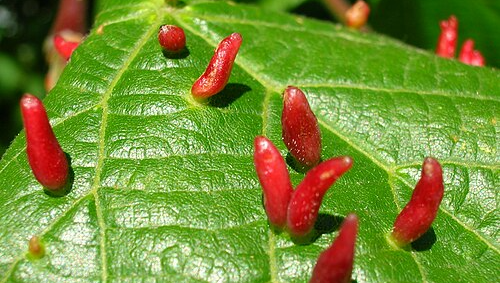
Eriophyid Mites (family Eriophyidae), commonly referred to as gall mites or rust mites, are highly specialized, microscopic plant-feeding arthropods that cause distinctive deformities on host plants. Unlike most mites, they possess only two pairs of legs and have elongated, worm-like bodies. Their feeding triggers abnormal plant growth such as galls, velvety patches, and bronzing, making them economically important pests of trees, fruit crops, and ornamental plants.
Taxonomy and Classification
Eriophyid Mites belong to the class Arachnida and subclass Acari, which includes mites and ticks. They are distinct from other plant-feeding mites due to their reduced number of legs and vermiform (worm-like) body shape. They undergo simple metamorphosis and are typically highly host-specific, with individual species adapted to a single plant or closely related group of plants.
Physical Description
Eriophyid Mites are extremely small, usually less than 0.2 mm in length, and cannot be seen without magnification. They are translucent, pale white, or yellowish and have elongated cylindrical bodies. Because of their microscopic size, their presence is typically identified by the damage symptoms they cause rather than by direct observation.
Common plant symptoms associated with these mites include:
- Galls: Small, raised, pimple-like growths on leaves or stems where mites live and feed.
- Erineum Patches: Velvety or felt-like growths on leaf surfaces, often red, yellow, or green.
- Rusting/Bronzing: Discoloration of leaves or fruit surfaces, commonly seen on apples, pears, and citrus.
Distribution and Habitat
Eriophyid Mites are found worldwide in a wide range of climates and ecosystems. Their habitat is limited to specific host plants, where they inhabit leaves, buds, stems, or developing plant tissues. They overwinter as adults, often hidden beneath bud scales, in bark crevices, or within plant tissue, emerging in spring to feed on new growth.
Behavior and Life Cycle
Eriophyid Mites have rapid life cycles, often completing a generation in less than two weeks under favorable conditions. This allows populations to build quickly, sometimes producing dozens of generations within a single growing season.
They disperse primarily by wind currents but may also hitch rides on insects or birds in a process known as phoresy. Their feeding involves injecting saliva into plant cells, which manipulates plant growth and leads to the formation of galls or other abnormal structures that provide both food and protection.
Once galls form and harden, mites are protected within the plant tissue, making them difficult to control with treatments.
Feeding and Damage
The impact of Eriophyid Mite infestations varies depending on the host plant and mite species:
- Aesthetic Damage: Galls and patches on ornamental trees can be unsightly but often do not significantly harm mature plants.
- Economic Damage: On fruit crops, rusting and surface damage can reduce market value and quality.
- Physiological Effects: Severe infestations may lead to leaf distortion, premature leaf drop, reduced growth, and damage to buds.
- Disease Transmission: Some species act as vectors for plant viruses, including wheat streak mosaic virus.
Management and Prevention
Effective management depends on early intervention before plant damage becomes established.
- Dormant Oil Applications: Applying horticultural oil in late winter or early spring helps control overwintering mites before they begin feeding.
- Acaricides: Miticides or sulfur-based treatments can be effective when applied during early growth stages before galls form.
- Pruning: Removing and disposing of heavily infested plant parts can reduce local populations.
- Plant Health: Maintaining vigorous plant growth helps reduce susceptibility to severe damage.
Conservation and Research
Eriophyid Mites are the subject of ongoing research, particularly in understanding how they manipulate plant growth to form galls. Scientists are also working to develop resistant plant varieties and improve integrated pest management strategies for crops affected by these mites. While some species are pests, others play specialized roles in ecosystems, highlighting the complexity of their ecological interactions.