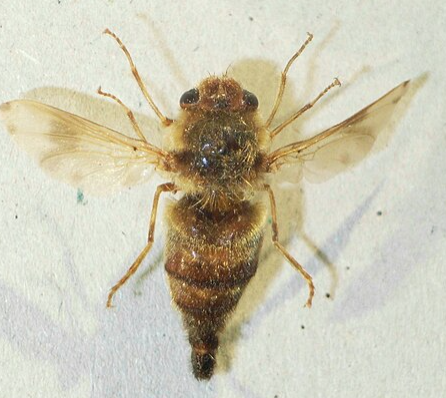
Equine Botflies (genus Gasterophilus) are parasitic flies whose larvae, commonly called bots, infest the gastrointestinal tract of horses, donkeys, and mules. While the adult flies are short-lived and do not feed, the larval stage is highly damaging, attaching to the digestive lining of the host and causing irritation, lesions, and digestive disruption. These parasites are a major concern in equine health management worldwide.
Taxonomy and Classification
Equine Botflies belong to the family Oestridae within the order Diptera (true flies). They undergo complete metamorphosis consisting of egg, larva, pupa, and adult stages. Several species affect horses, including the common horse bot fly (Gasterophilus intestinalis) and the throat bot fly (Gasterophilus nasalis). These insects are obligate parasites, meaning their larvae must develop inside a host to complete their life cycle.
Physical Description
The adult botfly is a stout, hairy insect that resembles a honeybee in appearance, with a brownish body and buzzing flight. Adults lack functional mouthparts and do not feed, living only long enough to reproduce.
The eggs are small, yellowish, and firmly attached to the horse’s hair. Their placement varies by species, with G. intestinalis typically laying eggs on the forelegs and shoulders, while G. nasalis prefers the underside of the jaw.
The larvae (bots) are cylindrical, fleshy maggots measuring approximately 1/2 to 3/4 inch long. They are pale yellow to pinkish in color and equipped with strong oral hooks and rows of spines that allow them to anchor securely to the stomach lining.
Distribution and Habitat
Equine Botflies are found globally wherever horses and related animals are present. Adult flies are commonly encountered in pastures and stables during late summer and fall. The larval stage inhabits the mucosal lining of the horse’s digestive system, particularly the stomach and small intestine.
Behavior and Life Cycle
The life cycle of equine botflies typically spans one year and is closely tied to seasonal conditions. Adult females lay eggs on the horse’s hair, which hatch either through warmth, moisture, or when stimulated by the horse’s licking behavior.
Once ingested, the larvae penetrate the soft tissues of the mouth and migrate through the oral cavity for several weeks before traveling to the stomach. There, they attach to the lining using their oral hooks and remain for 8 to 12 months, feeding and developing.
In the spring, mature larvae detach and pass out of the host in the feces. They pupate in the soil, and adult flies emerge within a few weeks to restart the cycle. During egg-laying, adult flies may cause horses to exhibit panic behaviors known as gadding, which can lead to injury.
Damage and Health Impact
The presence of botfly larvae can have significant health effects on equine hosts:
- Oral Irritation: Migration through the mouth causes inflammation and discomfort, potentially affecting feeding.
- Stomach Lesions: Larvae attach to the stomach lining, creating ulcer-like lesions and localized damage.
- Digestive Disruption: Heavy infestations may interfere with normal digestion and nutrient absorption.
- Colic Risk: Severe infestations can contribute to gastrointestinal blockages, increasing the risk of colic or, in rare cases, rupture.
- Behavioral Stress: Adult flies provoke defensive behavior in horses, leading to stress and potential injury.
Management and Prevention
Effective control focuses on interrupting the life cycle through both physical and medical interventions.
- Deworming: Administering bot-specific dewormers such as ivermectin or moxidectin in late fall or early winter is the primary method of control.
- Egg Removal: Regular grooming and use of bot knives or grooming tools to remove eggs from the horse’s coat helps prevent ingestion.
- Pasture Management: Proper manure removal reduces pupation sites and helps limit adult fly emergence.
- Stable Hygiene: Maintaining clean environments reduces the likelihood of reinfestation.
Conservation and Research
Equine Botflies are managed as veterinary pests with significant economic and health implications. Ongoing research focuses on improving parasite control strategies, reducing reliance on chemical treatments, and addressing concerns about resistance to deworming medications. Advances in diagnostics and targeted treatment protocols continue to enhance equine health management.