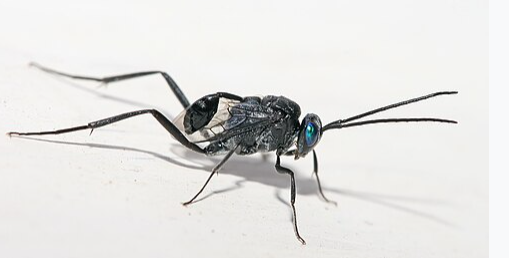
Ensign Wasps (family Evaniidae) are highly specialized parasitic wasps that are completely harmless to humans and are considered beneficial biological control agents. Their life cycle is closely tied to cockroaches, as females lay their eggs inside cockroach egg cases (oothecae). The developing larva consumes the eggs within the case, preventing the emergence of a new generation of cockroaches. Their presence indoors is often a clear indicator of an active cockroach infestation.
Taxonomy and Classification
Ensign Wasps belong to the order Hymenoptera, which includes wasps, ants, and bees. They undergo complete metamorphosis with egg, larva, pupa, and adult stages. These insects are classified as parasitoids, meaning their larvae develop by feeding on and ultimately killing their host. The most commonly encountered species indoors is Evania appendigaster, which parasitizes the egg cases of large cockroach species such as the American Cockroach and Oriental Cockroach.
Physical Description
Adult Ensign Wasps are small, slender insects measuring approximately 1/4 to 1/2 inch in length. They are typically black and easily recognized by their distinctive body structure.
- Flag-like Abdomen: The abdomen is small and attached high on the thorax by a thin stalk, giving it a flag-like appearance that moves up and down as the wasp walks.
- Slender Body: The body is narrow with long legs, adapted for active searching behavior.
- Harmless to Humans: They do not sting and pose no threat to people or pets.
The larvae are small, white, grub-like organisms that develop entirely within cockroach egg cases and are not visible outside of them.
Distribution and Habitat
Ensign Wasps are found worldwide wherever cockroach populations exist. Their habitat includes residential homes, commercial kitchens, food storage facilities, and other areas where cockroaches are present. Indoors, they are often observed walking along walls, floors, or ceilings while actively searching for cockroach oothecae.
Behavior and Life Cycle
The life cycle of Ensign Wasps is closely linked to their cockroach hosts. Female wasps locate freshly deposited cockroach egg cases and use their ovipositor to insert a single egg inside the protective casing.
Once the egg hatches, the larva consumes all the developing cockroach embryos within the ootheca. After feeding, it pupates inside the empty egg case. The adult wasp then emerges by chewing a small exit hole and begins searching for new hosts. This process effectively eliminates an entire batch of cockroach offspring.
Natural Competitors and Ecological Niche
Although highly specialized, Ensign Wasps share their ecological niche with other parasitoid wasps such as species in the genera Aprostocetus and Tetrastichus, which also target cockroach egg cases. In addition, some ants and predatory beetles may consume exposed cockroach eggs. However, Ensign Wasps are particularly efficient due to their ability to locate concealed oothecae and exploit them effectively.
Ecological Role and Benefit
Ensign Wasps play a valuable role in controlling cockroach populations by naturally reducing reproduction rates. While they do not eliminate infestations entirely, they help suppress population growth and contribute to long-term pest management. Their presence is beneficial and should be viewed as a positive indicator of natural biological control activity.
Management and Prevention
No direct control measures are required for Ensign Wasps, as they are beneficial insects. Instead, their presence should prompt attention to cockroach management.
- Cockroach Control: Focus on sanitation, exclusion, and targeted treatments such as baits and boric acid to eliminate cockroach populations.
- Preservation: Avoid unnecessary broad-spectrum insecticides that may kill beneficial insects, including Ensign Wasps.
- Integrated Pest Management: Incorporate biological control agents like Ensign Wasps into broader pest management strategies.
Conservation and Research
Ensign Wasps are studied for their potential in biological control programs targeting cockroach infestations. Research focuses on understanding their host-seeking behavior, improving their effectiveness in indoor environments, and integrating their role into sustainable pest management systems that reduce reliance on chemical treatments.