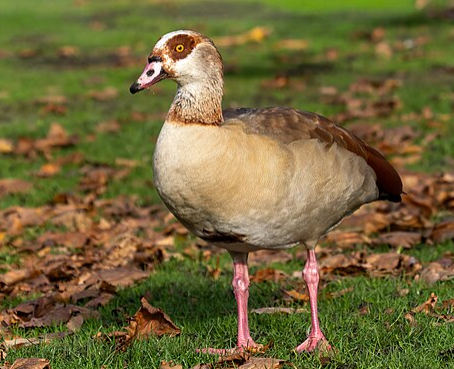
Egyptian Geese (Alopochen aegyptiaca) are large, highly adaptable waterfowl native to sub-Saharan Africa and the Nile Valley. Although not traditional structural pests, they are widely regarded as an invasive nuisance species in many regions outside their native range, including parts of Europe and the southern United States. Their aggressive behavior, rapid reproduction, and tendency to heavily graze and defecate in public areas create conflicts with agriculture, native wildlife, and human recreation.
Taxonomy and Classification
Egyptian Geese belong to the family Anatidae, which includes ducks, geese, and swans. Despite their name, they are considered intermediate between geese and shelducks. Many invasive populations originate from escaped ornamental birds that established breeding populations in the wild. They are monogamous, forming long-term pair bonds, and are protected under various wildlife regulations in some regions, which can complicate management efforts.
Physical Description
Adult Egyptian Geese are large birds, typically measuring 25–29 inches in length with wingspans ranging from 50–65 inches. Their plumage is a mix of gray, tan, reddish-brown, and white, with striking black flight feathers visible during flight. One of their most recognizable features is the dark brown patch around the eyes, giving them a masked appearance, along with a reddish-brown collar across the chest.
Juveniles are generally duller in color and lack the prominent eye patch. These birds are also known for their loud vocalizations, including honking and hissing, especially when defending territory or young.
Distribution and Habitat
While native to Africa, Egyptian Geese have established invasive populations in Western Europe and parts of North America, particularly in warm climates such as Florida and Texas. They thrive in a variety of habitats including lakes, ponds, rivers, golf courses, parks, and agricultural land.
They are highly adaptable nesters, utilizing tree cavities, tall grasses, abandoned nests, rooftops, and even urban structures such as window ledges and chimneys.
Behavior and Conflict
Egyptian Geese are territorial and aggressive, particularly during breeding season. Their behavior contributes to several types of human and environmental conflict:
- Aggression: They frequently chase and displace native birds, competing for food and nesting sites.
- Grazing and Defecation: Their feeding habits can damage turfgrass and crops, while large amounts of droppings contaminate public spaces and water sources.
- Nesting Issues: Nests in urban structures can cause blockages, mess, and sanitation concerns.
Feeding and Damage
Egyptian Geese are primarily herbivorous, feeding on grasses, seeds, and agricultural crops. While their feeding is natural, it can result in localized damage:
- Crop Damage: They may feed on emerging crops such as wheat and young seedlings, reducing yields.
- Turf Damage: Heavy grazing can degrade lawns, parks, and golf courses.
- Soil Erosion: Grazing near water bodies can destabilize banks and contribute to erosion.
Management and Prevention
Managing Egyptian Goose populations requires a combination of habitat modification, deterrence, and regulated population control measures.
- Habitat Modification: Allowing grass to grow taller and planting dense vegetation near water can discourage grazing.
- Harassment Techniques: Using dogs, noise deterrents, or visual scare devices can help drive birds away from specific areas.
- Egg Addling: Treating eggs to prevent hatching is a humane and effective population control method when conducted under proper permits.
- Exclusion: Installing fencing or barriers can limit access to ponds, lawns, and sensitive areas.
Conservation and Research
Egyptian Geese are studied as a model of invasive species success due to their adaptability and reproductive efficiency. Research focuses on assessing their impact on native ecosystems and developing effective, humane management strategies that balance conservation concerns with reducing nuisance and environmental damage.