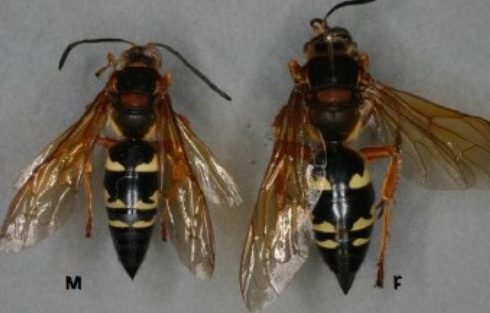
The Eastern Cicada Killer Wasp (Sphecius speciosus) is a large, solitary wasp species native to North America. Despite its intimidating size and appearance, this insect is generally non-aggressive toward humans and plays an important ecological role as a predator of cicadas. It is commonly encountered in sandy soils, lawns, and open landscapes during the summer months.
Taxonomy and Classification
- Order: Hymenoptera
- Family: Crabronidae
- Genus: Sphecius
- Species: Sphecius speciosus
Physical Description
Adult cicada killer wasps are among the largest wasps in North America, measuring between 1.5 and 2 inches in length. They have a robust body with a reddish-brown thorax and black abdomen marked with yellow bands, resembling wasps or hornets.
Females possess a stinger but rarely use it unless handled. Males, while territorial, lack stingers and cannot sting.
Distribution and Habitat
This species is widely distributed across the eastern and central United States. Preferred habitats include:
- Sandy or loose soils
- Lawns and golf courses
- Gardens and landscaped areas
- Forest edges
They often construct burrows in sunny, well-drained areas.
Behavior and Ecology
Female cicada killers hunt cicadas, paralyzing them with a sting and transporting them back to underground burrows. Each burrow cell contains one or more cicadas that serve as food for developing larvae.
This behavior makes them beneficial members of the predatory insect community.
Human Interaction and Management
While their burrowing activity can create unsightly soil mounds, cicada killers rarely require control. They are not aggressive and typically avoid human interaction.
- Maintain dense turf to discourage nesting
- Reduce exposed sandy areas
- Avoid unnecessary pesticide use