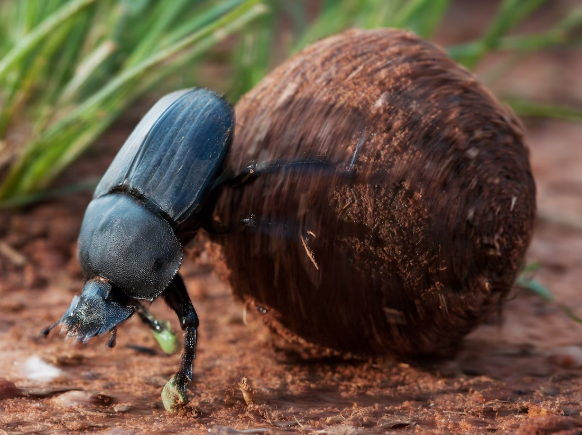
Dung Beetles (families Scarabaeidae and Geotrupidae) are a diverse group of beetles known for their unique behavior of feeding on and utilizing animal dung. Far from being pests, dung beetles are considered highly beneficial insects due to their essential role in nutrient recycling, soil health improvement, and natural pest control. They are widely recognized as important contributors to sustainable agriculture and ecosystem balance.
By rapidly breaking down and burying manure, dung beetles reduce fly populations, suppress parasites, and improve pasture quality. Their activity is critical in livestock systems and natural environments alike.
Taxonomy and Classification
- Common Name: Dung Beetles
- Order: Coleoptera
- Primary Family: Scarabaeidae
- Secondary Family: Geotrupidae
- Type: Beneficial decomposer insect
Dung beetles are ecologically grouped based on their behavior rather than strict taxonomy:
- Rollers (Telecoprids): Form dung into balls and roll them away for burial
- Tunnelers (Paracoprids): Dig tunnels beneath dung pats and bury dung directly below
- Dwellers (Endocoprids): Live and reproduce within the dung itself
They undergo complete metamorphosis (egg, larva, pupa, adult).
Physical Description
Dung beetles vary greatly in size, shape, and color depending on species.
- Size: From a few millimeters to over 3 cm
- Color: Typically black or brown; some species exhibit metallic green, blue, or bronze iridescence
- Body: Robust, compact, and heavily armored
- Legs: Strong and shovel-like, adapted for digging and moving material
Many species, particularly males, possess horns or ridges on the head or thorax used for competition and mating displays.
The larvae are typical scarab beetle grubs:
- C-shaped, white to cream-colored
- Soft-bodied with a darker head capsule
- Develop within dung or underground chambers
Distribution and Habitat
Dung beetles are found on every continent except Antarctica. They occur wherever mammals produce dung, including:
- Pastures and grazing lands
- Forests and savannas
- Agricultural systems
- Grasslands and open habitats
They are highly efficient at locating fresh dung, often arriving within minutes due to their acute sense of smell.
Behavior and Life Cycle
Dung beetles exhibit some of the most fascinating behaviors in the insect world.
- Attraction: Adults are drawn to fresh dung by chemical cues
- Processing: Dung is shaped, buried, or consumed depending on species
- Reproduction: Eggs are laid in specially prepared brood balls made from dung
The lifecycle includes:
- Egg Stage: Eggs are deposited in dung or underground chambers
- Larval Stage: Larvae feed on dung provided by the parent
- Pupal Stage: Development occurs within the brood chamber
- Adult Stage: Adults emerge and repeat the cycle
Some roller species are known for remarkable navigation abilities, using the sun, moon, or even the Milky Way to orient themselves while moving dung balls.
Ecological Role and Benefits
Dung beetles provide significant ecological and agricultural benefits:
- Pest Suppression: Reduce breeding sites for flies such as horn flies and face flies
- Parasite Reduction: Disrupt life cycles of parasitic worms and other livestock parasites
- Soil Aeration: Tunneling improves soil structure and root penetration
- Nutrient Recycling: Return organic matter and nutrients to the soil
- Pasture Improvement: Break down dung pats, increasing usable grazing area
These activities improve pasture productivity and reduce the need for chemical pest control.
Feeding Behavior
Dung beetles feed primarily on organic matter within dung, including:
- Partially digested plant material
- Microorganisms such as bacteria and fungi
- Organic nutrients within manure
Both adults and larvae rely on dung as their primary food source, making them essential decomposers in nutrient cycles.
Management and Conservation
Dung beetles should be protected and encouraged due to their ecological importance.
| Strategy | Purpose | Benefit |
|---|---|---|
| Reduced Chemical Use | Limit insecticides and parasiticides | Protects beetle populations |
| Selective Dewormers | Use dung beetle-friendly livestock treatments | Prevents larval mortality |
| Habitat Support | Maintain grazing systems and organic matter | Encourages natural populations |
| Introduction Programs | Introduce beneficial species where needed | Improves dung breakdown efficiency |
In some regions, such as Australia, dung beetles have been deliberately introduced to improve livestock waste management.
Threats
The primary threat to dung beetles is the use of certain veterinary drugs, particularly:
- Macrocyclic lactones (e.g., ivermectin)
- Residual insecticides in livestock systems
These chemicals can pass through animals and contaminate dung, killing developing larvae and reducing beetle populations.
Related Articles
Conclusion
Dung beetles are essential contributors to ecosystem health and agricultural productivity. Their ability to rapidly recycle manure, improve soil conditions, and suppress pests makes them invaluable allies in both natural and managed environments.
Protecting dung beetle populations through responsible management practices ensures continued benefits for soil health, livestock systems, and overall biodiversity.